Get Full Government Meeting Transcripts, Videos, & Alerts Forever!
Get email alerts on the Tribal Relations topic
No spam. Unsubscribe anytime.
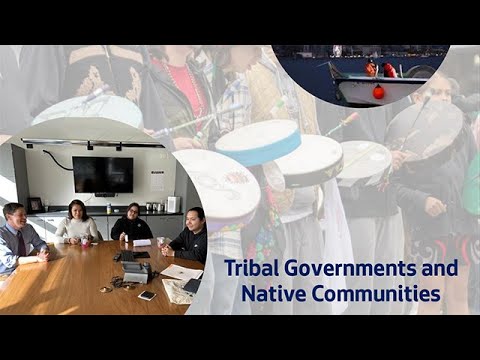
Tribal leaders and Indigenous Advisory Council brief committee on government-to-government work and priorities
Summary
Tribal elected leaders and the Indigenous Advisory Council updated the committee on tribal relations, consultation practices, the 2024 Indigenous Advisory Council work plan, and plans for a Tribal Nations summit and other collaborative efforts.
Elected tribal leaders and staff from the Office of Intergovernmental Relations and the Department of Neighborhoods briefed the Finance committee on June 18 about recent tribal relations work, the Indigenous Advisory Council’s priorities and plans to strengthen government-to-government engagement.
Councilmembers Donnie Stevenson (Muckleshoot Indian Tribe) and Luther J. Mills (Suquamish Tribe) opened the discussion, and Franchesca Miran, the city’s tribal relations director in the Office of Intergovernmental Relations, and Lydia Fattala of the Department of Neighborhoods summarized the city’s two main engagement pathways: formal tribal relations (government-to-government consultation) and the Indigenous Advisory Council (IAC), a city commission composed entirely of Native people.
Miran and Fattala described how the city is expanding consultation and engagement across more than 15 city departments, and they gave examples including arts and culture projects, parks cultural resource work and the city’s role administering Area Agency on Aging services in coordination with tribes. Miran emphasized that consultation is a formal, two-way process occurring early in project planning when treaties and federal trust responsibilities are implicated. "Consultation is a formal process...it requires two-way dialogue and meaningful engagement of tribal priorities," she said.
The Indigenous Advisory Council reported that it completed its third year as a commission and adopted a set of 2025 budget and policy priorities grouped into two themes: honoring political relationships (recognizing tribal nation sovereignty and treaty obligations) and centering culturally responsive programs aligned with Seattle’s Race and Social Justice Initiative. The council described recent activities including a webinar on culturally responsive affordable housing, youth listening sessions, Indigenous Peoples' Day programming and partnership with city departments on cultural-resource protection.
Councilmembers asked the tribal leaders and staff to return more frequently; the committee chair said tribal relations and the IAC will appear regularly in committee going forward, with a July 2 deadline for departments to report on action items from the recent Tribal Nations summit. "I expect those updates by July 2 committee," Chair Strauss said; staff noted they will seek to provide department updates or explain barriers and timelines.
Councilmembers and tribal leaders also discussed regional issues that cross jurisdictional boundaries, including seafood and cultural resource protection, and potential collaborative events such as an ocean-focused week in October. Councilmember Mills described tribal work on opioid treatment facilities and funding the tribe secured from the state for regional clinics; he said the clinics are a supplement to regional treatment capacity.
No formal committee action was taken; the briefing served as an informational update and a commitment to deeper, recurring engagement. Councilmembers and tribal leaders agreed to schedule additional one-on-one and committee-level meetings to discuss priorities and to ensure government-to-government coordination early in project planning.
The committee directed staff to convene department updates on summit action items and to return to committee with any department-level timelines or explanations if departments cannot yet report progress by July 2.