Get Full Government Meeting Transcripts, Videos, & Alerts Forever!
Get email alerts on the Property Tax Reform topic
No spam. Unsubscribe anytime.
Sunbury mayor warns House Bill 335 would cut city revenue about 11%, council discusses response
Summary
Mayor Eric St. John briefed the Sunbury City Council on House Bill 335, saying the measure to eliminate inside millage would reduce the city's revenue by about 11.4% (roughly $870,000 annually). Councilmembers expressed concern and discussed options including phased approaches and outreach to state representatives.
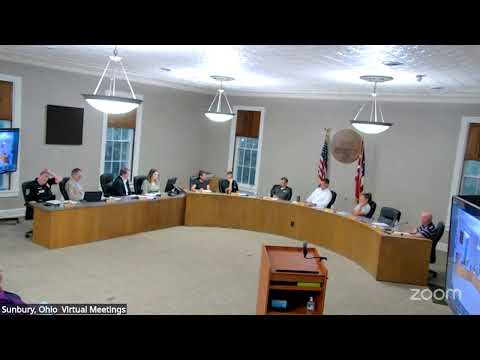
Mayor Eric St. John told the City of Sunbury council on June 28 that House Bill 335, recently introduced in the Ohio House, would eliminate inside millage and reduce the city's revenue by about 11.4%, an amount the county estimates at roughly $870,000 a year.
"This legislation would shift the burden squarely onto local communities, stripping us, elected officials of local communities, of a revenue source without any corresponding relief," St. John said during a lengthy briefing to the council.
The mayor said the impact for Sunbury is significant in practical terms: the county estimate equates to about seven police officers with wages and benefits, 17.4% of the city's personnel expenses, 87% of the current street improvement program, 16.5% of annual capital investments and roughly 30% of projected improvements at J.R. Smith Park. He also noted the estimated benefit to a typical homeowner would be a 2% to 5% reduction in total taxes.
St. John told the council the bill was introduced June 4 and moved quickly through the Ways and Means Committee with limited public input, and he said it is being positioned for inclusion in the upcoming biennial budget that must pass by June 30. "At this pace, there is no room for meaningful public input, no analysis for the long term impacts, and no opportunity for local governments to plan," he said.
Councilmembers responded with concern about the short timeline and the bill's lack of backfill for local governments. During the discussion St. John described possible mitigations discussed with state representatives, including a five-year phase-in or state backfill options, but said he had not seen a binding replacement revenue plan from bill proponents.
Council members were urged to contact state representatives and to consider local options should the measure pass, including careful prioritization of capital projects and personnel. The council did not take a formal vote on a resolution that night; several members asked for more information and said they would continue to monitor the bill and related testimony.
The mayor said he and local officials had been speaking with the county and state lawmakers and exploring phased approaches that could reduce the immediate fiscal shock if the bill moves forward. He recommended thoughtful local planning rather than accepting an immediate cut.