Get Full Government Meeting Transcripts, Videos, & Alerts Forever!
Get email alerts on the Statewide Ballot Initiatives topic
No spam. Unsubscribe anytime.
Two proposed Ohio constitutional amendments could sharply cut local revenue and change liability rules, Wooster officials warn
Summary
City officials described two citizen-led petitions — one to end qualified immunity and one to eliminate property taxes — as having potentially large statewide and local impacts, and urged residents to research the measures before signing.
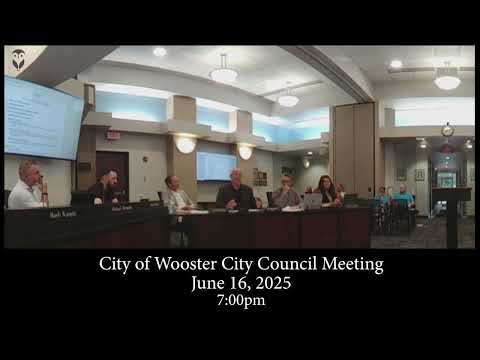
Wooster officials told the City Council on June 16 that two citizen-led petitions gathering signatures for Ohio ballot measures could carry large, uncertain effects for local government and residents.
The mayor explained that both petitions have passed an initial form review by the Ohio Attorney General and now must gather roughly 413,000 valid signatures from at least half of Ohio’s counties to reach the ballot. “I would just suggest that people do their research before signing any petition and that they consider the unintended consequences that may follow enactment of a proposed constitutional amendment,” the mayor said.
Why it matters: City staff told councilmembers that one petition seeks to abolish qualified immunity in Ohio, which the mayor said would expose a wide range of public employees and elected officials — including police, prosecutors, teachers and school administrators — to greater civil liability. The mayor cautioned that removing qualified immunity could substantially raise liability and insurance costs for cities, schools and other political subdivisions.
The second petition would eliminate taxes on real property, the mayor said, without specifying any replacement revenue source. “Everyone probably knows that public schools rely heavily on property taxes for support receiving about two thirds of that total but the remaining one third goes to the county, the city,” the mayor said, noting the city currently receives about $3,400,000 from inside millage. The mayor added that the petition “makes no provision for the replacement of those revenues.”
City staff and council members said they are monitoring related activity at the Statehouse and have reached out to state representatives for information. A city staff member identified in the meeting as Joel summarized several bills under discussion in Columbus and said the most drastic proposal gaining traction would eliminate inside millage, a change he said would be hard for local governments to absorb.
Council context: The mayor and staff framed the presentation as informational and did not urge a council position. The mayor said he would not take a formal stance in the meeting: “I am not gonna make an argument either way on the petitions themselves or the amendments.”
Next steps: Officials encouraged residents to research both measures before signing and said city leaders will continue monitoring legislation and outreach at the state level. Council and staff said they have been contacting the city’s state representatives to understand likely outcomes and potential state-level responses to revenue shortfalls.