Get Full Government Meeting Transcripts, Videos, & Alerts Forever!
Get email alerts on the Code Enforcement topic
No spam. Unsubscribe anytime.
Struthers council to amend code to restrict upholstered/indoor furniture on front porches; staff to provide monthly enforcement reports
Summary
City council members discussed amending the nuisance/unsightly property ordinance to bar indoor/upholstered furniture on exterior porches, asked code enforcement to provide monthly activity reports, and agreed to draft specific language and notification procedures.
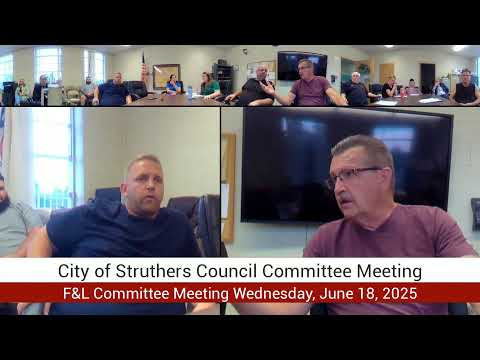
Struthers City Council members opened extended discussion on whether the city's nuisance and unsightly property rules should explicitly prohibit indoor or upholstered furniture on front porches and on improving regular reporting from code enforcement staff.
The debate centered on how to draw an enforceable line between acceptable porch use and items that "debase" neighborhood appearance, and how enforcement should be carried out. Council asked staff to draft an amendment to the city ordinance that would specifically prohibit upholstered/indoor furniture outdoors and to return recommended door-hanger and notification language for enforcement.
Council members and staff said the current ordinance allows citation when items are dilapidated or render a property unusable, but it does not explicitly say "indoor furniture." Several members said they recall prior enforcement practice targeting unusable indoor furniture on porches but acknowledged the language in the municipal code does not clearly track that practice. Code enforcement staff said crews historically used the existing language to cite visibly dilapidated items but that clarity in the ordinance would reduce subjective enforcement disputes and make expectations clearer for residents.
Members also discussed how notices are served. Under current practice described at the meeting, notice is considered properly served if posted on the front door or conspicuous location, handed to the property owner, or left with a person of suitable age at the owner's usual residence; mailing is not currently authorized. Council asked staff to prepare a door-hanger template that includes a date and a 72-hour compliance window and to add language stating that subsequent violations may not receive the same prior notice.
Council asked Billy, the code enforcement staff member who attends meetings, to begin producing a monthly enforcement report showing numbers of door tags, letters, administrative citations, follow-up results and contact attempts. Billy agreed to provide a monthly summary of the previous month’s activity in the first week of the following month.
Councilors also raised process and resourcing questions: how administrative fines relate to program funding, whether prior technology subscriptions (iWORKS) were replaced by a lower-cost cloud permit module and a locally built tracking program, and whether consolidated staffing changes from past administrations affected enforcement capacity. Councilors requested those staffing and funding implications be included in staff follow-ups.
Council directed staff to draft ordinance language to bar upholstered/indoor furniture from exterior porches, prepare the door-hanger template and notification procedure, and begin monthly reporting on code enforcement actions. No formal ordinance vote was taken during the meeting; members agreed to return the draft language for later action.