Get Full Government Meeting Transcripts, Videos, & Alerts Forever!
Get email alerts on the Rap Tax Allocations topic
No spam. Unsubscribe anytime.
Cedar City advisory panel recommends RAP Tax awards, pushes SUU consolidation and Cedar residency rule to council
Summary
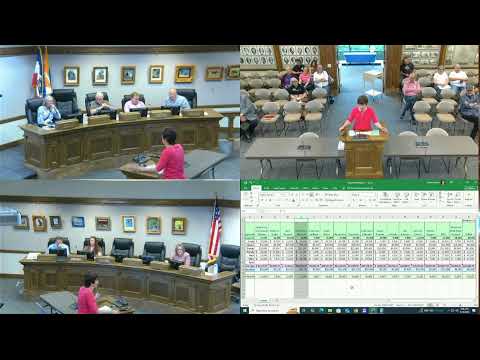
The Cedar City RAP Tax advisory panel finalized funding recommendations for local arts groups and voted unanimously to forward them to City Council, recommending that Southern Utah University (SUU) consolidate multiple campus applications and that council consider tightening residency requirements for applicants.
The Cedar City RAP Tax advisory panel voted unanimously to forward its recommended allocations for cultural groups to the Cedar City Council, recommending several adjustments including denying a separate request from SUU’s Satellite Salon unless it is consolidated under SUU’s single application.
The panel chair said the group would "arm wrestle" differences then arrive at a compromise that will go to the city council; Ellen will represent the panel at the council work meeting scheduled for July 2. The panel completed a first-pass budget, rounded awards to whole-dollar amounts and then moved the recommendation.
The advisory panel’s recommendation matters because the RAP Tax funds are a locally levied revenue stream meant to support Cedar City arts, cultural and tourism programs; the panel’s package will be a formal recommendation for council approval and affects next-year operating funds for many nonprofit and university-affiliated arts groups.
Panel members debated requests item-by-item, agreeing to average individual members’ suggested awards except where members flagged specific concerns. On Southern Utah University (SUU) requests, several panel members objected to Satellite Salon’s separate application, calling it a departmental program rather than a community-facing entity and recommending $0 for Satellite Salon unless it is submitted as part of SUU’s consolidated nonprofit application. Panel members said that requirement would encourage SUU to consolidate its SUU-related arts funding under a single 501(c)(3) umbrella.
Sarah Penny, Arts Council representative, told the panel, "we give these mini grants of $500 so he could apply for 1 of those in August and we'd probably give it to him depending on how many applications we have that year," and encouraged the Satellite Salon applicant to seek an Arts Council mini-grant or a cooperative arrangement with the school district.
The panel also discussed geographic eligibility. A member suggested asking City Council to amend the RAP Tax ordinance to require applicants be based in Cedar City; other members warned about edge cases where an organization’s corporate registration or board members are outside the city even though most activity and benefit occur in Cedar City.
On specific recommendations the panel recorded (first-pass figures; all recommendations were forwarded to council as a package): American Crossroads Theater — recommended $20,500; Quilters Guild — recommended $9,100; Children’s Musical Theatre — recommended $24,000; Music Arts — recommended $21,400; Livestock (annual event) — recommended $21,724; Impact Theater — recommended $8,100; Jubilo — recommended $5,100; Jazz Alliance — recommended $3,000; Johnson Center — recommended $13,700; Southern Utah Book Festival — recommended $8,300; SUMA (SUU) — recommended $45,000. Several other awards were described as "at or near their ask" in the panel summary; the advisory package notes that council approval is required before funds are final.
Panel members also rebalanced small increments (for example, moving $500 from American Crossroads Theater to Cedar City Community Theatre to reduce a growing disparity between the two theaters), and suggested follow-up clarifications staff should provide to council about last year’s awards and the panel’s rounding process. The panel made clear it was a recommending body and that City Council has final authority to approve the RAP Tax allocations and any ordinance changes.
The panel ended with a formal motion to forward the recommendation to City Council and a unanimous voice vote in favor. The panel recorded no opposing votes or abstentions and adjourned following the vote.
The City Council work meeting where the recommendation will be considered is scheduled for July 2; Ellen was named by the panel to represent the advisory panel at that meeting.