Get Full Government Meeting Transcripts, Videos, & Alerts Forever!
Get email alerts on the State Cpa Bills topic
No spam. Unsubscribe anytime.
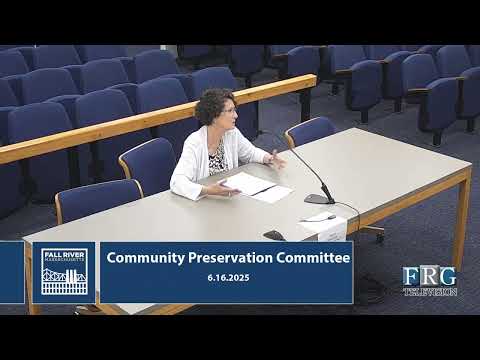
Fall River City CPC reviews state CPA bills, considers letters of support
Summary
Committee members reviewed a packet of state bills affecting the Community Preservation Act (CPA), discussed potential impacts including registry fees and ADA-related funding, and asked staff to circulate the proposals and hearing dates so members can decide whether to submit letters of support.
Members of the Community Preservation Committee in Fall River City reviewed proposed state legislation Thursday that would change aspects of the Community Preservation Act (CPA) and related procedures, and discussed whether the committee should submit letters of support on selected items.
A committee member said steering committee materials had been circulated that summarize what the state is proposing for CPA. “It was nice that you guys have this in your hand to see what's going on instead of having something passed that we didn't have a chance to speak on it,” the member said.
Committee members and staff discussed specific items in the packet, including a proposed increase to the CPA registry fee (from $40 to $80 as noted in the materials), an expansion of eligible categories (including ADA compliance), and possible implications tied to federal program changes such as FEMA policy adjustments. One member urged colleagues to review the bills quickly because some hearings had already been scheduled and “some of these will be heard before August.”
The committee discussed practical next steps: staff agreed to forward updates and circulate hearing dates to members who were not present, and members proposed adding a future agenda item to prepare template letters of support and vote on which bills the committee should endorse. “If you could send it to the members who aren't here, and then we could just put an agenda item on the next meeting,” one member said. Another asked whether the committee could provide a ranked list of priorities to staff for drafting letters.
Committee members cautioned that some proposals may have broader state-level implications and that individual communities would still make local implementation decisions if state law changes. Several members said they would contact state representatives directly when hearings were imminent. No formal letters of support were authorized at the June meeting; members directed staff to circulate materials and to place the matter on the August agenda for possible formal action.