Get Full Government Meeting Transcripts, Videos, & Alerts Forever!
Get email alerts on the Municipal Budget Health Insurance topic
No spam. Unsubscribe anytime.
Fall River plans audit, transfer to plug roughly $2.3M health-insurance shortfall in FY2026 budget
Summary
Interim Finance Director Emily Arp and Gallagher consultants told the City Council Committee on Finance the employer health trust fund faces a multi-year shortfall; the administration proposes a $2.0M transfer and a detailed audit while increasing FY2026 health appropriations.
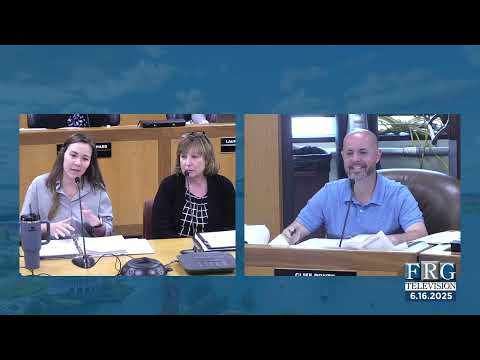
Interim Finance Director Emily Arp told the Fall River City Council Committee on Finance on June 11 that revised FY2026 health-insurance estimates require changes to how the city funds its employer trust fund.
Arp said the administration proposed using an anticipated $2.0 million transfer to raise the trust fund balance while ordering a detailed audit of the employer trust fund to “make sure that everything in the account is operating the way it should.” Diane LaFlaiche, a consultant with Gallagher, told the committee Gallagher’s projection for plan cost increases was 8.5 percent.
The committee heard repeated testimony that the employer trust fund has been underfunded in prior years and that the current shortfall was the result. “Over the years what has happened with our trust fund is that the city didn’t put enough into [the] trust fund,” said a council member during discussion, noting the gap has been discussed at multiple meetings. Arp said the combination of planned appropriations and the proposed $2.0 million transfer would put the fund balance near $2.7 million in a June 30 projection, but that the council’s target should be far higher.
Councilors and staff described a target employer-trust balance equal to roughly three months of claims plus incurred-but-not-reported (IBNR) reserves. Councilor Dionne asked for the recommended balance for claims; staff calculated three months of claims at about $10.5 million and IBNR at about $2.1 million, producing a target around $12.6 million. Arp said it will likely take several fiscal years and recurring appropriations — not one-time transfers — to rebuild the trust fund toward that goal.
Arp and Gallagher’s consultants repeatedly emphasized two near-term steps: a more detailed, forensic-style audit of trust-fund accounting and revenue flows; and continuing to increase the annual general-fund appropriation for health costs. “The first step, the biggest step, is the audit,” Arp said. She told the committee the audit will check that expenses that should be charged to the trust fund are charged there, and that revenues due to the trust fund are being posted correctly.
Diane LaFlaiche of Gallagher confirmed the firm’s projection of an 8.5 percent increase in employer costs for FY2026 and endorsed the administration’s use of conservative assumptions for rebates and stop-loss projections. Gallagher and city staff said prescription-rebate income is variable and is currently estimated conservatively in the FY2026 projections.
Councilors pressed administration staff on sustainability. Arp said the administration increased the FY2026 health appropriation by more than the 8.5 percent projected increase — describing a 14 percent step in total when previous one-time adjustments are included — and said the plan is to build the appropriation gradually over several years while auditing and reconciling outside agency contributions and other revenue flows. She acknowledged that using the existing fund balance is not a sustainable, long-term strategy but said it would cover FY2026 if the council approves the transfer under consideration.
Committee action: the committee voted to refer the FY2026 appropriation order to the full City Council for consideration. The committee discussion and the referral followed the administration’s resubmission of the budget and the consultants’ presentation of revised health-cost estimates.
What’s next: the audit scope and the timing of the proposed $2.0 million transfer are both dependent on council approval; staff told the committee they will return with audit findings and a five-year projection that includes trust-fund rebuilding scenarios if the transfer and budget are approved.