Get Full Government Meeting Transcripts, Videos, & Alerts Forever!
Get email alerts on the Community Development Block Grant topic
No spam. Unsubscribe anytime.
Council adopts HUD five‑year consolidated plan and FY25 annual action plan; staff outlines programs and apparent budget figures
Summary
City staff presented the HUD 2025–2029 consolidated plan and the FY2025 annual action plan, listing housing rehab loans, nonprofit grants and park improvements; council unanimously approved the plan after a public hearing.
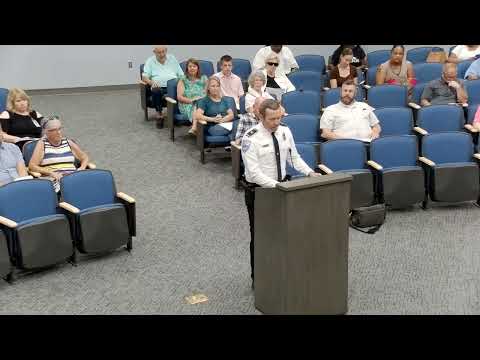
The Hickory City Council adopted the U.S. Department of Housing and Urban Development five‑year consolidated plan (2025–2029) and the FY2025 Community Development Block Grant (CDBG) annual action plan on June 17 after a public hearing and presentation by Community Development Specialist Annabeth Walker.
Walker said the consolidated plan sets the city’s roadmap for CDBG spending over five years and that the city engaged nonprofit providers and held neighborhood meetings in January and February to identify needs. "The consolidated plan will provide a road map for the city's spending of community development block grant funds over the next 5 years," Walker said.
Walker listed notable current and proposed projects: five owner‑occupied housing rehabilitation loans for households at or below 80% of area median income; grants to nine nonprofit agencies ranging from $5,000 to $7,500; rehabilitation work at Cliff Teague Park; and a single microenterprise grant. She said the city is part of the uniform HOME consortium for HOME funds covering a four‑county area and that a significant share of HOME resources will be used in Hickory.
Walker provided budget figures as presented to council: she said the city will receive approximately "$303,331,589 dollars in 2025 through the allocation directly from HUD," and that the city will budget approximately $45,000 in program income, "for a total budget of $376,589." Walker also described a proposed budget allocation including public infrastructure ($115,000), housing rehab and purchase programs ($125,000), public services ($60,000), program administration ($63,000), contingency ($9,589) and small business assistance ($4,000).
Council members asked for a brief clarification and Walker confirmed that the housing rehabilitation funds are specifically for owner‑occupied units.
The public hearing drew no speakers for or against the plan; the council voted unanimously to approve the consolidated plan and the annual action plan.
Next steps: Staff will administer the FY2025 CDBG projects and present required reports to HUD and the council; neighborhood and nonprofit partners will receive funding as outlined in the action plan.