Get Full Government Meeting Transcripts, Videos, & Alerts Forever!
Get email alerts on the Charter Review topic
No spam. Unsubscribe anytime.
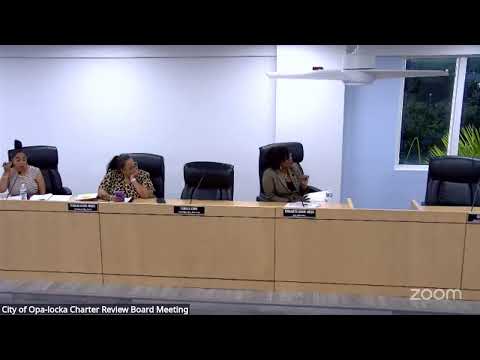
Opa-locka charter review board elects chair and vice chair, begins review of city charter
Summary
At its first meeting the advisory board elected Nikisha as chair and Veronica Williams as vice chair, heard a legal overview of the charter from the city attorney and agreed to meet monthly to draft recommendations for the City Commission.
The City of Opa-locka Charter Review Board elected Nikisha as chair and Veronica Williams as vice chair and opened a line-by-line review of the city charter at its first meeting. The board — an advisory panel created by ordinance — also agreed to meet monthly to continue its work and set a tentative July meeting date.
City Attorney Norris Weeks told the board the panel was created by ordinance 2021-14 and described the board’s advisory role, voting requirements and deadlines. "This charter review board was established by ordinance 2021-14," Weeks said, and he emphasized that the board may forward proposed amendments to the city commission only if adopted by an affirmative majority of board members.
The board’s work is advisory to the City Commission: the charter requires a majority of the board (three of the five appointed voting members) to approve any amendment before it can be submitted. Weeks walked the members through key provisions the board will likely consider, including the citizens’ bill of rights (open inspection of records; the right to notice and to be heard), term and election rules for the mayor and commissioners, limits on disposition of parkland, and procedural requirements such as Robert’s Rules of Order for meetings. He also noted timetable and administrative requirements set in the charter: meetings must be posted at least 48 hours in advance, the clerk should make summary meeting records available (minutes within 30 days), and the board must submit recommendations to the City Commission within 120 days after passage of a recommendation.
On procedure, the board appointed leadership by voice votes. Nikisha nominated herself for chair and was seconded; members voted "aye" with no recorded opposition. Veronica Williams was nominated and accepted the vice-chair position and likewise received unanimous voice approval. The board clarified that a quorum is three members and that any recommendation to the City Commission requires an affirmative vote by a majority of board members.
Members reviewed specific charter language highlighted by Weeks: the charter frames the city’s government as a commission-manager form of government, sets compensation and term rules for elected officials (the charter specifies compensation for mayor and commissioners at $500 per month and an eight‑year limit on consecutive service), and assigns duties to the city manager, city clerk and city attorney (appointments and removal thresholds require at least three affirmative votes). Weeks also cited Florida’s public‑records requirements, noting the charter’s reference to Florida Statutes chapter 119 for open-records provisions.
The board discussed scheduling and logistics before closing. Members agreed to hold regular meetings on the first Thursday of each month at 6:30 p.m., with a tentative exception for July (the board pinned a July meeting on July 24 at 6:30 p.m.). The clerk and staff attendance, notice posting and availability of summary notes were confirmed.
Two members of the public used the meeting’s public‑comment period to thank the board for serving: Natasha Irvin and Charlene Bass spoke briefly in support of the board’s work. No substantive charter proposals were filed during the meeting; Weeks told the board he would resume the charter walkthrough at the next session.
Next steps: the board will continue its review at the next scheduled meeting and may receive written or in‑person recommendations from city electors; any proposal the board wishes to forward to the City Commission must be approved by a majority of board members and transmitted through the clerk within the charter’s timelines.