Get Full Government Meeting Transcripts, Videos, & Alerts Forever!
Get email alerts on the Immigration Ice Actions Hearing topic
No spam. Unsubscribe anytime.
Assembly declines to authorize public‑services committee hearing on recent ICE actions after heated debate
Summary
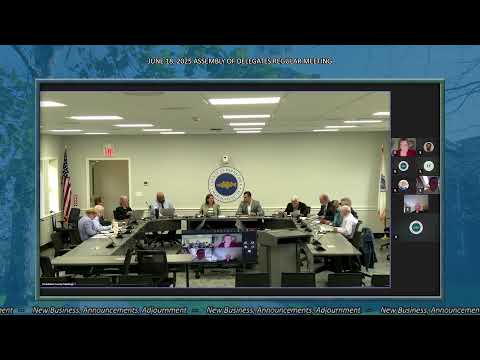
The Assembly of Delegates debated and ultimately voted not to authorize its public‑services committee to hold a hearing on recent ICE enforcement actions affecting Cape Cod residents.
The Assembly of Delegates debated whether to authorize its standing Committee on Public Services to hold a hearing on recent U.S. Immigration and Customs Enforcement (ICE) actions affecting Cape Cod residents. After extended discussion and competing proposals, the assembly did not authorize the committee to schedule a hearing.
Deputy Speaker Brandy Potash’s office brought the request to consider a hearing after federal reports and local concerns about ICE activity and a federal designation that called Barnstable County a “sanctuary” jurisdiction. Delegates who supported a hearing said the assembly should invite federal, state and local officials and immigration advocates to explain processes and to provide clear information to frightened residents; opponents warned a public hearing could become politically charged and might not change federal enforcement actions.
Assembly delegates debated venue and scope. Some, including Deputy Speaker Gessen, urged a committee hearing that would invite the U.S. Attorney’s Office, ICE representatives, local law‑enforcement leaders, legal aid organizations and the county Human Rights Commission so the public could receive direct answers about protections and processes. Gessen said the assembly should ask officials to “explain what you mean by sanctuary status” and to clarify who is being targeted and what protections exist.
Other delegates recommended a narrower route: asking the county’s Human Rights Commission to collect information and prepare an informational briefing. Delegate Frederickson argued the Human Rights Commission already has the “tentacles in our communities” and could reduce fear among residents through outreach and education rather than a full assembly hearing.
A motion to authorize the Committee on Public Services to hold a hearing was made and discussed on the floor. Delegates proposed an amendment to limit the committee meeting to a closed planning session (no public comment) to prepare a structured agenda for a later public hearing; that amendment failed. The main motion to authorize a committee hearing was then put to a roll‑call vote and failed.
Delegates who spoke on both sides emphasized the need for reliable information for constituents. Supporters argued a committee hearing could invite federal and local officials to answer specific questions; opponents said federal enforcement policies are determined outside the county’s authority and that a public meeting risked inflaming emotions without producing actionable county authority. No ordinance or resolution was adopted; the assembly did not direct a committee to schedule a public forum at this time.