Get email alerts on the Private Well Pfas Testing topic
No spam. Unsubscribe anytime.
Barnstable County launches volunteer PFAS private‑well testing program funded by ARPA
Summary
Barnstable County health officials and contractor Tetra Tech outlined a countywide, ARPA‑funded volunteer program to provide baseline PFAS and standard drinking‑water testing for private wells across Cape Cod, with roughly 270 samples to be analyzed initially and results posted anonymously.
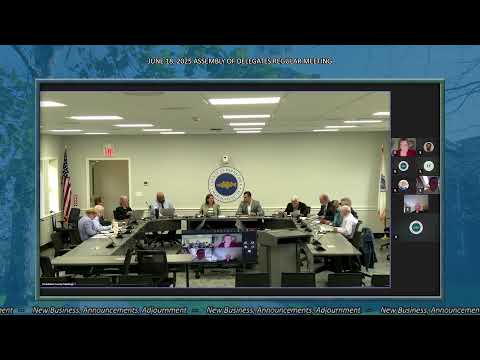
Barnstable County on Wednesday described a new, ARPA‑funded volunteer program to test private wells for PFAS and other common drinking‑water contaminants across Cape Cod.
County officials said the program is designed to give homeowners a baseline of water‑quality data and to identify any areas that may need follow‑up by MassDEP or by local health agents. The county and its contractor, Tetra Tech, plan an initial round of about 270 homeowner samples — held to about 300 total ARPA‑funded analyses with roughly 10% reserved for follow‑ups — and will post an anonymous countywide report when the work is complete.
“This is a volunteer program, free to the public,” Jay Gardner, director of Health and Environment for Barnstable County, told the Assembly of Delegates. Gardner and Dr. Katie O’Neil, program manager for shared services, said the effort aims to reach towns across the Cape and to work closely with local health agents so residents are not surprised by results or uncertain how to proceed.
Bill Phelps, a licensed site professional and project manager with contractor Tetra Tech, described logistics and quality controls: residents will apply online (or by phone), receive laboratory‑supplied glassware and instructions, and either drop samples at scheduled town collection points or have Tetra Tech collect them. Phelps said the program will “make every effort to kind of make this an anonymous program” while noting that, because public‑funded lab results may be subject to public records requests, residents will sign a release acknowledging that possibility.
County and contractor staff said the ARPA allocation supports roughly 300 samples in total, with about 270 to be allocated on a first‑come, first‑served basis and approximately 10% reserved for quality‑control resamples. The effort includes outreach materials in multiple languages, coordination with town health agents, and lab procedures to avoid sample contamination — for PFAS testing, teams will follow strict handling protocols because results are measured at parts‑per‑trillion concentrations.
Officials explained how regulators will respond if elevated PFAS levels are found. According to the county briefing, MassDEP treats 20 parts per trillion as the drinking‑water guideline threshold and treats 90 parts per trillion as an “imminent hazard” level that triggers agency intervention; MassDEP could install point‑of‑entry treatment systems and pursue source investigation where appropriate. Phelps told delegates the agency told the county it would install and maintain treatment for about two years for households where imminent‑hazard levels are confirmed and households are unwilling or unable to resolve the problem.
Delegate O’Malley asked about homeowner reluctance to test before a real‑estate sale; Phelps and county staff said the program will provide information about treatment and financing options and will offer referrals and technical interpretation of lab reports. County staff said a final, anonymized report will be posted on the county website and that they expect to complete sampling and analysis and publish a report by the end of 2025.
The program targets private wells only; the county said its estimate of about 14,000 private wells on Cape Cod comes from state well registration databases and town records. County officials emphasized that the program is a baseline effort intended to expand understanding of local exposure patterns and to provide residents with clear, lab‑backed results and referral guidance.
AI generated
The text on this page is AI generated. Summaries, highlights, analysis, and video transcripts are all produced from the original source material.
AI can make mistakes, so if you spot one, and we will fix it for everyone.
Note: the source content is unaltered by us. Any content source we link to, be it a video, an audio recording, or a document, is presented exactly as its publisher released it. That publisher is usually a government body, sometimes an individual official or another organisation.