Get Full Government Meeting Transcripts, Videos, & Alerts Forever!
Get email alerts on the Customer Service topic
No spam. Unsubscribe anytime.
Panama City commissioners press staff for centralized 311-style service, better ticket management and clearer checklists
Summary
At a virtual commission workshop, elected officials urged the city to standardize public-facing documentation, pursue a 311/call-center model and fix ticketing processes in CityWorks and citizen-reporting tools so service requests do not backlog or go unclosed.
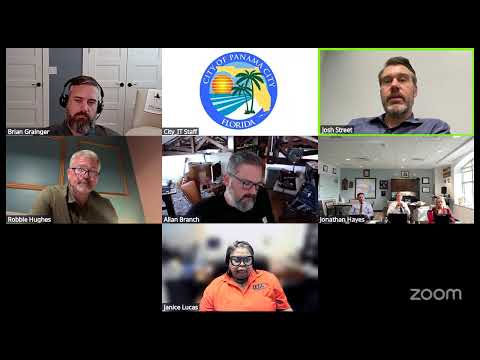
Commissioner Hughes urged the Panama City Commission at a virtual workshop to standardize public-facing documentation and create repeatable responses for residents, saying inconsistent verbal replies often cause confusion and complaints.
The commissioners said clearer checklists, better use of customer‑service software and a single point of contact for incoming calls could reduce backlog, make responses more equitable and free departmental staff to focus on fieldwork. The discussion covered SeeClickFix-style reporting, the CityWorks work-order system, a potential 311 call number and emerging AI plan-review software.
Why it matters: commissioners and staff said residents and businesses routinely call commissioners when they cannot get consistent or timely answers from city departments. That creates duplicate reporting, unclosed tickets and uneven service depending on which staff member answers the phone.
Commissioner Hughes said documentation could be released incrementally: “Their checklist included, like, the affidavit. It was a PDF. It had the checklist. It had the affidavit. It had all the forms on it where you had 1 thing.” He proposed staff publish one checklist at a time and maintain a rolling update schedule so answers are consistent across departments.
City Manager Jonathan Hayes described recent and planned technical work that bears on the problem. He said CityWorks implementation began in 2018, paused after Hurricane Michael and then stalled during COVID, and that the city later reduced annual renewal costs from about $140,000 to just over $80,000 by trimming seats. “They're launching City Works is launching a new mobile app that's that's more cell phone friendly,” Hayes said, describing a forthcoming app that could reduce reliance on iPads in the field.
Staff and commissioners noted multiple specific failure modes: SeeClickFix reports that were never closed; multiple callers logging the same water leak as separate tickets; and a lack of a single person or team responsible for merging or purging redundant tickets. Brian (IT staff) recommended pulling phone data to identify which departments have the highest rate of missed calls before choosing a technology or staffing fix.
Commissioner Granger and others pointed to examples in neighboring jurisdictions. Pensacola’s 311 program and Lynn Haven’s garbage-truck video system (which can auto-generate reports) were cited as models to review. Commissioners also discussed offloading routine phone handling to a central call center like the tax collector’s model so departmental admins can focus on in-person customers.
The group discussed software options that range from better process documentation to full managed services and AI tools. Commissioners mentioned blitzpermits.ai and other AI plan-review tools as potential ways to speed permitting and reduce staff review time if the city wishes to invest in automation.
Direction and next steps: commissioners asked staff to return with (1) data on missed phone calls and peak problem departments; (2) demonstrations or proposals for a centralized phone/call-center model (including possible 311 service); (3) an estimate from software vendors or managed services for meter- and ticket-management and for lifecycle replacement; and (4) a short plan for assigning a staff member or role responsible for ticket hygiene (merging, purging and closing requests). The commission scheduled the next virtual workshop for July 7 and asked staff to bring demos and cost estimates then.
Ending: Commissioners framed the effort as both technical and managerial: technology can reduce friction, but someone on staff must be accountable for keeping the ticket list clean and ensuring follow-up. The commission left the conversation with a list of specific staff deliverables and a target date to return with proposals and data.