Get Full Government Meeting Transcripts, Videos, & Alerts Forever!
Get email alerts on the Blue Bikes Operator Contract topic
No spam. Unsubscribe anytime.
City committee reviews request for 10-year Bluebikes operator contract starting 2026
Summary
The Boston City Council committee heard from Boston Bikes and Streets Cabinet staff about a proposed up-to-10-year contract for the Bluebikes operator, the current regional RFP schedule, funding and performance measures. No final council vote was recorded at the hearing.
Councilor Sharon Durkin, District 8 city councilor and chair of the Boston City Council Committee on Planning, Development, and Transportation, opened a June 18 hearing on an order (docket 0648) seeking the council’s permission for the city to enter a contract of up to 10 years for an operator to run the municipal bike‑share system, Bluebikes, with a contract term proposed to begin in 2026.
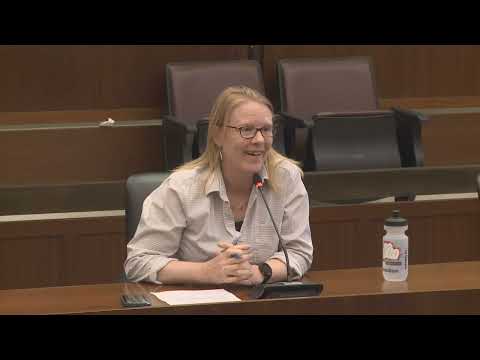
The request matters because Massachusetts law requires council approval for city contracts longer than three years, and a multi‑year contract is intended to give an operator stability to invest in system operations, equipment and partnerships. Kim Fultz, director of Boston Bikes in the Streets Cabinet, told the committee that long term agreements have helped attract private capital and title sponsorships that support system operations.
"The order is required or your approval is required for a contract of this type that's longer than 3 years," Fultz said. She described the city’s prior experience: Blue Cross Blue Shield of Massachusetts provided an $18 million title sponsorship in 2018 and renewed for $28 million in 2023. Fultz said the contract would be structured like the current agreement: a revenue‑sharing model in which user fees and sponsorship revenue are split between an operator and the municipal owners, reducing reliance on municipal operating subsidies.
Fultz and committee members described ownership and operations: the city owns Bluebikes stations and the bikes assigned to Boston stations; operators perform day‑to‑day maintenance and rebalancing. The current operating arrangement is with Lyft Bikes and Scooters (which acquired Motivate); Motivate employees who perform on‑street maintenance are unionized, Fultz said.
Committee members asked how the city holds operators to performance standards. Fultz said officials plan to strengthen key performance indicators in the next contract and add automatic financial penalties for missed standards such as rebalancing. "When you've got those sort of automated sticks for the operator, it makes a big difference," she said. The committee was told the current procurement includes neighborhood‑level availability requirements and a target that no station remain empty or full longer than about 24 hours.
The procurement process is regional: the Metropolitan Area Planning Council issued a request for proposals on behalf of the municipalities participating in Bluebikes. Fultz said proposals were due June 30 and a bid award was expected in mid‑July, with the city’s current contract running through April of next year. She said the committee of participating municipalities (including Boston, Cambridge, Somerville, Brookline, Everett and others) evaluates proposals jointly.
Councilors pressed fiscal and operational questions: Kim Fultz said annual system revenues are roughly $8 million and that the operator currently shares 10% of revenues above a threshold with the municipalities; she said terms of revenue splits are expected to change in the new contract. On e‑bikes, Fultz said Boston owns about 700 e‑bikes and systemwide the e‑bike share is about 15 percent of the fleet. She said the city has been cautious adding e‑bikes because of cost, equity and subsidy considerations.
No formal council vote on docket 0648 was recorded during the hearing. Councilor Durkin said she planned to move the orders at the next council meeting so the city can proceed into regional contract negotiations with council backing.