Get Full Government Meeting Transcripts, Videos, & Alerts Forever!
Get email alerts on the Open Government topic
No spam. Unsubscribe anytime.
House approves change extending grievance window for executive session records to 90 days
Summary
House Bill 36 38 (as amended) allows grievances alleging violations of public meetings law for executive sessions to be filed up to 90 days after records from those sessions are made public, extending the window to account for delayed public disclosure.
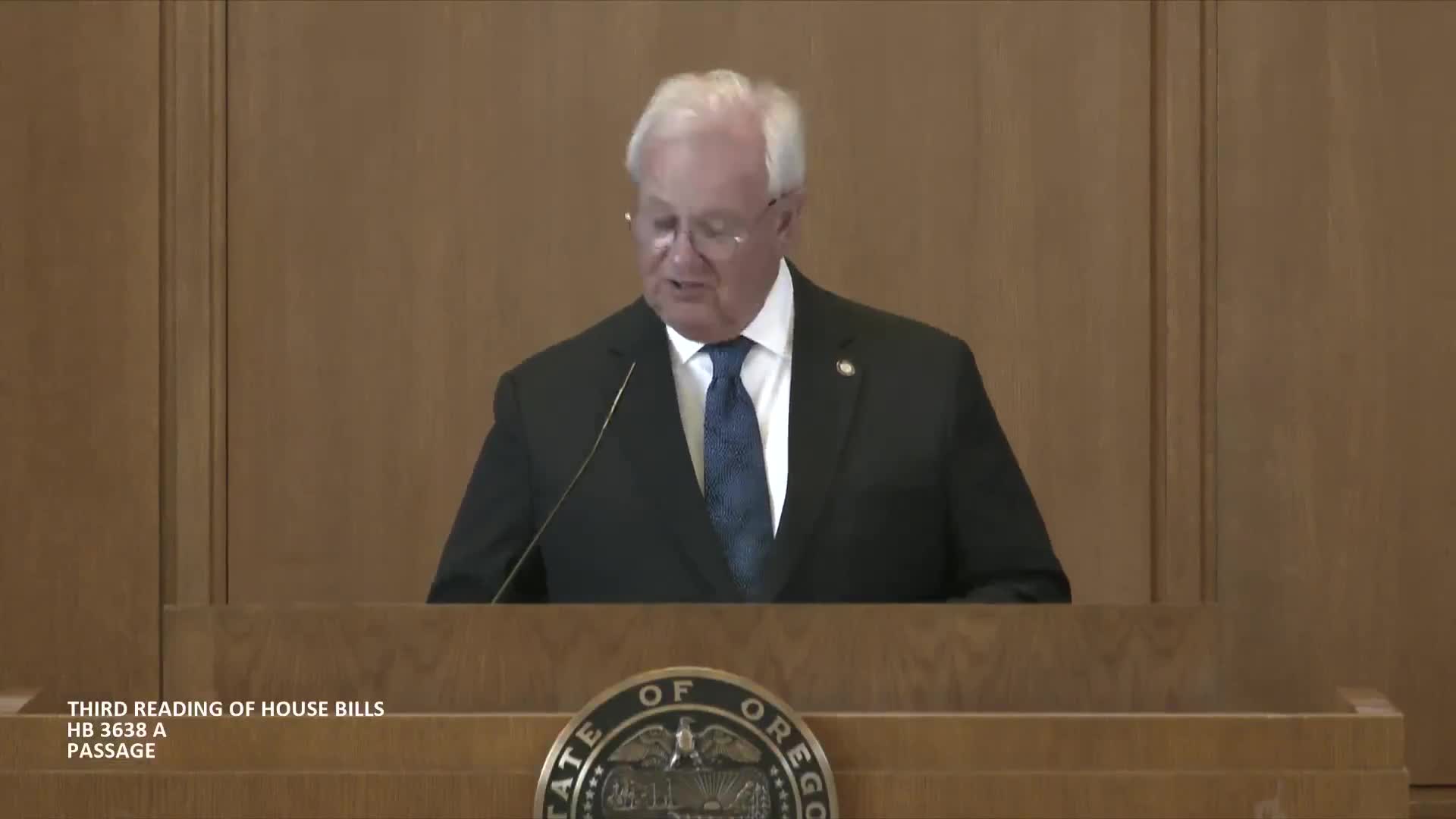
The Oregon House on June 17 passed House Bill 36 38 A, which modifies the timeline for filing grievances alleging violations of the public meetings law for executive sessions.
What changed: sponsors said the previous 30-day window to file grievances was too short because executive session records are often not public immediately. The amended measure allows grievances related to executive sessions to be filed up to 90 days after the records are made public.
Sponsor rationale: Representative Helfrich, who presented the bill, said the change "ensures accountability without burdening our agencies" and was developed after discussion with stakeholders, public agencies and transparency advocates. "This bill isn't just a technical fix, it's about protecting public's right to know," Helfrich said.
Opposition concerns: Representative Walters, a former mayor and city councilor, said some executive session discussions — for example legal consultations with counsel — need confidentiality and that broadening public access could have chilling effects on necessary internal communications. "Opening that up to the public record, I find concerning for our local officials," Walters said.
Outcome: the House voted and "House bill 36 38 having received the constitution majority is declared passed," according to the clerk.
Implementation notes: the floor record shows the change arose from stakeholder negotiations and a unanimous -2 amendment adopted in the House Rules Committee, but the text places the filing trigger tied to the date records are made public, not the date of the executive session itself.