Get Full Government Meeting Transcripts, Videos, & Alerts Forever!
Get email alerts on the Groundwater Contamination topic
No spam. Unsubscribe anytime.
Oregon updates groundwater response framework with green/yellow/red system to tackle contamination
Summary
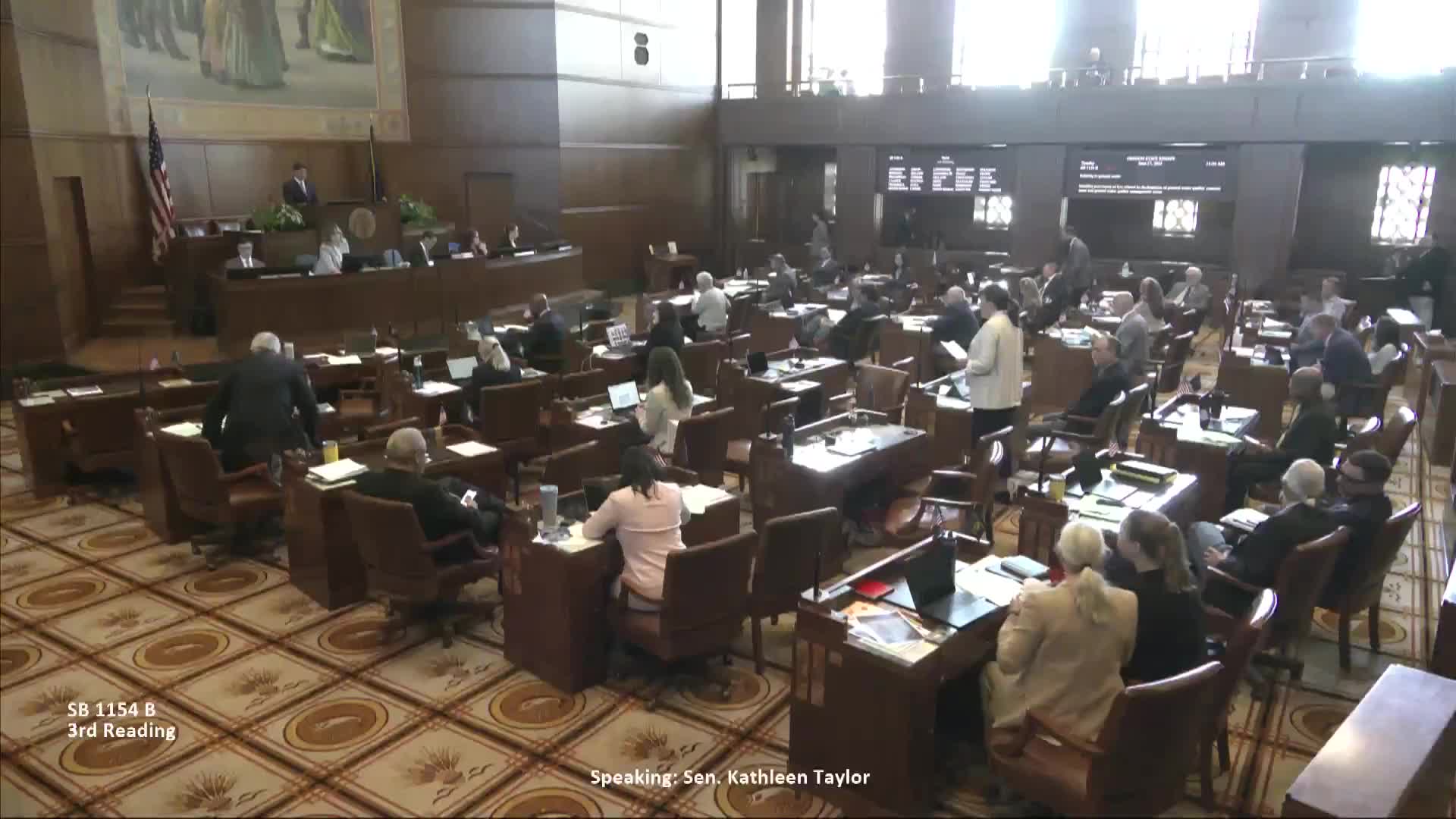
The Senate passed SB 1154 B, establishing a tiered (green/yellow/red) response framework for groundwater contamination, granting the Environmental Quality Commission new tools for coordination and voluntary remediation plans, and beefening state planning authority for serious contamination events.
The Oregon Senate on Tuesday passed Senate Bill 1154 B, a bill that modernizes the state's groundwater management approach by creating a tiered response system intended to improve prevention, coordination and, when necessary, regulatory action for contaminated groundwater.
Senator Taylor, the bill sponsor, told the Senate that the measure updates a framework originally set under the Groundwater Quality Protection Act of 1989 and establishes a green/yellow/red system. Under the bill the Environmental Quality Commission (EQC) may declare a "groundwater quality concern area" (yellow light) to convene agencies and affected communities to develop voluntary response plans; a "groundwater quality management area" (red light) may be declared when contamination threatens safe drinking water standards and includes a set of specified agency authorities for response.
Taylor said the bill was developed through a governor-led stakeholder work group and noted the measure was crafted to allow ongoing remediation efforts — including long-standing work in the Lower Umatilla Basin groundwater management area — to continue. Senator Golden, speaking in support, emphasized prevention, saying the policy "is really a step in the right direction in terms of preventing this really serious, natural resource problem in parts of our state." Golden also noted stakeholders had negotiated removal of some regulatory restrictions at the red stage during deliberations.
Senator Nash said the Lower Umatilla Basin (La Guama) was intentionally withdrawn from this bill's text and that he would vote no because of ongoing local remediation efforts he felt should remain guided by local stakeholders. The floor record shows some senators expressed concern about removing stronger regulatory tools at earlier stages; others said the bill balances the need for state coordination and respect for property rights.
The clerk recorded passage; the clerk declared SB 1154 B "having received a constitutional majority" and passed. Supporters said the bill focuses state resources on prevention and creates clearer, staged authority for agencies to respond to contamination depending on severity and risk to drinking water.
Key clarifications on the floor: the bill does not automatically confer new regulatory authority at the yellow-light stage (voluntary response) but does outline specific additional authorities when a red-light management area is declared; the bill was negotiated with substantial stakeholder input and is intended not to impede existing remediation efforts in the Lower Umatilla Basin.