Get Full Government Meeting Transcripts, Videos, & Alerts Forever!
Get email alerts on the Forest Products Tax topic
No spam. Unsubscribe anytime.
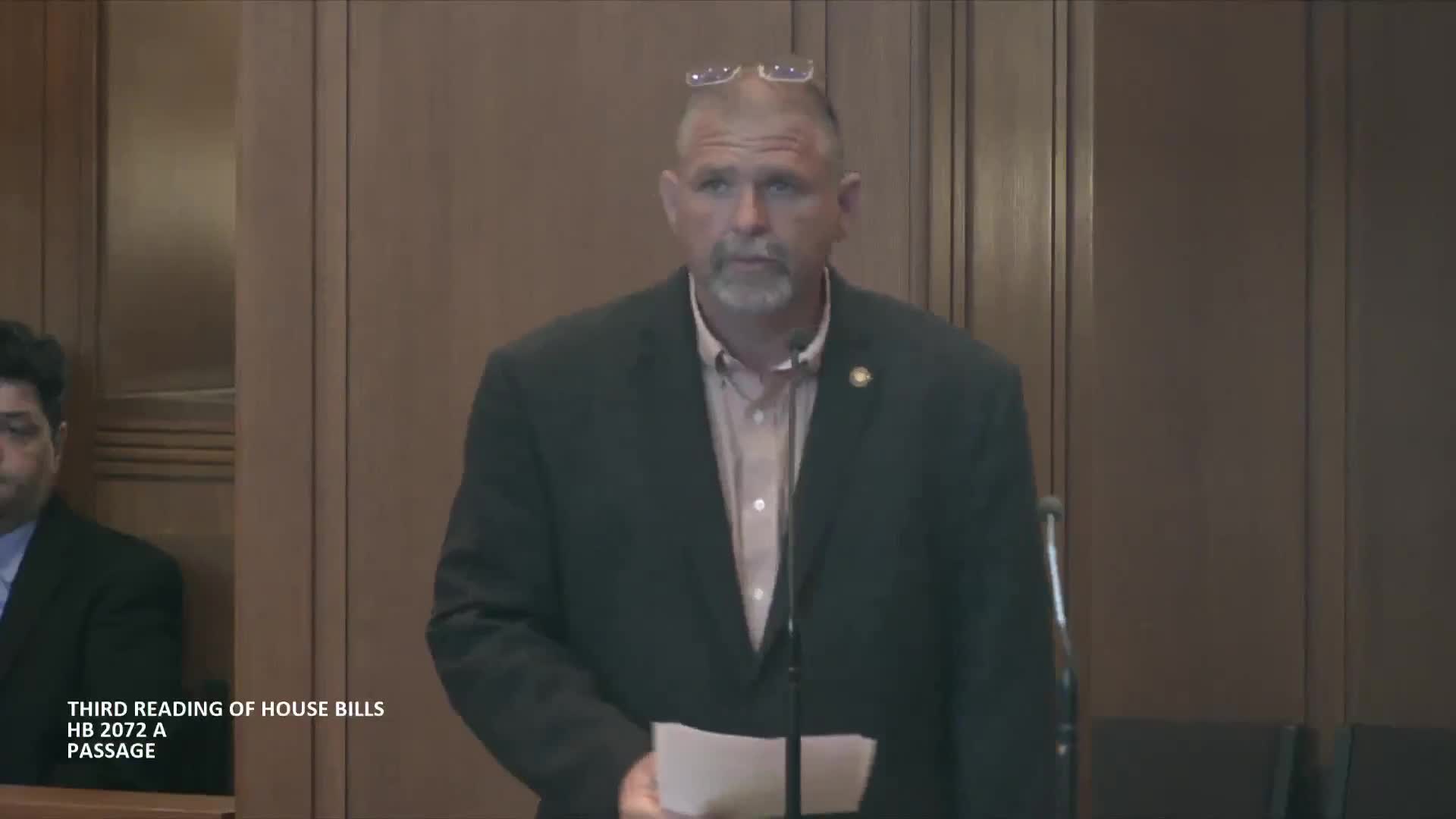
House repasses forest-products harvest tax extension to fund forestry research, wildfire response and education
Summary
House Bill 2,072 extends and adjusts components of Oregon's forest products harvest tax to maintain funding for forest research, wildfire suppression and forestry education; lawmakers debated the measure as a longstanding industry-supported revenue tool.
The Oregon House on June 17 repassed House Bill 2,072, which extends components of the forest products harvest tax for calendar years 2026 and 2027 and adjusts certain rates described by sponsors as necessary to fund forestry research, wildfire suppression and professional forestry education.
Why it matters: the tax provides revenue used by Oregon State University research labs, the Department of Forestry's administration of the Oregon Forest Practices Act, professional forestry education at OSU's College of Forestry and a mitigation fund tied to aquatic species protections.
What the bill does: Representative Owens told colleagues the bill "extends 3 components of the forest product harvest tax for the 2026 and 2027 calendar years" and that the measure "adjusts the tax rate of harvested forest products." He said the amendment keeps rates supporting forest research, fire suppression and forestry education at 90¢, 62.5¢ and 21¢ per thousand board feet, while modifying the rate tied to administration of the Forest Practices Act to meet a 40% funding target for that program; a new rate was described by the sponsor on the floor.
Debate and context: sponsors described the harvest tax as an industry-supported mechanism that has operated for decades. Representative Owens said the tax functions like a fee the industry self-imposes and that it typically secures bipartisan support.
Votes and outcome: after floor debate and a roll call, the clerk announced "House Bill 2,072, having received the constitutional majority, is declared passed." The House recorded individual votes during the roll call and opened the voting system for members to change votes before final declaration.
Implementation: the sponsor said administrative and implementation details are included in the statutory text and that a separate wildfire package (House Bill 39 40, noted on the floor) could further adjust wildfire-related rates if enacted. The Legislature’s Joint Committee on Ways and Means recommended approval of HB 2,072.