Get Full Government Meeting Transcripts, Videos, & Alerts Forever!
Get email alerts on the Rural Fire District Funding topic
No spam. Unsubscribe anytime.
House committee advances bill to create advisory committee on rural fire-district funding
Summary
The House Committee on Revenue voted to move Senate Bill 454 A to the floor with a “do pass” recommendation. The bill directs the Oregon State Fire Marshal to convene an advisory committee to study financing and revenue options for rural fire protection districts and report back to the Legislature by late 2026.
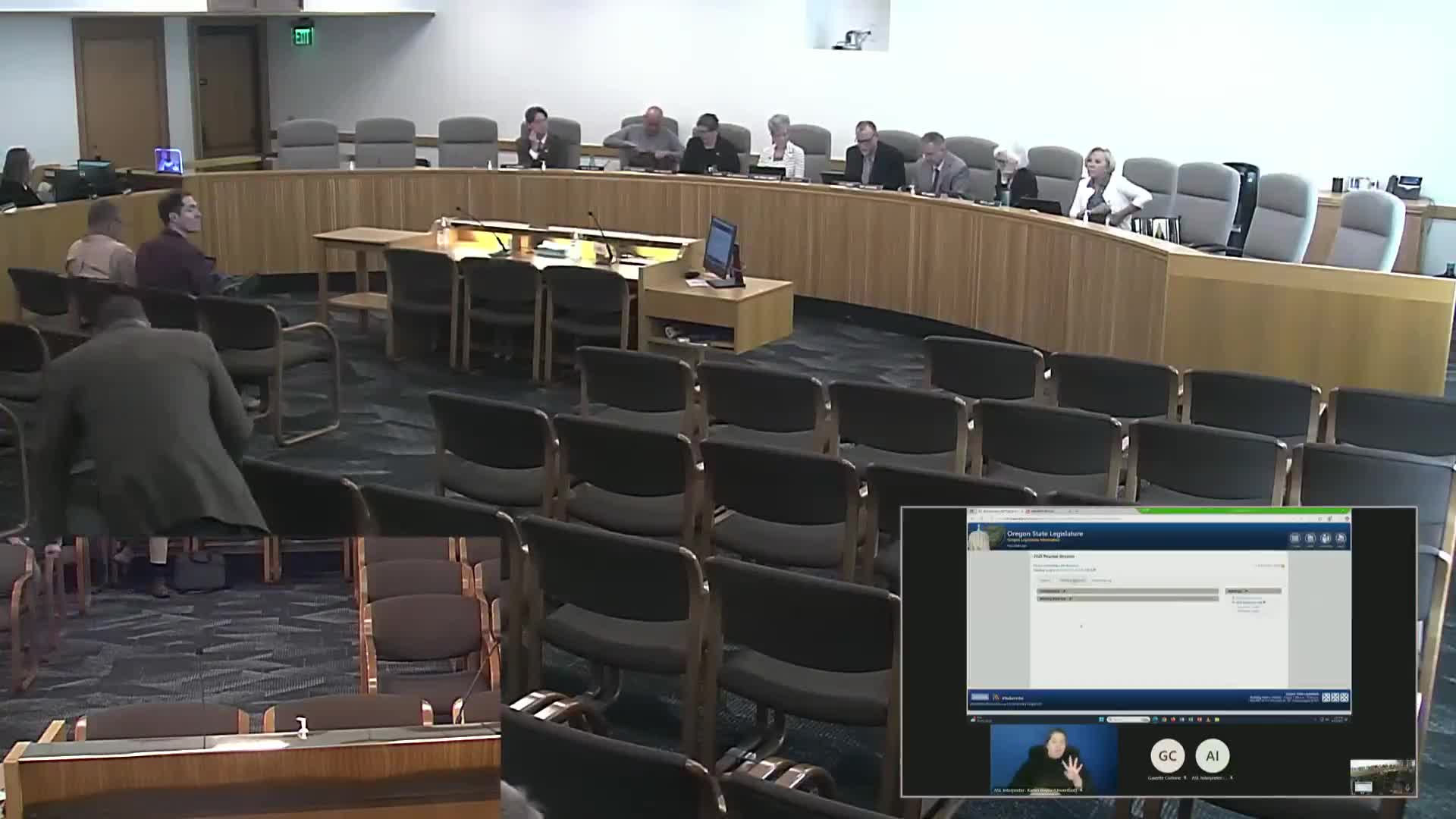
The House Committee on Revenue advanced Senate Bill 454 A on June 17, voting to move the measure to the floor with a “do pass” recommendation.
The bill would require the Department of the State Fire Marshal to form an advisory committee to study financing and revenue options available to rural fire protection districts and to provide a report to the Legislature by late 2026. Committee staff said the proposal carries no revenue impact and only a minimal fiscal effect.
Committee members described the study as necessary to address long‑running funding gaps for smaller, rural fire districts. “How are we going to fund all of these activities as we move forward in the future?” Representative Pam Marsh said during the work session. Marsh also thanked the fire marshal for supporting the effort.
Representative Emilia Smith asked whether the bill specifies the makeup of the advisory committee and whether members would be positioned to produce viable funding options. Adam Meyer, legislative director for the State Fire Marshal, said the committee would be an extension of an earlier task force and likely include associations and fire‑service groups but that exact membership has not been finalized. “We would be looking to similar types of membership for this committee, though we haven't talked exactly about what that would look like,” Meyer said.
Meyer told the committee the work is intended to be separate from large wildland‑fire funding efforts and instead focus on the varied financing challenges rural districts face, such as expanding population, different geographic needs and increased EMS responsibilities. Meyer said prior conversations identified structural barriers within existing funding mechanisms that the advisory group should examine.
The motion to move the bill to the floor with a due‑pass recommendation was made by Vice Chair Walters and, after no objections, the committee approved the motion. Representative Graeber will serve as the bill carrier in the House.
The committee closed its work session on SB 454 and moved on to other agenda items.