Get Full Government Meeting Transcripts, Videos, & Alerts Forever!
Get email alerts on the Stadium Bonding topic
No spam. Unsubscribe anytime.
Oregon House approves bill to enable privately backed financing for proposed MLB stadium in Portland
Summary
The Oregon House passed Senate Bill 110, raising caps and adjusting the financing framework to support construction of a proposed Major League Baseball stadium in Portland using privately secured bonds and projected payroll-related revenues.
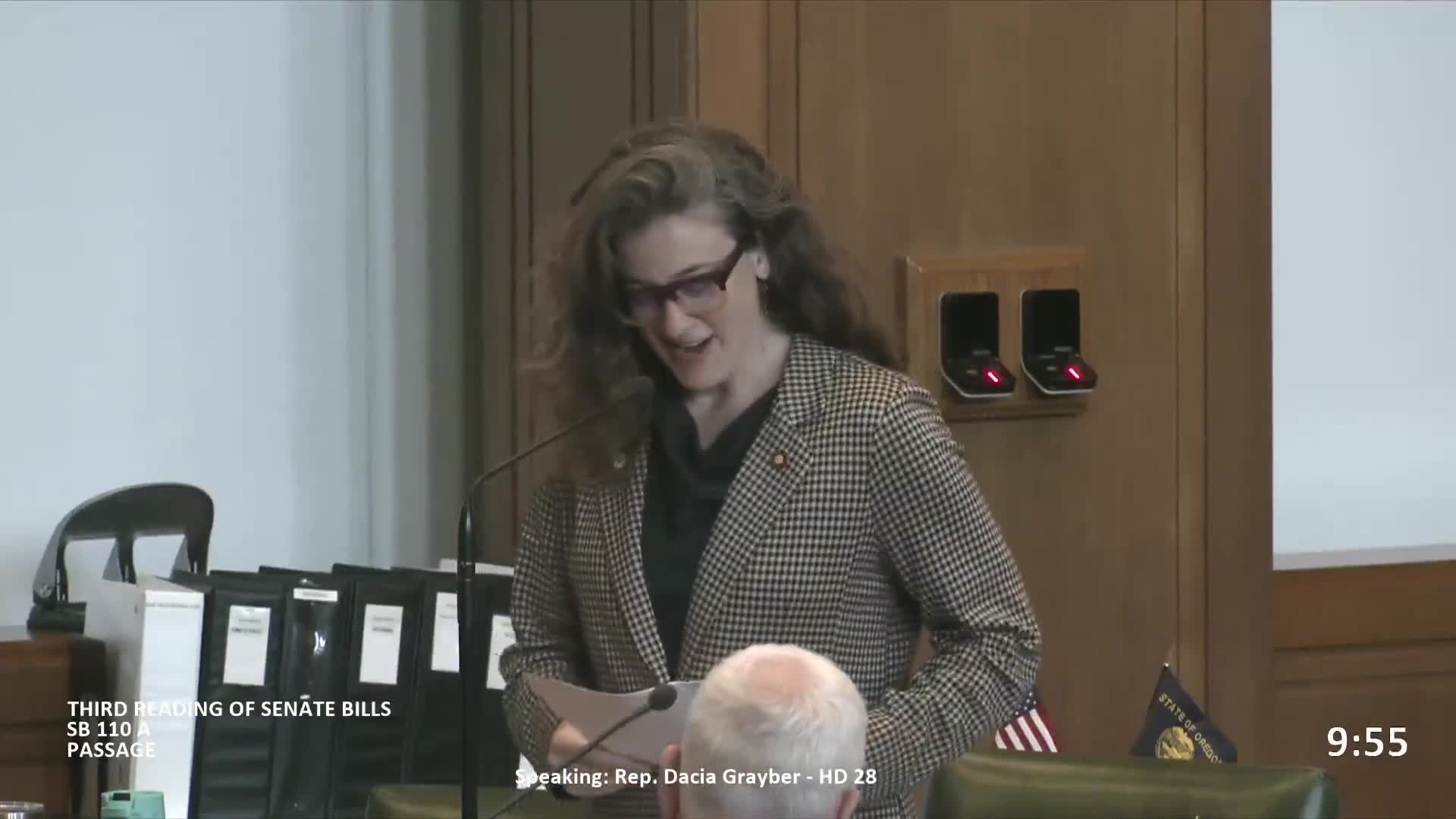
The Oregon House on June 17 passed Senate Bill 110, a measure that raises the cap on incremental baseball tax revenues and authorizes a financing structure intended to support construction of a Major League Baseball stadium in Portland without imposing new state taxes.
Supporters said the bill creates a privately secured-bond model that shifts financial risk away from the state and aims to spur jobs and local economic activity. "Senate Bill 110 increases the amount of incremental baseball tax revenues that the Oregon department of administrative services may grant for the purpose of constructing a major league baseball stadium," Representative Graeber said on the House floor.
Why it matters: sponsors and backers said the measure could drive construction jobs and permanent positions tied to a stadium, expand tourism and local business activity, and produce long-term state revenue once bonds are repaid. "This is not a curveball. It is a win win," Representative Nelson said, arguing the stadium would bring jobs, tourism and recurring economic activity.
Details and debate: the measure raises the prior funding cap to align with current construction costs and increases the minimum stadium cost threshold used to calculate incremental revenues. Proponents emphasized the financing method uses privately secured bonds and revenue from player and employee payrolls rather than creating a new tax on Oregonians. As Representative Graeber put it on the floor, "Senate bill 110 does not impose 1¢ of new taxes on the people of Oregon. With the approach we are taking via privately secured bonds, there is no financial risk to the state via this mechanism."
Opponents and concerns: lawmakers who questioned the bill raised concerns about public safety, transportation, and precedent for public support of large private projects. Representative Osborne urged more testimony and said he wanted clarity on public-safety plans, noting prior reductions to Portland police funding and asking how the city would address crime and security. "They haven't done a darn thing, and they don't have a plan to do a darn thing," Osborne said of Portland's city leadership in the context of those concerns.
Votes and next steps: after hours of debate and multiple members speaking for and against the measure, the House declared the bill passed. The clerk recorded that "Senate bill 110, having received the constitutional majority, is declared passed." The bill now proceeds according to legislative process for any remaining steps toward enactment.
The measure’s supporters said they expect private partners and developers to undertake the stadium financing and construction. Critics on the floor asked for additional hearings and detail on ancillary infrastructure such as transportation and policing that lawmakers said would be needed if a stadium moves forward.