Get Full Government Meeting Transcripts, Videos, & Alerts Forever!
Get email alerts on the Graywater Reuse topic
No spam. Unsubscribe anytime.
Proponents urge gray‑water reuse in new construction to stretch water supplies and protect rivers
Summary
Plumbing unions, watershed groups and conservation advocates urged support for House Bill 922 to require gray‑water and rainwater reuse systems in specified new construction as a way to conserve treated drinking water, reduce stormwater stress, and support climate resilience.
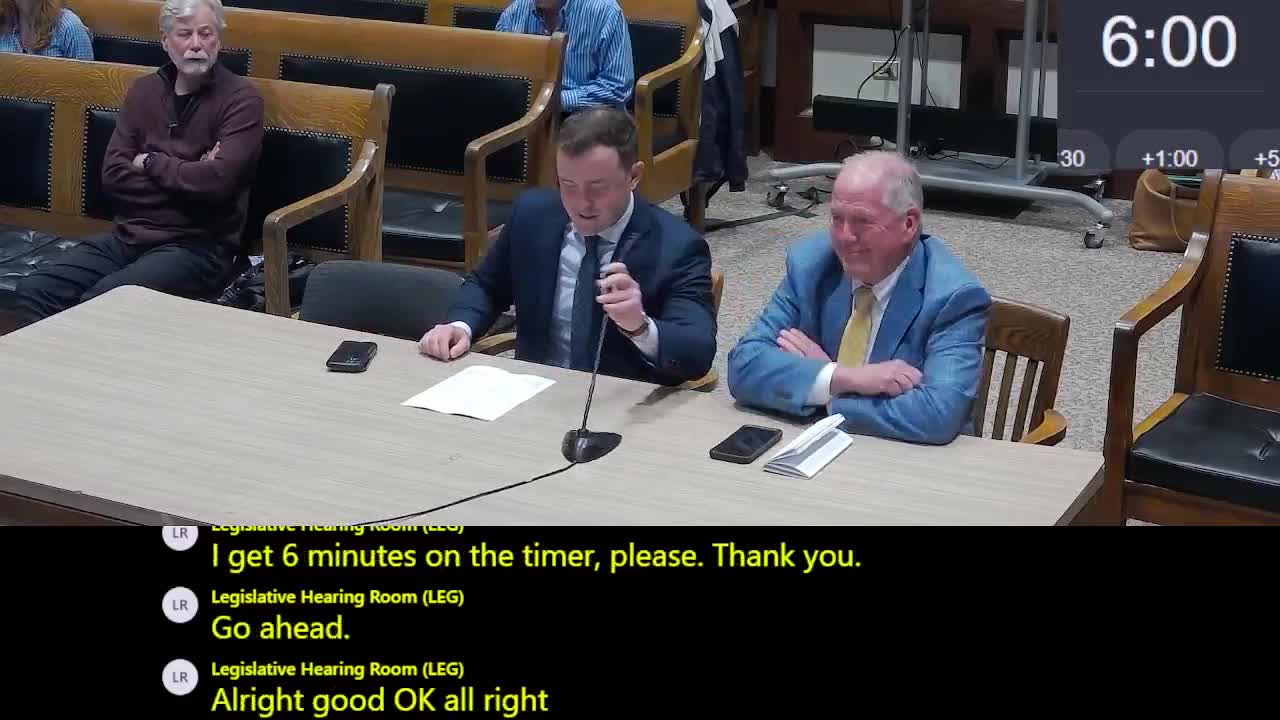
Plumbing contractors, labor representatives and watershed advocates told the Joint Committee on Environment and Natural Resources that House Bill 922 — which promotes gray‑water recycling and rainwater capture in new multifamily and commercial projects — is a practical step to conserve water, reduce stress on rivers and improve climate resilience.
Andrew D’Angelo of the Greater Boston Plumbing Contractors Association and Harry Brett of Plumbers Local 12 described industry readiness and existing projects. ‘‘These systems are not newer experimental. ...Our contractors and union plumbers are familiar with them. So they’re trained, certified, and ready to install them tomorrow,’’ D’Angelo said. He and Brett cited recent local projects — including large redevelopment sites and commercial buildings with half‑million‑gallon reclaimed water tanks — as proof‑of‑concept.
Heather Klish of the Massachusetts Rivers Alliance said gray‑water reuse (recycling shower, sink and laundry water for non‑potable uses such as toilet flushing and subsurface irrigation) can stretch limited supplies during drought and reduce runoff during intense rain events. ‘‘This bill would also promote the efficient use of water by advancing gray‑water recycling systems, especially in new multifamily housing,’’ Klish testified.
Testimony acknowledged technical and cost questions; speakers said more detailed cost estimates, incentives and state code coordination (DEP, plumbing code and local health boards) would be needed. Witnesses suggested starting with new large developments where economies of scale lower per‑unit costs. Builders and unions said systems can reduce energy use (less pumping and treatment) and improve resilience for communities dependent on limited aquifers or facing drought restrictions.
Ending: The committee requested follow‑up technical and cost information. Sponsors and trade groups urged a favorable report and pledged to supply implementation details and model code language.