Get Full Government Meeting Transcripts, Videos, & Alerts Forever!
Get email alerts on the Legislative topic
No spam. Unsubscribe anytime.
Committee review of dash 13 to House Bill 2025 outlines one-time tax increases, 50/30/20 distribution and new RV program
Summary
During an informational hearing June 16, legislative counsel and staff outlined the chairs' dash 13 amendment to House Bill 2025: a set of one-time tax/fee increases, changes to indexing, new revenue distribution rules (50% ODOT, 30% counties, 20% cities), and incorporation of an abandoned-RV program tied to House Bill 3209.
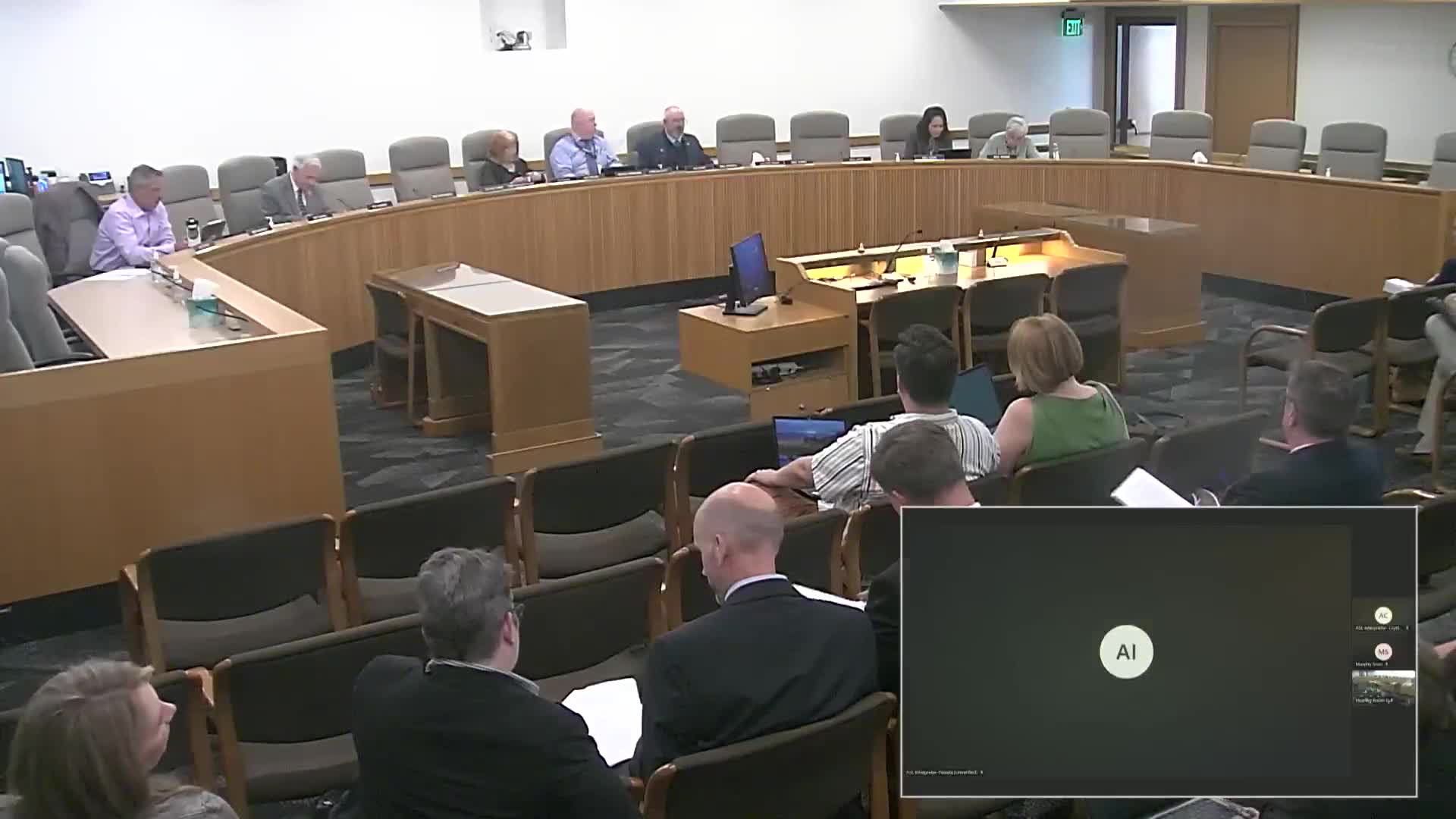
Co-chairs of the Joint Committee on Transportation Reinvestment convened an informational hearing June 16 to review the chairs' dash 13 amendment to House Bill 2025, a wide-ranging fiscal and policy package that folds in provisions from other measures including House Bill 3209.
The amendment, presented by Senior Deputy Legislative Counsel Heidi Elliott and senior deputy counsel Allen Dale, would convert some multi‑biennium fee rollouts into one‑time increases beginning July 1, 2028; change gas‑tax indexing rules; and direct a new revenue split of 50% to the Oregon Department of Transportation (ODOT), 30% to counties and 20% to cities. "Section 1, the performance review will now be biennial for both components of the performance review," Elliott said while walking through the amendment. Allen Dale summarized an indexing change: it "changes the ongoing gas tax indexing to year to year indexing for inflation with a collar of 100 to 104% of the prior year's rate."
Why it matters: the amendment reorders the timing and structure of multiple new taxes and fees that together are intended to address long‑standing maintenance and preservation shortfalls on state and local transportation systems. The chairs' amendment also folds in House Bill 3209, which increases registration fees for RVs and campers; those additional RV fees are directed to parks and to a new county/shared RV program, the counsel said. The amendment clarifies that the 1.37% allocation for small counties comes out of counties' 30% share, not the total package.
Key provisions and details: the counsel described the amendment as keeping the substance of prior measures but changing rollout timing and some mechanics. Among the specifics noted in committee discussion: - Several fee and tax increases originally phased over four biennia are consolidated into one increase effective 07/01/2028 (heavy vehicle fees and certain road assessment fees). - The amendment folds in House Bill 3209 language: RV and camper registration fee increases are routed to parks and to a county-shared abandoned‑RV program (section references in the dash 13 summary). - The new revenue distribution is described as a 50/30/20 split (50% ODOT / 30% counties / 20% cities); the summary clarifies the small‑county carve‑out is calculated from the counties' 30%. - Transfer and privilege/use tax provisions are changed so both taxes may apply to out‑of‑state vehicle purchases in some circumstances (sections 81, 83 and 87 in the summary).
Committee members pressed staff for comparisons between the base bill and the dash 13 text. Senator Starr asked for side‑by‑side differences; staff offered to share a DMV‑fee spreadsheet and to circulate more detailed comparisons. Catherine Jones (staff) told the committee she would "be sending out a spreadsheet with the DMV fees."
The amendment also removes some sections from the base bill: staff noted deletion of a provision addressing cost responsibility if the Legislature fails to act, and the chair acknowledged that deletion would need further committee attention. No formal action or vote occurred; the session was informational and committee members asked for additional materials and revenue estimates from the Legislative Revenue Office before any work sessions.
Ending: Committee members requested further details and revenue estimates ahead of a scheduled work session; staff committed to share fee spreadsheets and to provide answers to member questions before the next meeting. The informational hearing concluded with the committee noting additional posted amendments (dash 14, dash 15, dash 16) that members had not yet had time to review.