Get Full Government Meeting Transcripts, Videos, & Alerts Forever!
Get email alerts on the Language Access And Voting topic
No spam. Unsubscribe anytime.
Randolph officials, residents ask Legislature to permit Haitian Creole bilingual ballots
Summary
Town officials, councilors and community members from Randolph urged the Joint Committee on Election Laws to approve S.509 to allow bilingual (English/Haitian Creole) ballots in Randolph, citing population diversity, ESL wait lists and barriers to participation.
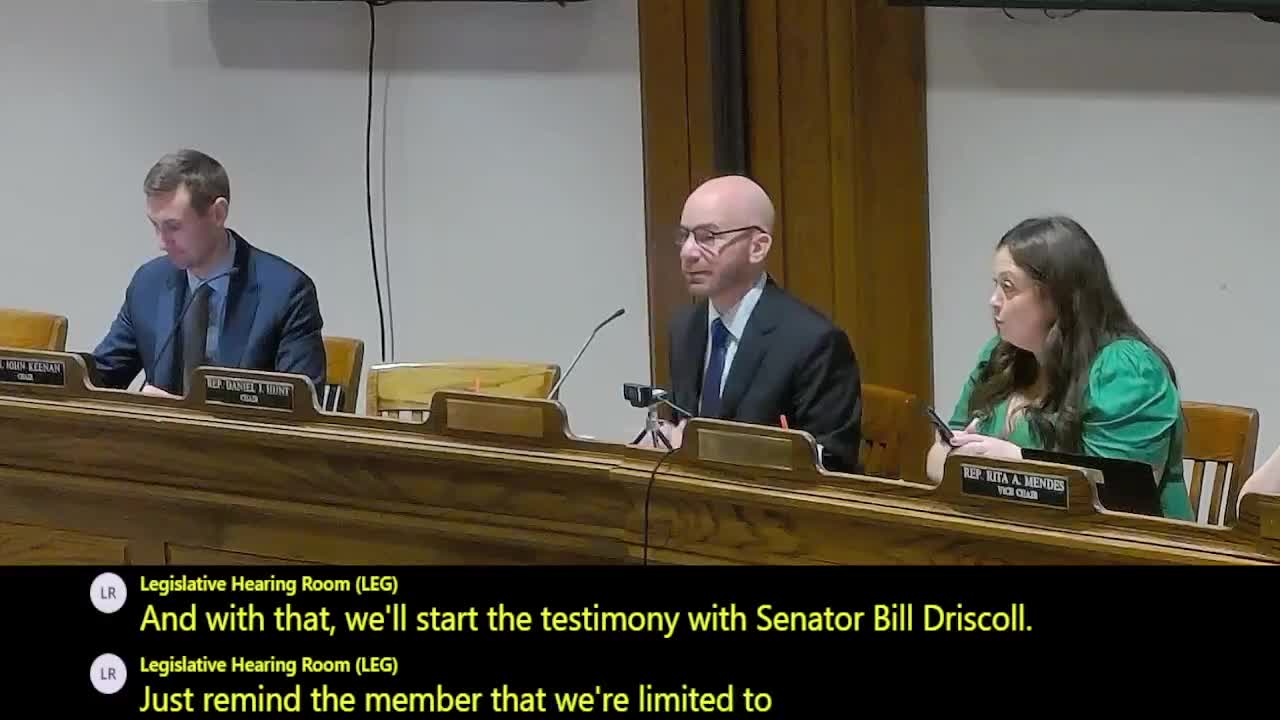
Senator Bill Driscoll asked the Joint Committee on Election Laws to report favorably on S.509, a home-rule petition to allow the town of Randolph to prepare bilingual ballots in English and Haitian Creole.
“Randolph is one of the most diverse towns in the Commonwealth, and Haitian Creole is a growing language in the community,” Senator Driscoll said, asking the committee to advance the measure to “make Randolph elections more inclusive and to foster deeper civic engagement.”
Brian Howard, the Randolph town manager, told the committee Randolph has “35,000-plus residents” and currently provides Vietnamese ballot translations under federal Voting Rights Act Section 203 but does not yet include Haitian Creole. Howard said bilingual ballots would help non‑English speakers “participate meaningfully in the election process,” reduce confusion over voting instructions and could increase turnout; he referenced a study that translated ballots can increase local turnout by about 10%.
Councilor Lehi Larman said the Randolph Town Council unanimously supported the home-rule petition and framed the change as both a legal and moral imperative: “We want to make sure all of our residents in the town of Randolph have the opportunity to be heard and seen.”
Community members and advocates testified that language access is also a practical problem: Heather Ho, co‑founder of Randolph Diversity, Equity, and Inclusion Coalition and board member of Randolph Community Partnership, said Randolph’s English-as-a-Second-Language wait list exceeds 300 people, limiting the ability of new arrivals to gain language proficiency before elections. Dr. Yolett Ebakate, a Haitian American resident, said providing ballots in Haitian Creole affirms civic belonging and removes a barrier to participation.
Witnesses described current accommodations—language lines, bilingual poll workers, and the ability for a voter to bring an assistant into the booth—but said those resources are not a full substitute for a bilingual ballot. Town officials said recruiting bipartisan poll workers with Creole language skills is difficult.
Committee members did not act on S.509 at the hearing; the committee invited written testimony and said members may follow up with municipal officials on implementation details, including translation standards and ballot layout.
Supporters asked for a favorable report and for the Legislature to move quickly so Randolph can implement bilingual ballots for future elections.