Get Full Government Meeting Transcripts, Videos, & Alerts Forever!
Get email alerts on the Elections Infrastructure topic
No spam. Unsubscribe anytime.
Senator Rausch pushes broad elections infrastructure upgrades to ease municipal burden
Summary
Sen. Rausch and local election officials told the Joint Committee on Election Laws that S.534 would centralize digital reporting, move key deadlines and modernize voter lists to reduce municipal costs and confusion and to improve access for voters.
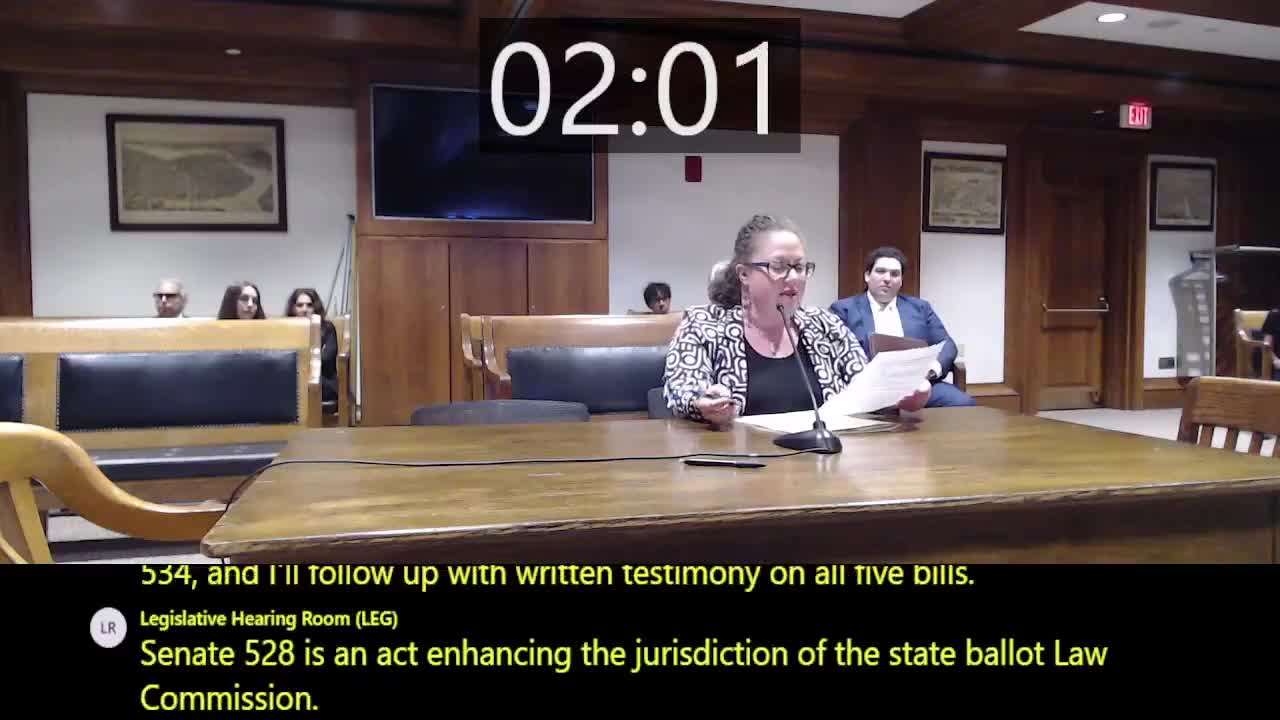
Senator Rausch urged the Joint Committee on Election Laws to give a favorable report to S.534, an “Upgrades Act” he described as aimed at upgrading elections infrastructure, improving voting access and reducing municipal burden.
Rausch told the committee the bill would centralize digital reporting of preliminary results, move the voter registration deadline that sometimes falls on a Saturday, shift the primary date to a more stable time, enable use of digital voter lists at polling places, and change early-voting and ballot-processing rules to reduce costs and confusion for cities and towns.
“The proof is in the pudding as we see widespread departure of town and city clerks statewide,” Senator Rausch said. “We have voter confusion. We have massive wastes of money. We have a ridiculous burden on municipal budgets.”
Town clerks, represented by Tom Joyce, counsel to the Massachusetts Town Clerks Association, and Ben Kaufman, town clerk of Brookline and chair of the MTCA Legislative Committee, told the committee clerks can advise how proposed changes would work in practice and urged lawmakers to consult local administrators during drafting. “The MTCA is here. We are ready, willing, and able to provide advice, share our knowledge, and offer expertise on the nuances of elections administration,” Ben Kaufman said.
Emma Chinman, coalition manager for Partners in Democracy, said S.534 and related bills would modernize outdated rules and remove barriers for voters, and she urged the committee to advance reforms that ensure “voting should be easy, efficient, and equitable.”
Proponents described specific provisions intended to reduce municipal labor and costs: eliminating a second envelope for permanent-mail voters, prohibiting use of a secretary of state’s personal image or materials in polling-place materials except as a candidate listing, and requiring linguistically competent outreach in even-numbered years. Rausch also said the bill would adjust the ballot-return deadline so slow mail does not disenfranchise voters and require technological upgrades that allow digital rolls at polling places.
Committee members did not take a vote on the bills during the hearing. Supporters said the changes would need further technical review with clerks and local officials to identify implementation details and avoid unintended consequences.
The hearing continued with public testimony and written submissions were invited for the record.