Get Full Government Meeting Transcripts, Videos, & Alerts Forever!
Get email alerts on the Combined Sewer Overflow topic
No spam. Unsubscribe anytime.
Lawmakers and advocates press for deadline to end combined‑sewer overflows into Massachusetts rivers
Summary
Lawmakers, environmental groups and residents urged the Joint Committee on Environment and Natural Resources to back bills that set a timetable and technical standards to sharply reduce or eliminate combined‑sewer overflows (CSOs), citing public‑health risks, environmental justice concerns and long‑term infrastructure needs.
Lawmakers, environmental groups and residents urged the Joint Committee on Environment and Natural Resources to back legislation that would require large reductions in combined‑sewer overflows into Massachusetts waterways and set timetables for doing so.
Advocates told the committee that millions to hundreds of millions of gallons of untreated or minimally treated sewage still flow into small urban streams and larger rivers when storms overwhelm older combined systems. ‘‘These discharges are not just an environmental nuisance. They are a public‑health crisis,’’ said Patrick Karen, executive director of the Mystic River Watershed Association.
The bills discussed include House Bill 1031 and companion Senate Bill 608 (targets and timetables for the MWRA service area) and House Bill 1046 (a broader House measure introduced by Representative Greg Schwartz). Supporters said the bills establish accountability, require plans and set a 10‑year target for large parts of the system to reach a 25‑year storm level of control — a level proponents say is achievable with tunnels, upstream stormwater controls, sewer separation and other tools. ‘‘This bill directly addresses the urgent need to eliminate combined sewer overflows,’’ Patrick Karen said, noting that CSO discharges can reach ‘‘tens and hundreds of millions of untreated sewage’’ into local waterways during storm periods.
Residents who live near Alewife Brook in Cambridge and Somerville described repeated floods and direct household exposures. ‘‘Untreated sewage flood water came into my house and into my neighbor’s homes right through the back door. We had no idea what was in that water,’’ said Kristen Anderson of Save the Alewife Brook. Testimony from the group and allied speakers cited monitoring and public records showing roughly 29 million gallons of untreated sewage in Alewife Brook in 2023 and more than 50 million gallons in 2021.
Scientific and public‑health testimony framed the problem as both environmental and equity related. A recent academic analysis cited during the hearing found communities with higher proportions of minority and low‑income residents face higher exposure to CSOs. Emily Norton of the Charles River Watershed Association noted that many residents are unaware that raw sewage continues to enter urban rivers after rain events: ‘‘When people hear this, they’re shocked. They’re shocked that in 2025 — in Boston, Cambridge — we would still allow this.’’
Opponents and stakeholders warned about the scale and cost of remediation. Phil Guerin of the Massachusetts Coalition for Water Resources Stewardship said elimination of CSOs would be ‘‘a multibillion‑dollar endeavor’’ and that ratepayers ultimately bear much of the cost; he urged careful planning for financing. Representatives and witnesses discussed funding models that were used for prior large water projects and said combining green stormwater infrastructure, upstream retention and targeted tunnels could lower costs compared with single‑technology solutions.
Supporters urged the committee to issue a favorable report to set a policy direction and begin detailed planning and financing discussions. ‘‘There are models in the U.S. that have already gone forward and shown tremendous benefit,’’ said Patrick Karen, citing examples in other cities. Local advocates asked the panel to prioritize places where repeated floods and CSO discharges are harming homes, parks and popular recreational corridors, and to require reporting and timetables to move work forward.
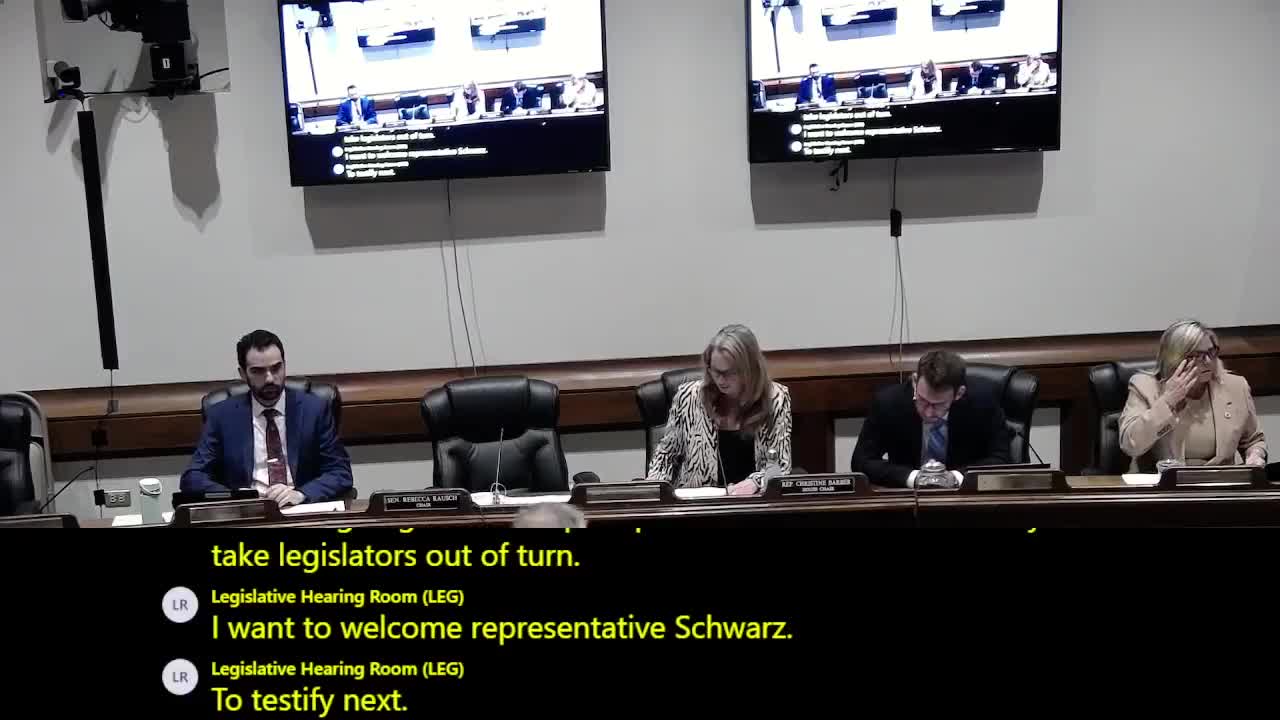
The committee took testimony from municipal and nonprofit groups, elected officials and residents; it did not take a vote during the hearing. The legislation will now proceed through the committee process where staff and members may refine technical definitions, cost estimates and timetables.
Ending: The proposals remain at the committee stage. Supporters urged the panel to send the bills out with favorable reports to signal a commitment to planning and funding; opponents urged additional financial analysis and phased approaches. The committee accepted written follow‑up materials and data from multiple parties for further consideration.