Get Full Government Meeting Transcripts, Videos, & Alerts Forever!
Get email alerts on the Municipal Budget Millage topic
No spam. Unsubscribe anytime.
Tequesta manager previews 2025-26 budget, recommends holding millage at 6.4595 mills
Summary
Village Manager Jeremy Allen presented a first look at the Village of Tequestabudget on June 16 and recommended holding the millage at the current 6.4595 mills while drawing limited reserves for one-time capital projects.
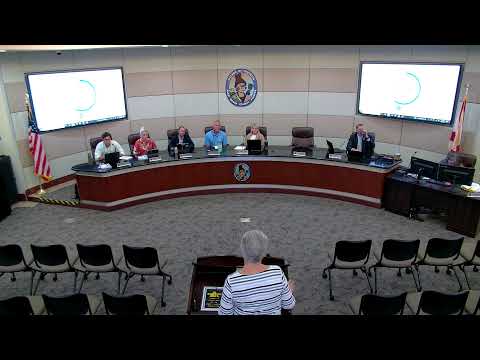
Village Manager Jeremy Allen opened the Village of Tequestabudget workshop at 6:01 p.m. on June 16, 2025, and described the presentation as a "first look" at the 2025-26 budget.
Allen said the administration recommends keeping the millage rate at 6.4595 mills and noted the legal timing for the property-tax process: certified ad valorem values will be provided on July 1 and the council will set a maximum millage rate at its July meeting. "July, we do set the maximum tax rate, millage rate," Allen said. "You can always go down, but you can't go up." (Village Manager Jeremy Allen)
Why it matters: the millage and revenue assumptions determine how much the village can fund operations, pay for capital projects and respond to rising personnel and insurance costs. Allen told council members the village is projecting a relatively flat tax base in the coming years and has modeled conservative revenue growth (roughly 3.5% to 4% in later years) amid lower expectations for new construction.
Key details: Allen presented the village's fund structure (general fund, enterprise funds for water/stormwater/refuse, capital funds including surtax-funded 301 and a general 303 capital fund) and highlighted near-term uncertainties: certified property values (July 1), final health-insurance rates (the draft uses a 12% placeholder), and labor negotiations. He also said the village expects the local 1-cent surtax that funds the 301 capital fund to sunset in December and that surtax receipts will decline in the budget year.
Council members focused on reserves, long-term forecasts and whether a one-year millage reduction is appropriate. Jeff (finance staff) confirmed the village's three-month operating target is about $4.7 million; Allen said the current unassigned fund balance is larger than that. Vice Mayor Sartore and other council members noted that some municipalities keep larger cushions because of hurricane risk and FEMA timing, while several members urged a conservative approach to protect operations.
Costs and proposed uses: Allen listed proposed one-time uses of reserves including $1.3 million for Remembrance Park Phase 2 and $100,000 for Old Dixie beautification; he described these as one-time expenditures and said they should not be used to cover recurring costs. He also identified recurring cost pressures: a $268,000 placeholder for a 12% health-insurance increase, an offer to the police bargaining unit that increases costs (Allen cited a $280,000 figure tied to the police offer), and an increase in firefighter salary obligations tied to the public-safety pension actuarial assumptions.
Longer-term picture: Allen showed five-year projections that flatten after 2026 because the village does not expect large new development projects that previously boosted revenue. He warned council that reducing the millage without a long-term plan could leave the village with fewer resources for operations and capital needs.
Council direction and next steps: Council asked staff to produce alternate millage scenarios for future discussion (including a rollback example), to refresh comparative water and millage-rate studies, and to return with refined numbers after July 1 certified values and final insurance quotes. The council set a follow-up budget workshop for July 22, 2025.
Ending: Allen emphasized that the budget is a work in progress and asked council to reserve detailed questions until staff can update assumptions after July 1. "We can always come back if needed," he said. (Village Manager Jeremy Allen)