
Little Rock board OKs legal pathway to finance Madison Heights but rejects short-term note
Get AI-powered insights, summaries, and transcripts
Subscribe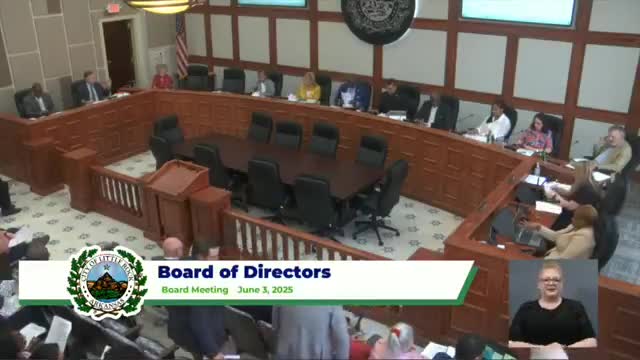
Summary
The Little Rock Board of Directors approved a resolution setting legal conditions to provide city funds to the Municipal Housing Alliance to keep Madison Heights operating, and approved hiring bond counsel. A separate ordinance to issue a short-term promissory note failed, leaving funding unresolved ahead of an Aug. 1 foreclosure hearing.
The Little Rock Board of Directors voted June 3 to approve a resolution that sets conditions the city wants met before it disburses funds to the Municipal Housing Alliance (MHA) to preserve Madison Heights, but the board rejected a separate ordinance that would have authorized a short-term promissory note to provide those funds.
The board approved Resolution 20 — described at the meeting as the legal “pathway” to make a city loan to MHA — by a 6-2 roll-call vote. The board also approved a $75,000 contract for bond counsel to support proposed financing by the same margin. A follow-up ordinance that would have authorized issuance of a promissory note to finance an acquisition of the property failed on a 5-3 roll call, so no short-term funds were authorized immediately.
Why it matters: Madison Heights houses low-income residents and includes a mix of subsidized and market-rate units. Supporters said a city loan could prevent displacement, while skeptical board members warned the city could become the operator or guarantor of an apartment complex and absorb significant financial risk if projections fall short.
Board action and votes - Item 20 (resolution establishing conditions for the city to provide funds to MHA): Passed, yes 6, no 2. Recorded yes: Director Lewis, Director Adcock, Director Miller, Director Webb, Director Peck, Director Hines. Recorded no: Director Campiris, Vice Mayor Warrick. - Item 21 (contract with Friday Eldridge & Clark LLP to serve as bond counsel, not to exceed $75,000): Passed, yes 6, no 2 (same roll call pattern). - Item 22 (ordinance authorizing issuance of a promissory short-term note under Amendment 78 to the Arkansas Constitution): Failed, yes 3, no 5. Recorded yes: Director Lewis, Director Adcock, Director Miller. Recorded no: Director Campiris, Director Webb, Director Peck, Director Hines, Vice Mayor Warrick.
Discussion highlights City Attorney Tom Carpenter described the resolution’s conditions as paperwork the city would require before disbursing funds: releases and quitclaims from parties with claims on the Madison Heights parcels, documentation from HUD and state authorities, audited financials from MHA, and escrow or deed mechanisms so the city could obtain clear title if MHA defaulted. Carpenter said the “thrust of these resolution requirements were that the city would get a title, a fee simple title ... that would be held at escrow,” language he said was intended to protect the city’s interests if the loan is made.
Supporters, including dozens of Madison Heights residents, urged the board to act. Donna Massey of Arkansas Community Organizations told the board, “please vote yes on all 3, 20 21 and 22.” Tenant Daphne Williams said, “please vote yes because this place is home to a lot of people that in otherwise cannot afford to live anywhere else.” Resident Velda Austin, a 20‑year tenant, asked whether the city would provide placement help if residents must move.
Skepticism and legal uncertainty Directors who opposed the financing said the city would be taking on unfamiliar and long-term housing‑management risk. Director Computers (Campiris) said the city did not get into the apartment business to operate complexes and warned the short‑term note would pledge the city’s full faith and credit: “If it goes south ... the city has to pay that obligation,” a staff member confirmed.
Director Hines said he supported passing items 20 and 21 to preserve options but opposed immediate short‑term financing, saying HUD could intervene and place MHA into receivership — and that federal processes might produce other remedies. Hines said, “I’m gonna vote for 20 and 21 to keep the table set. I’m not gonna support ... the short‑term financing yet.”
Timing, money and outstanding issues - Loan ask and debts: Board discussion referenced outstanding lender claims of about $5.4–$5.5 million; the resolution and staff set a not‑to‑exceed figure of $6,000,000 to cover accruals and uncertainty. - Appraisal and collateral: Staff cited an appraisal figure (board‑referenced) near $18.7 million for the properties, which supporters said made the loan position less risky if secured by title. - First-year cost estimate: Board discussion estimated debt service on a $6 million short-term note at roughly $1.6 million annually (balloon/short-term structure discussed). - Resident count: Speakers said roughly 1,000 residents live across Madison Heights sites; speakers described a mix of elderly, working and voucher‑assisted tenants. - Foreclosure hearing: A court calendar date of Aug. 1 was cited as the next critical milestone tied to existing lender action; staff and HUD contacts said alternative HUD property‑solution processes (PSP panel) could take months (three to six or longer) to resolve matters.
What the decision means now By approving the conditions (Item 20) and paying for bond counsel (Item 21), the board directed staff to draft loan and security documents and to continue negotiations. Because the short‑term note (Item 22) failed, no city financing is yet available and staff said the city may still pursue financing later if circumstances change or additional guarantees appear. Mayor Scott told the public that the board had created a legal pathway to save Madison Heights but that immediate funding was not authorized without a successful financing action.
Next steps and outstanding dependencies Staff recommended — and the board approved — document preparation and legal work to create the loan structure if the board later authorizes financing. The resolution lists dependencies on HUD, state entity approvals and other creditors’ releases; those are outstanding and must be resolved before disbursement. Staff and some directors said HUD’s involvement or an interested private partner could alter or remove the need for city financing.
Community reaction Residents and community organizations urged immediate action to avoid displacement and to preserve affordable housing. Board members were split between urgency to protect residents and caution about exposing the city to financial and operational risk.
Ending The board left the legal groundwork in place but did not fund Madison Heights on June 3. If additional paperwork, guarantees or lender interest materializes, the board may revisit short‑term financing in coming weeks; otherwise the foreclosure schedule and HUD processes remain the controlling timelines.