
Residents and commissioners press questions about Polk Regional Water Cooperative costs and timing
Get AI-powered insights, summaries, and transcripts
Subscribe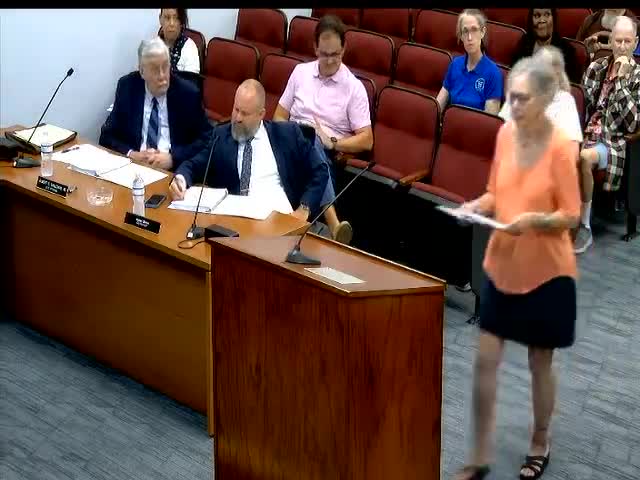
Summary
Public commenters asked whether work on the Polk Regional Water Cooperative’s Southeast well field off Walking Water Road is behind schedule and whether cost overruns will raise water bills; Commissioner Kevin Thompson and other commissioners summarized uncertainties about treatment costs, funding and Lake Wales’s participation.
Public commenters and commissioners at the City of Lake Wales commission meeting on Oct. 10 pressed for clearer information about the Polk Regional Water Cooperative (PRWC) water project, including whether construction is behind schedule and how much the new Lower Floridan source will cost to treat and deliver.
Janine Montgomery, a resident who addressed Commissioner Kevin Thompson during the public-comments portion, asked whether the project “is truly behind in the construction? And if so, for how long?” She also asked whether citizens might face bills “1 to 5 times higher” as the project’s schedule extends toward 2028 or 2032.
The commission’s representative, Commissioner Kevin Thompson, responded at length during commission comments. Thompson said the county’s Southeast well field off Walking Water Road is the site “that is ready to build” and that the project has begun construction activity. He emphasized two categories of costs the public should watch: the capital cost to build the plant and the treatment cost per unit of water. “We don't know what that second one is exactly,” Thompson said, referring to treatment costs. “Anyone who tells you they know the answer to that is in deep speculation.”
Thompson said some project components remain uncertain: the total project price, the final amount the Suwannee or South Florida Water Management Districts (as funding partners) will contribute, and how much federal or state grant money will be available amid shifting federal priorities. He said Polk County, Lakeland and Winter Haven are among the largest financial contributors and may be the first jurisdictions to pass costs on to their residents if participating members decide to do so.
Thompson told the audience Lake Wales is currently a member of the PRWC but “we're not a participating member in the project” and the city has taken a “wait and see approach.” He said based on Lake Wales’s current permitted withdrawals from the Upper Floridan aquifer, the city “probably wouldn't need to join this until 2035.” He added that Lake Wales is not close to exhausting permitted supply today and that “a thousand gallons of Upper Floridan aquifer water we can treat for about 50¢ per thousand gallons,” while reverse-osmosis treatment of Lower Floridan water will be much more expensive.
Thompson also described operational tasks still underway, including acquisition of easements for transmission mains, and said those negotiations were “very, very close to being completely wrapped up,” which should improve cost estimates. He encouraged residents to follow project updates and said city staff have implemented water-conservation measures and leak-detection technology to reduce local demand.
No formal action was taken at the meeting on PRWC participation or purchases. Commissioners and staff said further study, updated cost estimates and future agenda items will determine whether and when Lake Wales becomes a purchasing participant in the PRWC project.