
Park County planners say permit revenue fell after metal-mine payments stopped; grants help cover long-range work
Get AI-powered insights, summaries, and transcripts
Subscribe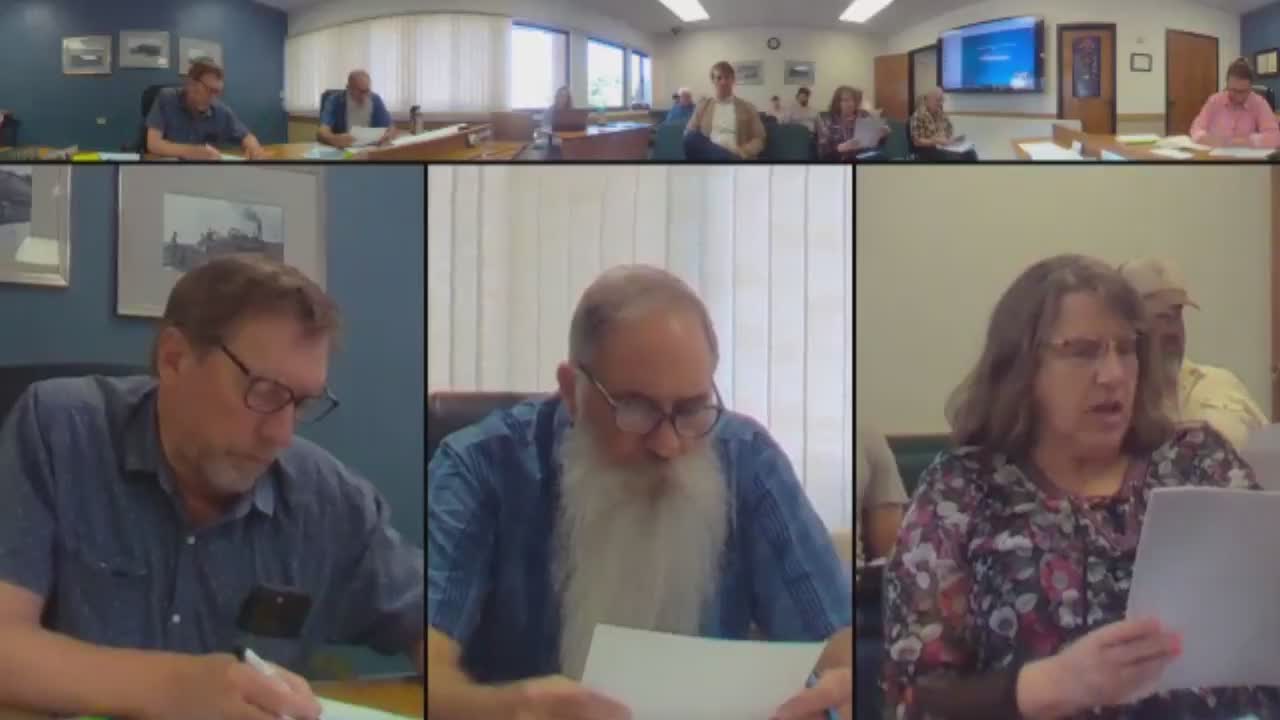
Summary
Planning staff told commissioners that metal-mine revenue fell sharply after operations ceased last fall, increasing reliance on PILT and grants; staff discussed floodplain mapping updates, permit-fee limits under state law and a Department of Commerce grant for subdivision regulations.
Park County planning staff told the Board of Commissioners on June 10 that revenues from metal-mine payments dropped sharply after mine operations ceased last fall, forcing budget adjustments and greater reliance on other sources including PILT and grant funding.
Officials said the county had estimated a transfer from metal-mine funds of about $88,000 for the current year but actually received $43,006.39. Planning staff explained that a portion of metal-mine receipts goes to a metals trust, and the remainder is split in thirds among elementary schools, high schools and the planning department. With the reduced metal-mine amount, planning’s draft budget scales back revenue from those sources and increases its expectation for PILT (payment in lieu of taxes).
Planning staff described ongoing floodplain work and the floodplain map update, noting extra public meetings, notice requirements and the separate accounting for 2022 FEMA flood revenues. The department said floodplain permitting remains part of the county’s participation in the National Flood Insurance Program and that the current fee for a floodplain permit is $300; staff added that the fee “hardly covers mailing and notices” and said a future fee review is warranted.
Staff described how the planning office uses grants to offset long-range work. The subdivision-regulations update is supported by a $24,000 Community Technical Assistance Program grant through the Department of Commerce; department staff will facilitate the work while the Commerce program pays the engineering firm. Planning staff said some grants require in-kind or documented time as a match, while others provide direct payments to outside contractors and therefore do not flow through planning payroll lines.
Planners described their limited staffing and unpredictable permit-related revenue; one staff member said that when they started in 2006 the county had five planners and that headcount had fallen to two by 2012. Staff said they share many responsibilities, perform their own administrative work and rely on grant funding and the planning mill levy to help cover costs.
No formal fee changes or personnel requests were decided at the workshop; staff recommended the commission consider a future review of fee schedules, especially for floodplain permits and subdivision fees that are set by adopted regulations and sometimes constrained by statute.