
Park County commissioners approve Yellowstone Reserve commercial subdivision with mitigation conditions
Get AI-powered insights, summaries, and transcripts
Subscribe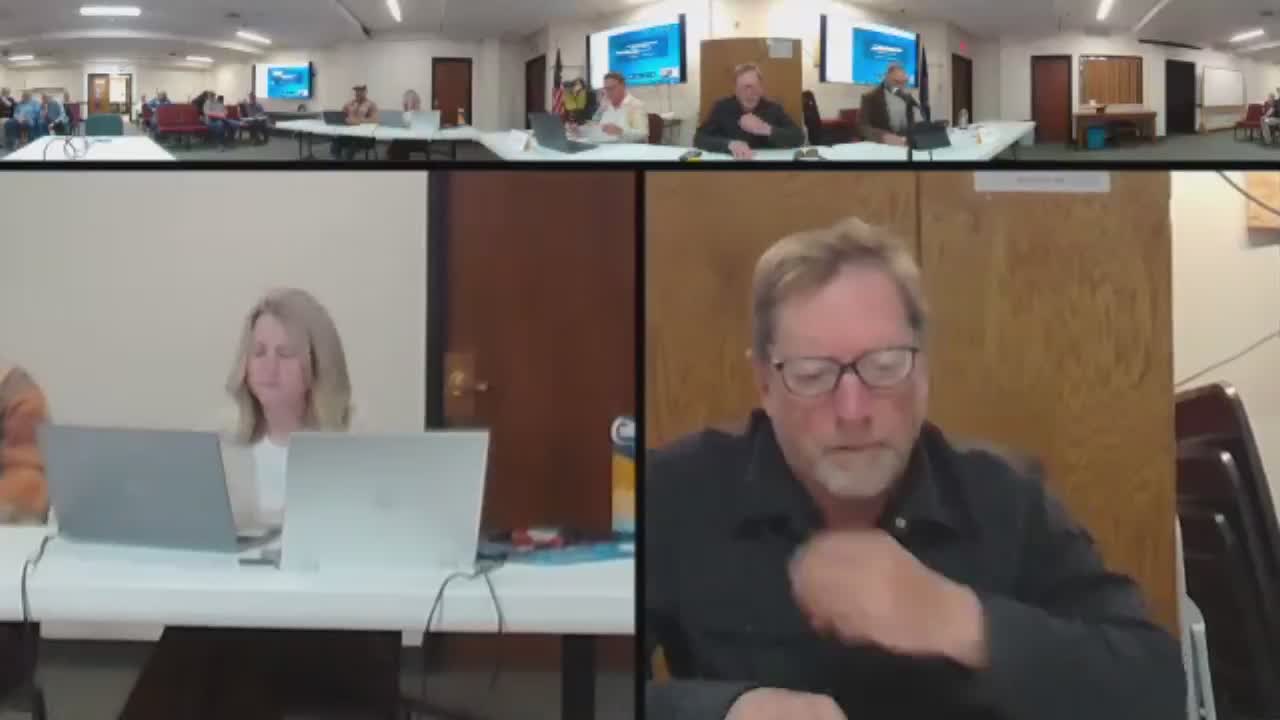
Summary
Park County commissioners approved a 12‑lot Yellowstone Reserve major commercial subdivision on June 3, 2025, adopting applicant‑proposed mitigation that limits water use, requires metering and reporting to state agencies, and adds site‑specific covenants after substantial public comment about groundwater, flooding and fire protection.
Park County commissioners on June 3 approved the Yellowstone Reserve Major Commercial subdivision, a 12‑lot commercial subdivision near Interstate 90, after accepting an applicant preference for mitigation that county staff and the planning board had said addressed the project’s key impacts.
The commissioners’ approval incorporates covenant language restricting permitted and prohibited uses, requires on‑site water meters with annual reporting to the Department of Natural Resources and Conservation, requires stormwater controls and a centrally engineered fire water system, and leaves final DEQ (Department of Environmental Quality) and DNRC approvals as conditions of final plat.
The vote closes a contentious review that began with a staff report recommending denial and a planning board recommendation for denial. Many residents raised concerns about groundwater contamination from septic systems, flood risk tied to the 2022 event, fire‑suppression capacity for commercial uses served by exempt wells, and the lack of county commercial zoning. The applicant and project engineers responded with technical plans and a detailed set of covenants, and the commission concluded those measures mitigate the impacts identified in the reviews.
County planning staff described the process for major commercial subdivisions — preliminary plat, sufficiency review, staff report, planning board recommendation and a commissioner hearing — and said the applicant’s mitigation arrived after the planning board meeting and was posted for the public before the June 3 hearing. Planning staff noted they initially recommended denial based on impacts to groundwater and the natural environment but wrote that the applicant’s mitigation addressed the identified impacts.
Speakers at the hearing detailed local concerns. Brandy Carpenter, executive director of Friends of Park County, summarized polling her group had conducted and urged stronger protection for water supplies: "When asked about the importance of protecting water supplies, 44% of voters said it was extremely important, 38% said it was very important, and 12% said it was somewhat important. That means 94% of Park County voters think it's important, that is protecting water supplies." Carpenter urged denial or independent study and noted one parcel had flooded in 2022.
Residents described on‑the‑ground impacts from the 2022 flood. Mike Daley, who said he assisted with rebuilding Stafford Animal Shelter after the flood, told commissioners that floodwater had reached 22 inches above the shelter slab and that debris had moved onto the adjacent parcel under review. Multiple commenters and the Park County Environmental Council asked the commission to require flood‑proofing or exclude flooded portions of parcels.
Project representatives outlined engineering, water, wastewater and fire plans. Jeremy Fadness of WWC Engineering said lots will use individual wells and septic systems and that the team has worked with DEQ. On fire protection, he said: "We are proposing a fire water storage pond with a 180,000 gallon capacity, and a pump and a fire hydrant," with pumps rated at 1,500 gallons per minute for two hours to meet state fire‑code requirements. The project team also said MDOT (Montana Department of Transportation) approved highway access with required signage and that DEQ will complete final review after county approval.
The applicant’s attorney, Bill Fanning for Bailey Construction, described covenant changes added after planning board concerns. Fanning said the covenants list permitted commercial uses tailored to stay within the exempt‑well and DEQ limits, ban high‑use activities (for example, marijuana grows, nurseries, car washes) and grant enforcement access to DNRC, DEQ and Park County. He said meters will be required and that metering data will be collected and submitted annually to DNRC by a licensed engineer.
Opponents asked for stronger enforceable safeguards. Kim Cochran, president of the board of Prince of Park County, criticized meter‑only mitigation and urged an automatic shutoff when daily or annual allocation limits are reached, citing worries that DNRC and other agencies lack routine enforcement capacity. Cochran urged denial or an independent pollution study and cited county subdivision ordinance sections the group said support denial when flood or pollution risk cannot be ruled out.
County planning staff and several commissioners described why they judged the mitigation to be sufficient for the purposes of subdivision review. Staff reiterated that Park County cannot itself regulate exempt wells and identified DNRC as the appropriate enforcement authority for groundwater allocations; the approved findings note that limitation and document that covenants and metering are part of the mitigation package. Commissioners also noted that DEQ and state building permits remain required for final approvals and for building‑level fire protection (including sprinklers if triggered by building code review).
Commissioner discussion acknowledged divided public testimony but concluded the applicant’s revised covenants, metering and engineered fire and stormwater systems reduce the project’s identified risks. A motion to approve the subdivision review "with findings and conditions modified by the Park County Commission to include the planning board report and the applicant’s preference for mitigation" passed without recorded opposing votes.
The approval is conditioned on the updated covenants, construction of the stormwater treatment ponds and the central 180,000‑gallon fire water system, installation of meters on exempt wells with annual DNRC reporting by a licensed engineer, and completion of required DEQ and DNRC determinations before final plat. The record notes that if future FEMA or other regulatory flood mapping places any lots within a regulated flood hazard area, those lots will then be subject to applicable floodplain permitting requirements.
Public commenters urged the commission to pursue countywide commercial/industrial zoning rather than relying on case‑by‑case subdivision reviews; several speakers said zoning would provide clearer, predictable siting for commercial activity and reduce ad hoc decisions. Others supported the subdivision as a needed source of small‑business lots that could expand the county’s year‑round economy.
The decision ends this discrete subdivision review but leaves multiple dependencies in place: final DEQ and DNRC approvals, compliance with state building and fire codes during structure permitting, and potential future adjustments if flood maps change. The commission closed the hearing after the vote and proceeded to other business.