Get Full Government Meeting Transcripts, Videos, & Alerts Forever!
Get email alerts on the School Facilities Finance topic
No spam. Unsubscribe anytime.
Lakota board approves resolution to pursue November bond and levy; sends documents to county auditor
Summary
The Lakota Board of Education voted to approve a resolution of necessity to pursue a bond issue and a permanent improvement (PI) levy, authorizing staff to file required documents with the county auditor so the district can receive official ballot language and millage estimates ahead of a possible November ballot question.
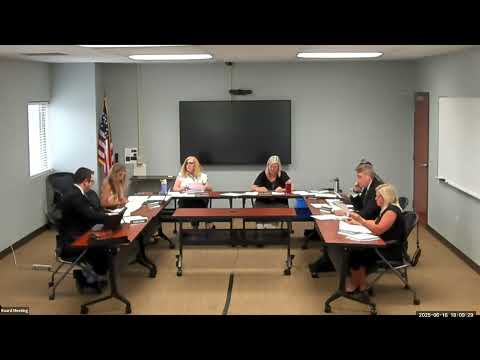
The Lakota Board of Education on June 16 approved a resolution of necessity to pursue a district bond issue and a related permanent-improvement levy, and directed staff to submit certification documents to the county auditor for final millage and ballot language.
The vote clears the district to have the county auditor compute official tax-millage figures and prepare the ballot language; the board will take a separate vote on June 30 if it chooses to place the measures on the November ballot.
District staff had presented two packaged options showing different phasing and timelines; the board signaled a preference for a single “one-ask” November election (Option A) to avoid voter fatigue and compress construction sequencing. Staff reviewed the financial worksheets that show the new bond package, the PI levy request, and sample taxpayer impacts based on estimated appraisals.
Adam Schied, a district staff member who worked through the projections, told the board the materials show the district’s current bond mills and the proposed figures: the presentation cites a bond size of $506,359,503, an advertised ballot millage of 3.99 mills and a PI levy component of 0.95 mills. The staff presentation noted the district currently carries about 2.12 mills in existing bond levies and that, depending on reappraisal factors, the actual collection impact for taxpayers in 2026 could be shown on examples as roughly 2.59–2.82 mills rather than the full advertised ballot total.
The presentation explained the 0.95-mill PI request is tied to participation in the Ohio Facilities Construction Commission (OFCC) program, which requires a local PI contribution (presented as 0.5 mills in the materials) to qualify for state assistance. Staff told the board the county auditor must receive the certification and supporting documents prior to June 30 so the auditor can compute exact millage and prepare the formal ballot wording; the board must have any ballot question submitted to the board of elections no later than July 27 under the timeline staff provided.
At the board meeting the motion — described in the agenda as a “resolution of necessity of bond issue and levy of taxes in excess of the 10-mil limitation and to submit the question of the same to the electors and requesting state consent approval and special needs designation in connection therewith” — passed on a roll call vote. Board members voting yes included Mister Wharton, Miss French, Miss Casper and Miss Schaefer; Mister Dean recorded a no vote. The motion’s mover and seconder were not specified in the recorded roll call.
Board members and staff discussed practical campaign and timing considerations, noting that state-level proposals under consideration to raise levy passage thresholds to 60% could affect local levy strategy if enacted. Staff also emphasized that figures presented were estimates and that the county auditor’s certification will produce the official numbers the board will use when it decides whether to place the measures on the ballot.
If the board proceeds on June 30 to place the issue on the November ballot, the auditor will supply the final issue number and official millage language; if the June 16 resolution had failed, staff said the materials would not be sent to the auditor and there would be no further certification step.
The board did not adopt any final tax rates or place an item on the ballot at the June 16 meeting; the action recorded was authorization to proceed with the certification process.