Get Full Government Meeting Transcripts, Videos, & Alerts Forever!
Get email alerts on the DEI Policy topic
No spam. Unsubscribe anytime.
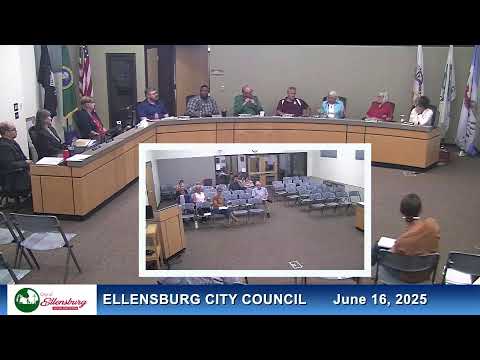
Residents debate role of DEI in Ellensburg comprehensive plan during public comment
Summary
Dozens of residents spoke during public comment on whether a Diversity, Equity and Inclusion chapter should remain in the city comprehensive plan. Speakers debated legal risk to federal grants, community priorities and the commission’s activities; council heard both calls to remove Chapter 9 and defenses of DEI programming.
A large contingent of Ellensburg residents used the city’s non‑agenda public comment period to debate whether the Diversity, Equity and Inclusion (DEI) chapter should remain in the city’s comprehensive plan and how city government should respond to federal guidance.
Multiple speakers urged the council to remove Chapter 9 (the DEI chapter) from the comprehensive plan while preserving an advisory DEI commission; others defended the commission’s activities and urged the council to keep DEI in plan language. Comments included personal testimony about community service, program outcomes and concerns about public safety tied to heated rhetoric.
Among arguments opposing the chapter, one commenter said she had obtained a 04/24/2025 letter from the U.S. Department of Transportation (Secretary Sean Duffy) that, she said, warned agencies that a policy based on protected classes could jeopardize federal financial assistance if it constituted discriminatory treatment. That speaker asked how the city would assess potential conflicts between the comprehensive plan’s DEI language and federal funding conditions and specifically asked how the city would replace a two‑year, $3.9 million transit grant she said could be at risk.
Speakers supporting the DEI chapter said the commission’s work focused on community outreach, events and programs — world cafés, listening tours, a campus‑community dialogue, cooking classes and small grants for basic needs — and said those efforts aim to increase engagement and access to services for residents who otherwise might not be heard. Several speakers tied the DEI work to public‑safety concerns, recounting experiences of violence against LGBTQ+ people and saying rhetoric that frames DEI as hostile to religion or majority groups can contribute to harm.
Council members did not take formal action on the comprehensive plan language during the meeting. City staff and council members noted that legal risks and federal funding impacts cited by commenters require review; council members asked staff to bring information about legal exposure and federal guidance back for discussion. Staff indicated they are tracking federal guidance and litigation and will present assessments if council wants a formal review.
Why this matters: the presence of DEI language in a city comprehensive plan can shape municipal programming and outreach and, according to speakers on both sides, may affect eligibility or perceived risk for federal grants. The debate was both programmatic — what the commission does in practice — and procedural — whether those activities should be reflected in the plan’s chapters.
Council members and staff heard multiple concrete requests from the public: clearer public translations of city materials for Spanish‑speaking residents, better accountability for commission grant allocations, and clearer documentation from staff about federal‑funding legal compliance. The council did not adopt changes at the meeting but committed to review legal implications and follow up with staff analysis.