Get Full Government Meeting Transcripts, Videos, & Alerts Forever!
Get email alerts on the Property Tax Delinquency topic
No spam. Unsubscribe anytime.
Montgomery County treasurer reports drop in delinquent property parcels, warns state law and legislation may blunt gains
Summary
County Treasurer John McManus told Riverside City Council that delinquencies by parcel have fallen sharply in Riverside but that penalties, interest and pending state-level changes to "inside millage" could blunt the fiscal impact for local governments and schools.
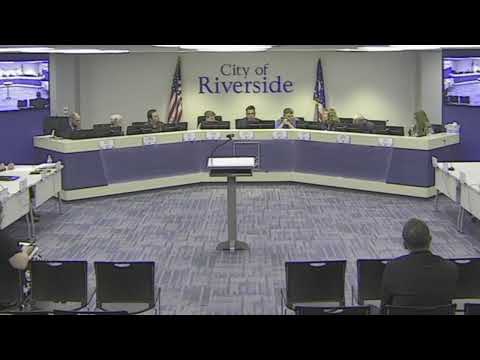
John McManus, Montgomery County Treasurer, told the Riverside City Council on June 16 that the number of delinquent property parcels in Riverside has fallen from about 580 to 281 since his last presentation, while total delinquency dollars have not fallen proportionally because of legally‑required penalties and compounding interest.
McManus said the county’s public investment fund is about $900 million and earned about $26 million last year for county operations. He also outlined homeowner payment patterns in Riverside: about 3,555 parcels are paid through mortgage escrow and “over a thousand” households are enrolled in county prepayment programs that let owners spread property tax bills across monthly payments.
Why it matters: The drop in delinquent parcels signals improved tax compliance at the parcel level, which benefits schools and local governments that rely on property tax revenue. McManus cautioned, however, that state law requires treasurers to affix penalties and interest multiple times a year, increasing delinquency balances even when fewer parcels are delinquent.
McManus described tools the treasurer’s office offers to residents: monthly prepayment plans, delinquency contracts that protect an enrolled property from tax foreclosure while payments are current, and a depositor‑initiated foreclosure process that allows citizens to post a cash deposit to trigger a county judicial foreclosure on eligible properties. “If a property owner is enrolled in a delinquency contract with his or her treasurer, that property is protected from a tax foreclosure or a tax lien,” McManus said.
He also summarized statewide and county fiscal threats: a proposal pending in the Ohio General Assembly to eliminate ‘‘inside millage’’ could remove a guaranteed pool of local revenue. McManus said county auditor modeling shows eliminating inside millage would reduce Montgomery County jurisdictions’ revenues by about $128.8 million; he cited a $548,000 loss estimated for the City of Riverside and roughly $2.2 million for Mad River Local Schools under that scenario.
Council members asked how to address deeply delinquent parcels that remain on the books despite reductions in count. McManus described common obstacles — abandoned properties, probate, bankruptcy and fractured small parcels created during subdivisions — that can make enforcement difficult and sometimes leave properties effectively orphaned. He pointed to local examples of aggressive approaches, including Harrison Township’s outreach and Trotwood’s Community Improvement Corporation work, but said there was no single, county‑wide fix.
The treasurer encouraged council members to refer constituents to his office for prepayment enrollment and delinquency contract options and offered to speak directly with residents who request help. He also introduced Missy May Walters, the treasurer’s associate who manages external relations.
Ending: McManus thanked the council for the invitation and congratulated Riverside on the improved delinquency numbers while urging continued use of county tools and vigilance about pending state legislation.