Get Full Government Meeting Transcripts, Videos, & Alerts Forever!
Get email alerts on the Mobile Food Vendors topic
No spam. Unsubscribe anytime.
Tiffin council changes mobile food vendor rules, waives weekly location fee and widens hours
Summary
After extended public comment and committee discussion, Tiffin City Council amended its mobile food vendor ordinance to remove a proposed $25 weekly location fee, extend permitted vending hours, allow equipment to remain on site under conditions and exempt event vendors from location-permit requirements.
Tiffin City Council on June 9 amended chapter 7.23 of the city code governing mobile food vendors, removing a proposed $25 weekly location fee, expanding permitted hours and adding administrative discretion about multi-day placement of equipment.
Council members and staff said the changes aim to align local rules with state fire-code registration and reduce administrative friction for food vendors while preserving enforcement tools. The council voted on several distinct amendments after public comments from two local vendors and committee-level discussion.
Director of law Zachary Fowler told council “as it stands right now, chapter 7 23 … a $50 fee. That license is good for a year. But if you're gonna operate on city property … there is a location permit that carries a $25 a week fee that is good for up to a month.” Fowler said proposed edits largely clarified definitions, the city administrator’s authority to suspend or revoke licenses and to align some language with state fire-code expectations and the fire marshal’s registration system (iROLL).
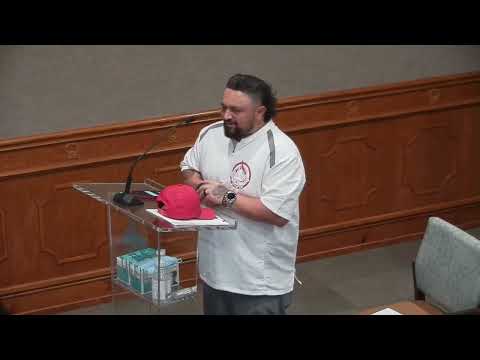
Two mobile vendors spoke during public comment. William Alford, owner of B and A Barbecue, asked for clarity about a line in the application that allows “any other information deemed necessary by the city administrator,” saying: “I would just like clarification on what specifically that is and if there are certain or anything that is being looked for considerably, that we could have that in writing.” Tina Schenk, owner of the Bagel Buggy, told council “Tiffin's policy is the most vague of any other policy,” urging a clearer annual permitting system and consistent enforcement.
Council members said they wanted to make doing business in Tiffin easier while retaining enforcement. Council member Horniman (during debate) described the $25 as an administrative offset, while other members and the mayor cited examples from peer cities with annual fees and different enforcement approaches.
Actions taken (ordinance 25-54 and related amendments): - Council voted 4–3 to remove the $25-per-week location fee for use of city property. Roll call as recorded in the transcript: Dougherty — yes; Hayes — no; Horniman — yes; Jones — no; Reisner — no; Sney — yes; Thacker — yes. (Motion carried 4–3.) - Council amended language changing a proximity/reference term from “restaurant” to “business” to broaden application; that amendment passed unanimously, 7–0. - Council adopted an amendment (section 7.23.06(b)) allowing vendors’ equipment and vehicles to remain at a permitted location without daily removal provided the vendor intends regular ongoing use; the clause defines abandonment as cessation longer than three continuous days or a city-administrator determination. That amendment passed 5–2. The ordinance includes a right to appeal any city-administrator decision to city council. - Council changed permitted vending hours to 6:30 a.m.–2:30 a.m. (Sunday vending must end by midnight); that amendment passed unanimously, 7–0. - Council added an exemption so vendors participating in organized events (heritage festival, farmers market, similar) are not required to obtain a separate location permit for the event; that amendment passed unanimously, 7–0.
Council and staff emphasized enforcement remains possible: Fowler and City Administrator Nick Dutra explained that vendors still must hold the annual mobile-vendor license and meet health and fire inspections; a location permit (if required) remains an approval step even where the weekly fee was removed. Dutra said late-night and weekend, short-duration, noncompliant setups are harder to enforce but the city retains administrative suspension/revocation and criminal remedies when needed.
The council directed law staff to draft final ordinance language reflecting the amendments. No final adoption vote on the consolidated ordinance text was recorded at this meeting; several individual amendments were carried and the item was being redrafted for later readings.
The debate brought several implementation questions that council asked staff to resolve before final passage, including: how the city will display or publish approved vendor registrations, how to record the linear footage a vendor needs when assigning spaces, and how the city will coordinate iROLL/firerelated inspections with local enforcement.
The council hearing included extended public testimony from vendors who asked for a consistent annual system, clearer designated spaces that fit larger truck footprints, and more reliable enforcement against operators who use city spots without permits. The city administrator said staff will explore multiweek or per-permit options to reduce weekly administrative burden and to consider designated, multiuse spaces downtown.
Ending: Council members said the second-reading draft of the ordinance will be updated to reflect the amendments and to include clearer administrative procedures and appeal steps; staff were directed to return revised language at a future meeting.