Get Full Government Meeting Transcripts, Videos, & Alerts Forever!
Get email alerts on the Solid Waste Collection topic
No spam. Unsubscribe anytime.
Alpharetta council directs staff to phase out city-run dumpsters at Alpharetta Commons
Summary
City staff presented options to resolve a $10,000 monthly public expense for nine dumpsters behind Alpharetta Commons; council directed staff to notify businesses, pursue ground-lease or compactor options, and report back within about 60 days.
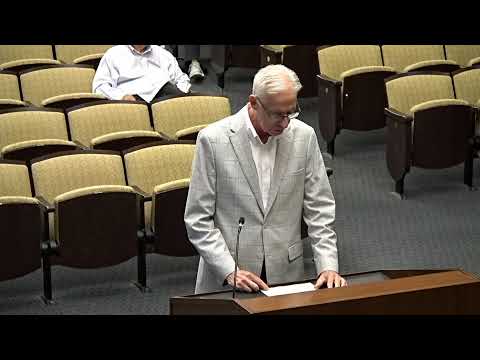
City Administrator Mister Lagerblum told the Alpharetta City Council on June 16 that nine dumpsters behind Alpharetta Commons on Milton Avenue and Roswell Street have become a roughly $10,000–$11,000 monthly expense the city has been subsidizing.
The dumpsters were placed after a 2021 invitation to bid and have served restaurants, retail and offices in the block, Lagerblum said. He told council the original user-fee formula—nonrestaurant users paying $100 per month with the remaining cost split among restaurants—has eroded as participation dropped and contamination charges increased, which drove up the monthly bill.
“1 of the things we could do…is we could just get out of the trash business,” Lagerblum said, listing options including removing the dumpsters, offering a ground lease for space so businesses could contract privately, or supporting a privately funded compactor as a longer-term solution. He said staff tried meetings with property- and business-owners but received limited engagement.
Council members generally favored moving the cost and responsibility to private property owners and businesses, while seeking a transition plan to avoid abrupt harms to downtown merchants. Mayor Pro Tem Tim Markle asked staff to “physically talk to each business owner and inform them the certain date that’s coming” and to provide options for shared haulers or screening requirements. Councilman Dorito and others urged ground leases or consortium arrangements that would allow owners to “police each other” under lease or zoning appearance requirements.
City Attorney Ms. Eswine cautioned about the legal limits of using a special service district for fees, telling council that pending court cases have questioned when a fee without an opt-out can be treated as an unauthorized tax. Lagerblum said staff had explored a special service district but that the city attorney’s office required an opt‑out clause to reduce legal risk—an outcome Lagerblum said would undermine the tool because participation would be optional.
Council members suggested a phased transition. Several said they want staff to return with a plan that minimizes disruption to small businesses — including possible compactor siting, relocation to other screened corrals, or ground-lease language that clarifies appearance and operational responsibilities. Mayor summarized the direction: “it’s all pointing the same direction, and then I will report back as to the progress that we make.”
No formal ordinance or vote was taken; council provided direction to staff and asked for follow-up with business owners and a return report to council.