Get Full Government Meeting Transcripts, Videos, & Alerts Forever!
Get email alerts on the Opioid Response topic
No spam. Unsubscribe anytime.
Iredell officials report declines in opioid emergency visits as county expands peer and recovery supports
Summary
Iredell County EMS and public-health staff reported expansion of a countywide opioid response using settlement funds and local partners; staff described peer support teams, referrals, Narcan trainings and metrics showing fewer opioid-related ED visits in 2024.
Iredell County officials on Tuesday held the annual opioid-settlement meeting required by the settlement terms and described a countywide network of EMS, public-health and nonprofit partners providing outreach, peer support and recovery services.
“We like acronyms a lot in our program,” Terry Lamb Blankenship, lead peer support specialist for the county’s Community Response Support Team, said as she outlined the EMS program’s structure and results. Lamb Blankenship described a team of four community paramedics and three peer support specialists who, from July 2024 through May 2025, engaged 68 new participants, made 72 referrals to substance-use treatment and 182 additional referrals for services such as food and employment.
Lamb Blankenship said the team logged “over 600 individual interactions” with clients and helped place 27 people into stable sober living, most of whom had previously experienced homelessness. She presented a client success story — a man identified as Grant who is nine months into recovery, employed and volunteering — and read brief gratitude messages from other clients.
Jennifer Kilby, human services planner at the health department, described complementary prevention and recovery work funded or supported through the same settlement resources, including Youth Mental Health First Aid training for school resource officers and juvenile program staff, employment-related services with partners such as NCWorks and Goodwill, and recovery-support summits that drew more than 100 participants. Kilby said training efforts reached 75 participants and that plans include launching teen mental-health first-aid training in July for high-school students.
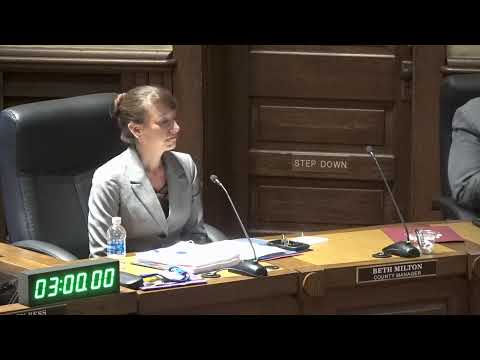
County Manager Milton and several commissioners credited local coordination and early program starts for the county’s outcomes. “We started these efforts before the opioid settlement money started coming in,” Milton said. He said existing local programs allowed the county to expand countywide once settlement funds arrived and suggested that is contributing to a decline in opioid-related emergency-department visits in 2024.
No formal board action was required; the session fulfilled the annual review requirement attached to the opioid settlement funds and offered municipalities an opportunity to receive the countywide program update. Officials invited municipalities to participate in planning and described ongoing training opportunities, including an advertised no-cost Narcan/CPR training.