Get Full Government Meeting Transcripts, Videos, & Alerts Forever!
Get email alerts on the Legislative Session Impact topic
No spam. Unsubscribe anytime.
Belton ISD staff say 2025 Texas laws bring targeted dollars but leave local funding gaps
Summary
District staff told the Belton Independent School District board on June 16 that measures passed in the 80th Texas legislative session provide several targeted allotments but leave shortfalls for pre-K, safety, special education and non-teacher compensation until state guidance and local calculations are complete.
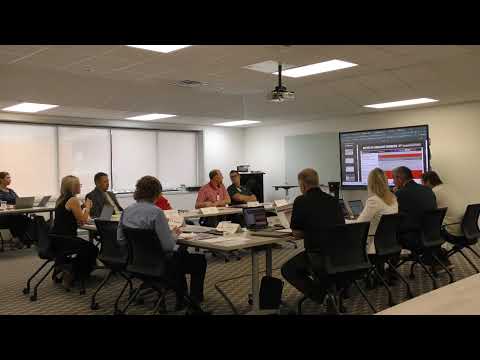
BELTON, Texas — Belton Independent School District staff reviewed the district’s legislative priorities and the effects of the 80th Texas Legislature during a June 16 workshop, saying several bills produced narrowly targeted funding but left important local costs uncovered.
Christine, a district staff member who presented the update, told trustees the session generated more than 1,500 education-related bill filings statewide and that about 148 bills ultimately passed. She said several measures — including Senate Bill 2 and House Bill 2 — are the most consequential for the district because they create or change specific allotments rather than broadly increasing the basic student allotment.
Those targeted allotments include a $55 increase to the basic allotment (about a 1% rise), a teacher-retention allotment that the district estimates will translate to roughly a 7% average pay increase for classroom teachers in Belton ISD, and new or expanded allotments for safety and mental-health supports. Christine said the safety allotment was doubled and the district currently anticipates receiving “a little less than a million dollars” next year from that change but noted the district’s projected cost for armed security across campuses is approximately $1.7 million, leaving a funding gap.
She also summarized state actions related to prekindergarten and special education. House Bill 2 did not convert half-day pre-K funding to guaranteed full-day pre-K; instead, an early-education allotment will direct about $1.2 million toward full-day pre-K locally, with an additional roughly $216,000 the district could use either for teacher academies or toward pre-K costs. Christine said the district’s full-day pre-K cost is about $3.6 million, so the allotments will not fully cover the expense.
On special education, Christine said the Legislature added about $22 billion statewide and that the state’s underfunding gap had been roughly $2 billion. She cautioned that local impacts remain uncertain until TEA (Texas Education Agency) issues implementing guidance and district models are available; she said the district may not know the full effect until the end of the next school year when state calculations settle.
Board members flagged the session’s tendency to tie new money to specific uses. One trustee summarized the shift as “very specifically targeted to a very specific area,” saying that the allotment approach leaves less local flexibility for spending. Christine and others said the district will continue advocacy and follow-up with legislators and wait for TEA guidance and policy update 126 before making policy or local-budget decisions tied to the new laws.
The board discussion also covered items that failed to pass this session but were priorities for the district, including proposals related to accountability reform, tax compression, and lobbying rules. Christine said those items may return in future sessions and that the district will continue community engagement on legislative priorities.
The workshop included no public comments on the legislative update and no formal votes on legislative responses; staff described the presentation as informational and said they will report back as TEA guidance and budget templates are released.
Ending: District staff urged continued monitoring and local advocacy, noting several impacts remain unanswered until TEA issues implementing rules and the district runs its local funding models.