Get Full Government Meeting Transcripts, Videos, & Alerts Forever!
Get email alerts on the Education Outcomes topic
No spam. Unsubscribe anytime.
San Marino Unified presents year‑in‑review: restorative practices, attendance and high school outcomes highlighted
Summary
District staff reviewed 2024–25 progress on four board goals, reporting expanded restorative practices and PBIS, increased use of the Titan Wellness Center, high graduation and assessment outcomes, and pilot academic programs including Mandarin dual‑language and a Medical Arts Academy.
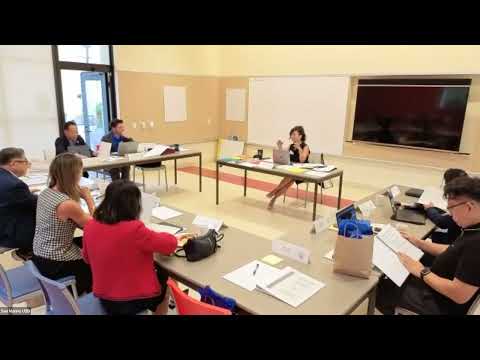
San Marino Unified School District staff presented the district’s 2024–25 progress on four board goals — safety and wellness; fiscal health and sustainability; a culture of service, value and appreciation; and preparing students for global citizenship — during a June 9 strategy session.
Assistant Superintendent Linda Richter led a summary of instructional and student‑support programs. She said the district entered year three of restorative practices, expanded positive behavioral interventions and supports (PBIS) at elementary schools and continued growth of the Titan Wellness Center, the district’s mental‑health hub. Richter presented referral counts the district is tracking through its Local Control and Accountability Plan: 235 referrals to the wellness center in 2022–23 and 262 in 2024–25, with San Marino High School (92 referrals), the middle school (94 to 114) and elementary sites showing smaller changes.
Richter also reviewed instructional initiatives and assessment results. The district reported continued gains on state assessments: San Marino Unified’s students met or exceeded state standards across ELA and math in 2024, and the district retained a high graduation rate (reported at about 99%). The district described implementation of Universal Design for Learning, multi‑tiered systems of support (MTSS), and expanded small‑group instruction at elementary schools. The high school reported AP performance that met national recognition benchmarks and a strong attendance average districtwide (about 97 percent).
Staff highlighted program pilots and specialized pathways: the Mandarin Dual Language Immersion program entered its third year, with demand requiring a lottery and a wait list; the Titan Medical Arts Academy expanded collaboration with Pasadena City College for coursework and is developing a Saturday research/capstone sequence to supplement internships; and the district piloted STEM and science curriculum at middle grades while planning an elementary science pilot for 2025–26. Richter said the district had embedded ethnic-studies content into English 10 for 2025–26 and that the board had approved the course in May.
Tutoring and formative assessment usage were discussed: the district provided free 24/7 tutoring through Tutor.com under a grant and uses iReady (K–5) and NWEA/IXL (6–12) as diagnostic tools administered three times per year to guide instruction and align professional development. District staff said iReady and NWEA data feed regular data‑inquiry cycles at site level so teams can design interventions promptly.
No formal board actions were taken during the presentation; staff said they would provide additional, finalized assessment files to the board when state releases are completed later in the year.