Get Full Government Meeting Transcripts, Videos, & Alerts Forever!
Get email alerts on the School Finance topic
No spam. Unsubscribe anytime.
Rutherford County committee approves $17.4 million school year‑end cleanup, funds laptops and cafeteria transfers
Summary
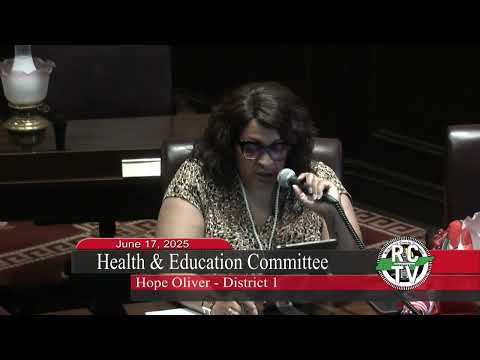
The Health & Education Committee approved fiscal‑year‑end budget amendments for Rutherford County Schools totaling $17,402,929 in fund‑balance moves and related adjustments, funding 1:1 high‑school laptops, payroll accruals and cafeteria indirect‑cost transfers; separate cafeteria amendments also passed.
Rutherford County’s Health and Education Committee on June 17 approved year‑end budget cleanup amendments that move $17,402,929 within the school general fund (Fund 141) and separate adjustments in the centralized cafeteria fund (Fund 143), funding items that include 1:1 high‑school computers, payroll accruals and indirect‑cost transfers.
The cleanup amendments, presented by school staff, were described as routine year‑end accounting to place additional recognized revenues and to reallocate expenditures across object codes before the fiscal year closes. Committee members approved the cafeteria fund amendment(s) and the Fund 141 balance amendment in separate roll calls; votes were recorded as unanimous among commissioners present.
The amendments and why they matter
School staff told the committee the Fund 141 cleanup amendment budgets $17,402,929 for items such as leave payouts, degree/certification increases, pay‑scale changes, stipends, insurance premium increases, contracted services, capital outlay for construction and liability‑insurance increases tied to recent transportation claims. The amendment also funds the purchase of 1:1 laptops for high‑school students and mobile charging stations for elementary schools.
“That's part of this cleanup amendment,” school staff said about the laptops; commissioners were told the district avoided pulling the laptop purchase from fund balance and instead covered it through this cleanup, an amount staff described as roughly $6 million. School staff said those laptop purchases were the result of months of internal budget work to reallocate available revenue.
The cafeteria fund (Fund 143) amendments include two actions the committee approved: (1) a budget neutral year‑end reallocation to cover employee payouts, food supplies and transportation without increasing overall revenues or expenditures; and (2) an indirect‑cost reimbursement entry that moves $3,484,173 from Fund 143 to Fund 141 to reimburse the general fund for indirect costs that benefit multiple programs. The Rutherford County Schools (RCS) unrestricted indirect cost rate for FY 24‑25 was reported as 11.33%, calculated annually by the Tennessee Department of Education.
On how the payments and revenues work
School staff explained that some state TISA (Tennessee Investment in Student Achievement) funds and other state revenue were received above budgeted estimates this year and were recognized now so they could be expended appropriately before the fiscal year end. Staff also described a line item labeled “TISA on behalf” tied to a charter school the district did not authorize; the state makes payments on behalf of that charter and the district records an offsetting revenue and expenditure entry. “It’s just a wash,” a school official said of those on‑behalf entries.
Committee members asked how cafeteria funding and federal reimbursements relate to proposals to feed all students. School staff said cafeteria operations are largely reimbursement based (USDA federal reimbursements and meal payments) and described cash‑flow constraints on offering universal free meals. A school official said, “To feed our students for free would basically bankrupt the 1.43 fund in probably less than a year,” and estimated that providing free meals countywide last year would have cost roughly $7.3 million to $8 million and would have produced a multi‑million dollar deficit in the cafeteria fund under last year’s figures.
Staff noted that some districts use the Community Eligibility Provision (CEP) to feed all students, but that eligibility depends on a concentration of students qualifying for free and reduced‑price meals; Rutherford County’s qualifying rate was described as in the low‑to‑mid 40s this year and therefore below the level that typically supports CEP. Staff also noted that USDA reimbursements are returned on a reimbursement basis (not pre‑paid), which can create short‑term cash‑flow issues for the cafeteria fund.
Payroll, insurance and staffing questions
Commissioners questioned whether salary increases in the cleanup amendment reflected permanent raises or merely accruals for year‑end payrolls. School staff clarified the additional salary dollars in the amendment represent accruals to cover June, July and August payrolls that fall within the fiscal timeline; separate budget work for FY 25‑26 is addressing planned salary schedule changes (including steps to raise new‑hire minimums). The committee was told the district has focused recent increases on veteran teachers and that projected new‑teacher salaries for next year were expected to be just above the statewide $50,000 target.
Votes and next steps
The committee approved: Fund 143 budget amendment (indirect cost transfer) by roll call (Commissioners Oliver, Davidson, Wilson, Gooch and Chairman Dodd voting yes); Fund 143 budget amendment number 2 (budget neutral cleanup) by roll call; and the Fund 141 year‑end fund‑balance amendment by roll call. Committee members were told the item will proceed to the county budget committee the following night for further action.
The discussion included questions about ongoing cafeteria investments — staff reported approximately $1.8 million in kitchen renovation encumbrances underway to reduce large fund balances and update serving infrastructure. No formal action to change meal price or universal free meals was adopted; those would require separate policy or budget decisions by the board and county commission.