
Vancouver council debates rental-registration fee, delays inspection specifics
Get AI-powered insights, summaries, and transcripts
Subscribe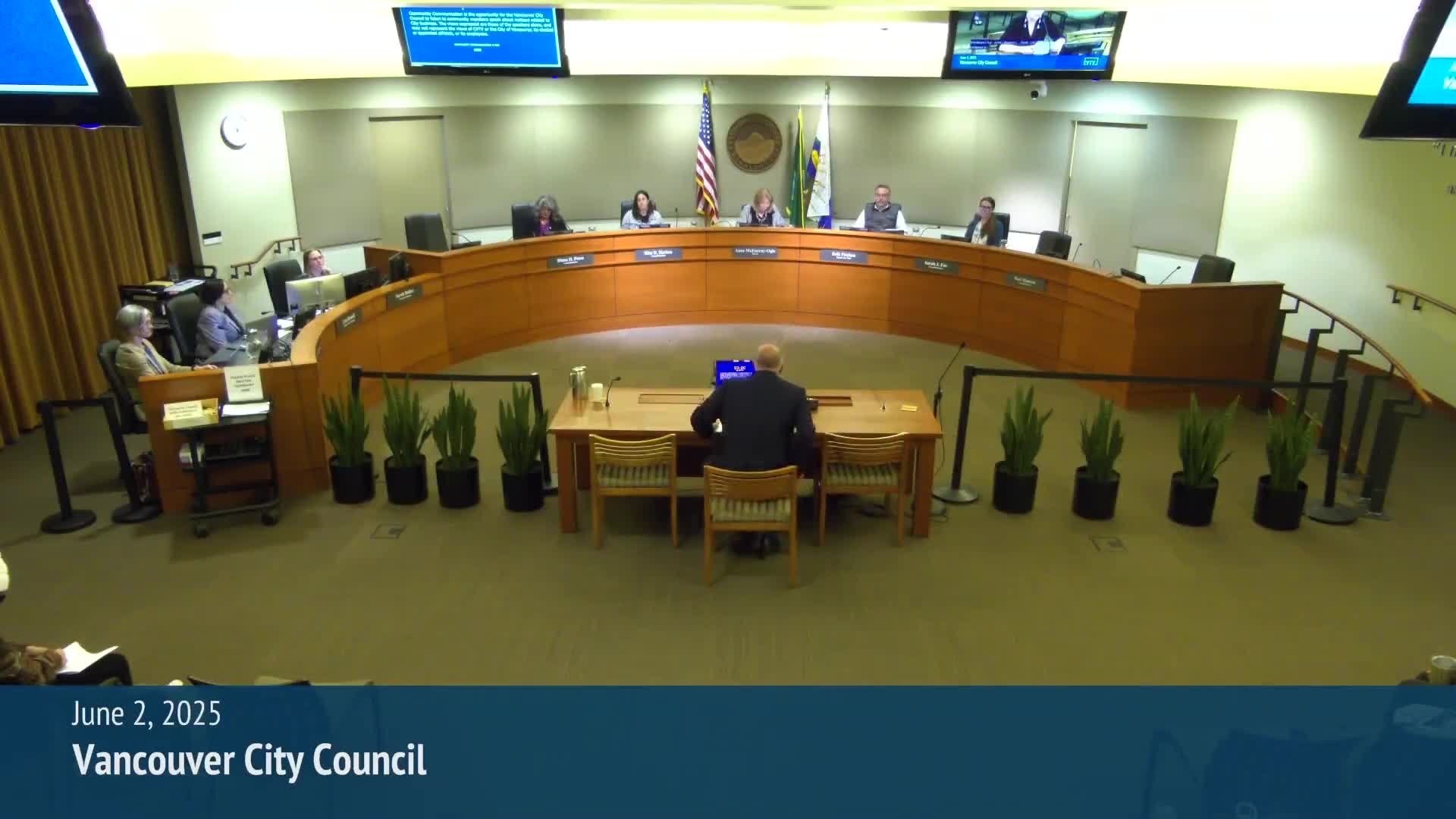
Summary
Vancouver City Council members debated an ordinance on June 2 that would establish a rental-registration program requiring all rental housing in the city to register annually and pay a $30 per-unit fee, with some exemptions for income-restricted units.
Vancouver City Council members debated an ordinance on June 2 that would establish a rental-registration program requiring all rental housing in the city to register annually and pay a $30 per-unit fee, with some exemptions for income-restricted units.
The measure is intended to create a complete inventory of rental housing, identify owners and contacts, and provide data to support future enforcement, education and relocation-assistance programs. Councilors and members of the public raised concerns about the fee structure, the timing of the first registration, and whether small, owner-occupied and newly built units should be treated differently.
Supporters of the program said it is a tool to fill gaps in the city’s data on rental stock and to improve communication and enforcement. Critics — including a landlord representative and several council members — warned the fee and any inspection program that follows could increase costs for small landlords and ultimately be passed on to tenants.
“[The registration] was never really a consideration, in part because we want to create a complete data set of what units we have in the city, who owns those units, and how we can contact them,” said Carrie, staff member, explaining why staff proposed unit-level registration. “We don't have a way of contacting on-the-ground local building owners right now.”
Councilor Fox pressed staff on implementation details and the ordinance’s timing provisions, saying the code reads as if a unit cannot be rented unless it is already registered. “If I get a license to rent a unit that was just built in August or September, I'm paying $30 for that unit and then I'm paying $30 again in January,” Fox said, arguing the city should allow a 12‑month, anniversary-style license or otherwise clarify the start date to avoid double-charging new units.
Staff responded that the current proposal uses a single annual registration window in January so the city can manage renewals and communications on one schedule. Taylor, staff member, said the program includes a director authority to waive fines and adjust start dates if implementation is delayed, and staff offered to clarify the ordinance language to reflect the intended operational approach.
Members of the public weighed in. Albert Schlafield, speaking for Al Angelo Company, urged the council to reject the ordinance or alter it, saying inspection costs and private-inspector requirements would “drive costs up and those costs are inevitably gonna get passed on to tenants.” He also asked whether registration and inspections must be linked and whether landlords of a few units would be disproportionately affected.
Councilors discussed exemptions and fee structure at length. Councilor Perez urged the council to distinguish between small, local landlords and large corporate owners, proposing either a fee waiver for owners of five units or fewer or a tiered fee structure. Staff and other councilors noted the advisory committee that recommended the ordinance included representatives from tenants, small and large landlords, tenant-rights groups and property managers, and that committee had recommended a per-unit fee to avoid penalizing large owners with a large per-property flat fee.
Staff highlighted a proposed 90‑day “learn” period at program launch during which the registration fee would be waived to encourage early sign-ups, and said income‑restricted units at or below 60% of area median income would be required to register but would be exempt from the fee.
No final vote on the rental-registration ordinance occurred on June 2. Councilors chose to pull the item from the consent agenda for extended discussion and directed staff to revise language addressing the start date and registration timing, clarify penalties and waiver authority, and return with an updated proposal. Councilor Fox and others said any substantive changes to fee structure should be returned to the advisory committee for reconsideration.
The city manager and staff also agreed to bring the matter back for a follow-up discussion so the council could consider whether small landlords should be permanently exempted from the fee or placed on a tiered schedule. The council left the fee structure in the draft code “for now” and asked staff to provide clearer text before the next reading.