Get Full Government Meeting Transcripts, Videos, & Alerts Forever!
Get email alerts on the City Budget topic
No spam. Unsubscribe anytime.
Yakima staff outline $9 million 2026 budget gap; recommend public-safety and parks levies plus fee changes
Summary
City staff told the Yakima City Council that the general fund faces an approximately $9 million shortfall for 2026 and presented options including deep service cuts, a public-safety levy, a parks levy, fee increases, and other revenue tools such as a utility tax or Transportation Benefit District (TBD) changes.
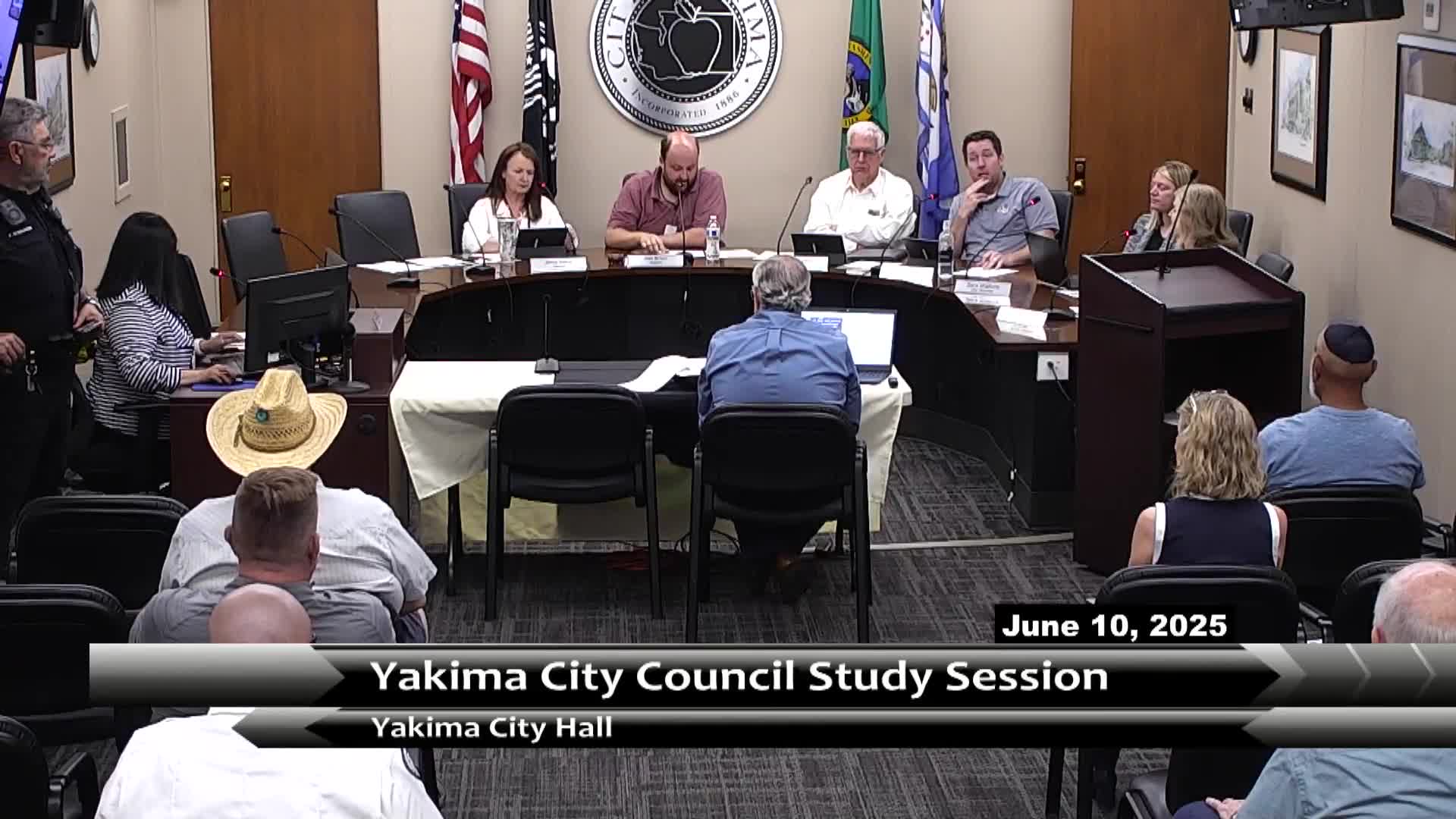
City Manager Vicki Baker and finance staff told the Yakima City Council during a study session that the city faces “a deficit of approximately $9,000,000” for the 2026 general fund and laid out a menu of cuts and revenue options to close the gap.
Baker, who led the presentation with staff, said the city has spent the last year adopting “priority based budgeting” and asked council members to weigh which services the community wants to keep. Finance presenter Craig Warner said the shortfall exists in part because one-time federal ARPA funds and higher reserves used to balance the 2025 budget will no longer be available for 2026.
The staff presentation grouped possible actions into three broad approaches: (1) expenditure reductions totaling about $9 million if the council chose to make cuts only; (2) voter-approved levies to restore some services; and (3) targeted revenue changes and fee adjustments. Warner summarized the scale: "we have a deficit of approximately $9,000,000." He and Baker emphasized that many of the line items would need additional analysis before being finalized.
Cuts on the staff list ranged across parks, public safety and other services. The presentation cited examples with dollar estimates taken from the city budget: closing Fire Station 92 (about $1.7 million), eliminating the gang unit ($1,000,000), closing the Lions Pool (net $479,000), reducing parks maintenance ($500,000), eliminating the YPD property crimes unit ($750,000), and eliminating trolley maintenance. Staff said the public-safety-related reductions made up roughly $5.6 million of the total proposed cuts, parks about $2.0 million and other services about $1.4 million.
Staff recommended a package of two levies as a principal revenue approach: a public-safety levy of roughly $5.4 million and a parks-and-recreation levy of about $1.8 million, plus $1.8 million of remaining service reductions and fee increases. Using the city’s stated average assessed-value home ($356,395), staff estimated the public-safety levy would cost an average homeowner about $160 per year (about $13.36 per month). The parks levy was estimated to cost an average homeowner about $53 per year. Combined, staff said a single city-service levy covering the entire $9 million shortfall would translate to about $22 per month for the average assessed home.
Warner presented alternative revenue options and timetable constraints. Staff said a councilmanic utility tax could be enacted more quickly and that “every 1% increase in your utility tax is gonna generate about a half a million dollars,” while a TBD fee increase (from $20 toward $40) or a TBD sales tax could generate $1.7 million to $2.7 million annually but staff recommended reserving TBD revenue for transportation capital instead of the general fund. Staff also summarized that a recently authorized 0.1% public-safety sales-tax carve-out at the state level contains programmatic requirements and would require analysis before the city could rely on it.
Several council members asked for more detail and for staff to validate the line-item estimates before the council commits to a ballot measure. Council members and staff discussed timing constraints: the county’s ballot deadline is in early August, and staff said they would need time to finalize levy language, legal review and financial vetting. Staff asked for a council direction by roughly the first council meeting in July if the council intends to place measures on the November ballot.
Staff also outlined longer-term revenue options that require studies and voter approval, including creation of a fire district or a metropolitan park district and adoption of impact fees for new development. Those options were discussed as multiyear solutions, not immediate fixes for 2026.
Direction and next steps from the meeting: staff will re-verify the savings and cost estimates for any items left on the cut list, provide more precise staffing and program impacts, and return with refined levy sizing and language for council consideration. The budget advisory committee will also weigh in and staff said it would deliver additional detail as quickly as practical given the county deadlines.
Votes at a glance: the only formal motion recorded in the transcript was a procedural motion to adjourn the meeting to the next regular council meeting on 2025-06-17 at 5:30 p.m.; the motion was seconded and the chair called the ayes.
Why this matters: the choices before the council would affect police and fire staffing, parks and recreation programs and facilities, and a range of city-maintained services. Staff and several council members warned that relying solely on reserves or one-time federal funds is not sustainable and that a mix of revenue and cuts will likely be necessary to stabilize 2026 and beyond.