
Yakima Regional Clean Air Agency adopts FY2025-26 budget after months-long COLA debate
Get AI-powered insights, summaries, and transcripts
Subscribe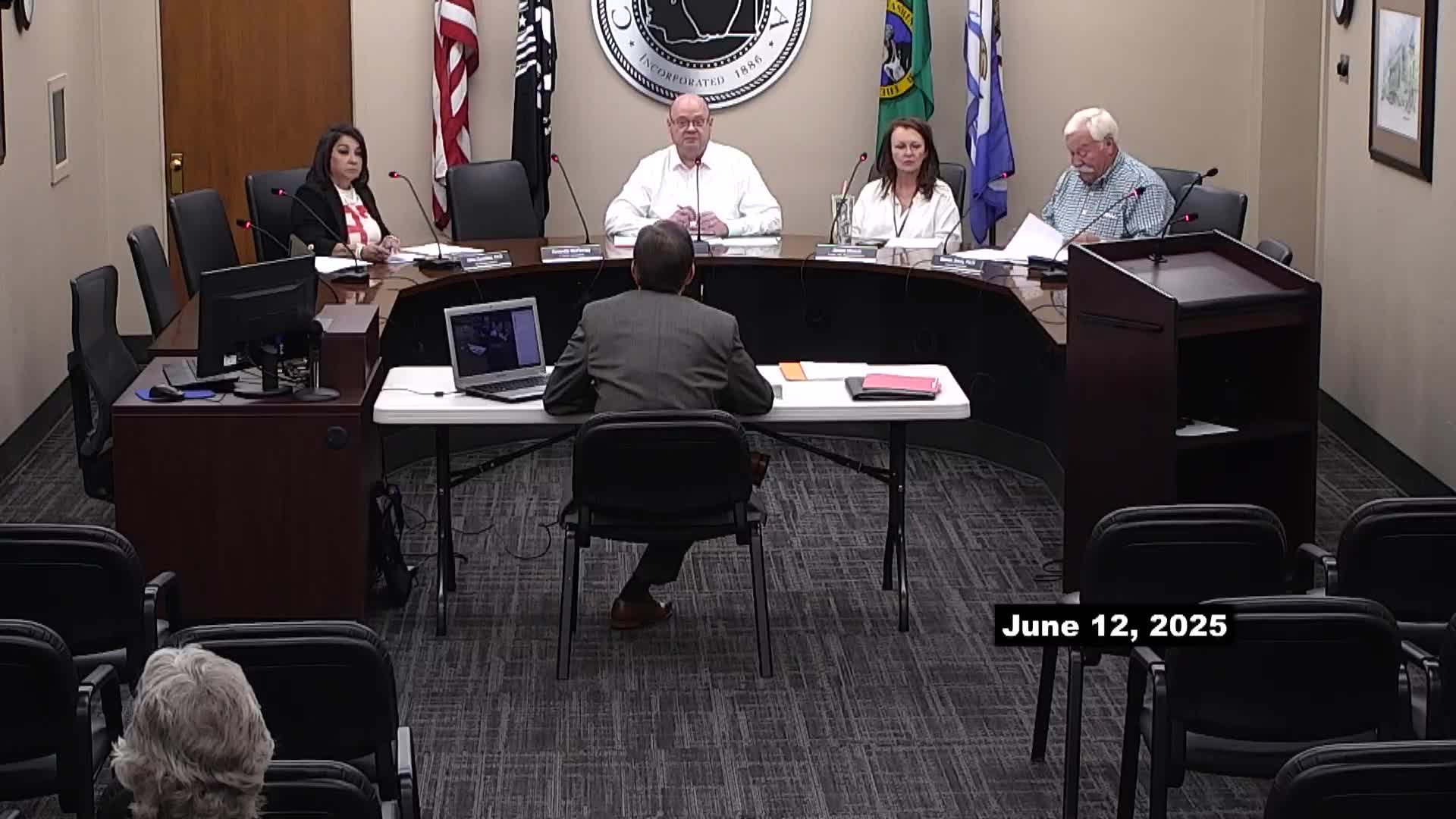
Summary
The Yakima Regional Clean Air Agency board on June 12 adopted the FY2025-26 budget and a 1¢ per-capita supplemental assessment after extended debate over a proposed cost-of-living adjustment (COLA) for staff, reserve allocations and timing for fee notices to cities.
The Yakima Regional Clean Air Agency Board of Directors on June 12 adopted its fiscal year 2025–26 budget and a supplemental assessment, after board members debated whether to budget for a staff cost-of-living adjustment (COLA) now and require a separate vote to enact raises.
The vote approved amended Resolution 2025-01 establishing a supplemental assessment rate of 55¢ per capita and Resolution 2025-02 adopting the FY2025–26 budget, which the board amended to reflect $1,565,229 in projected revenue and $1,682,350 in projected expenses.
The question of whether to include funding for an automatic COLA and the schedule for authorizing raises dominated the discussion. Dr. Steven Jones, a board member, said he favored budgeting the money but requiring a separate resolution to authorize any salary increases, explaining the practical need to have funds available for cities’ budgeting: “If it’s not included in the budget, then we cannot base our assessment rates on those projected costs, and those assessments have to go to the cities by the fourth Monday in June,” Jones said. He proposed that the board “use as our basis for the initial 2025–26 budget, the draft presented at the May meeting, with the proviso that no action may be taken on funding provided for salary adjustments, except by further resolution.” That motion carried.
Director Mark Thornsberry, the agency’s executive director, described how revenue changes and new registrants reduced earlier supplemental estimates. He told the board the draft budget had previously included language allowing “up to 3%” for COLA and noted agency practice has been to phase compensation changes to avoid sudden, large adjustments. “The draft budget did provide the budgetary amount to cover a 3%,” he said, adding that the actual COLA level would be decided later by resolution.
Board members discussed alternative ways to fund raises, including using unallocated reserve funds. Several members warned that repeatedly relying on reserves to fund recurring salary increases would be unsustainable. One commissioner said reserves were established following guidance from the state auditor and described them as a tool to smooth purchases of vehicles, scientific equipment and possible legal liabilities.
The board amended the supplemental assessment resolution to raise the per-capita assessment from 54¢ to 55¢ and then adopted the budget as amended. All votes on the minutes, vouchers and the two budget resolutions were approved with unanimous “aye” votes recorded during the meeting.
The board also agreed to bring a separate COLA resolution back to the July meeting for formal debate and possible action; the executive director’s performance review is also scheduled for the July agenda. Director Thornsberry said recruitment and system-development work continues and that a high volume of public-records requests has consumed staff time.
The board briefly discussed the timing of future fee-setting: while permit-fee changes typically take effect in January and are adopted in December, the supplemental assessment requires notice to cities in June. Multiple members suggested moving the calendar earlier in future years to avoid compressed decision timelines.
The board adjourned after approving the budget and related resolutions; it plans to meet in July and will decide later whether to cancel the August meeting.