Get Full Government Meeting Transcripts, Videos, & Alerts Forever!
Get email alerts on the Tax Policy Sb3 topic
No spam. Unsubscribe anytime.
Raymore staff project $717,000 near‑term loss if Missouri SB 3 tax freeze takes effect; council warned of long‑term debt pressure
Summary
City staff told the Raymore City Council on Monday that Missouri’s recently passed Senate Bill 3 would freeze real‑property tax liability at 2024 levels for some counties and that, if applied in Cass County, Raymore could lose an estimated $717,329 in collections over the near term and face larger long‑term debt service pressure.
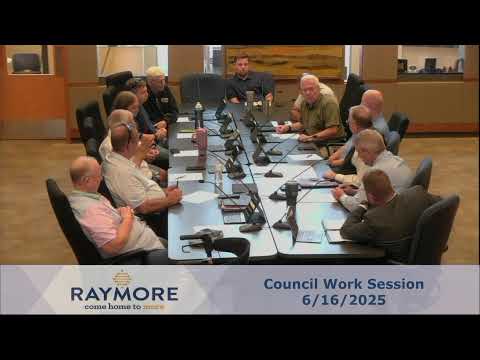
City staff briefed the Raymore City Council on Monday on how Missouri Senate Bill 3 — passed in a special legislative session — could affect the city’s property tax receipts and debt service if county voters adopt the measure.
City staff member Fairborn summarized SB 3’s core effect as a freeze of the “real property tax liability” (the dollar amount of tax owed on property) based on a 2024 base year for counties classified by the law. He said Cass County is in the category that would be frozen at 0% increase over the base year and that the freeze would apply to residential property, including apartment complexes.
Finance staff presented numerical impacts the city calculated under conservative assumptions that hold the city’s levy and the assessed‑value formula constant. Staff reported a near‑term difference of $717,329 over two years if the freeze is implemented: $232,993 in general fund revenue, $62,688 in the parks fund and $421,329 in the debt service fund. Staff estimated a 10‑year conservative impact of about $17,000,164.19 but cautioned that sales, reassessments and CPI changes will affect that projection.
Staff explained the law’s mechanics: assessed valuations would continue to be calculated, but the tax bill would show a credit that reduces the taxpayer’s owed amount to the frozen base year figure. Over time, staff said, the effective levy would be pushed down by rising assessed valuations that the city is not collecting against, which could in turn lower the tax base used for future bond calculations.
On debt service, city staff warned the council the debt‑service fund takes the largest immediate hit and that the city could face pressure to raise the levy if bond payments cannot be met. Staff estimated the debt‑service shortfall could grow to more than $2 million by 2035 under the zero‑increase scenario and said the planned no‑tax‑increase bond issue for a Justice Center would likely be delayed into the 2030s unless other actions are taken.
Staff also reported conversations with the local school district superintendent and noted the district expects to survive but warned smaller political subdivisions in Cass County could be forced to consolidate. Staff said the governor and legislature could pursue fixes in a later special session and that legal challenges to the law are likely.
The council discussed ballot timing and messaging. Staff recommended the presiding county commissioner consider placing the question on an April ballot to allow time for legal challenges and fixes to play out rather than placing it on the November general election and immediately affecting December tax bills. Staff emphasized the city must remain informational and not advocate for or against ballot language.
No formal council vote was taken. Staff said the city will present two preliminary budgets in upcoming work — one that includes the SB 3 impact and one that anticipates judicial change — and will continue monitoring litigation, county decisions and any legislative fixes.
The council requested more detail on growth assumptions and on how changes would affect bond ratings; staff noted a potential negative pressure on Moody’s ratings across Missouri and estimated a possible two‑notch downgrade scenario if revenue stress becomes widespread.