Get Full Government Meeting Transcripts, Videos, & Alerts Forever!
Get email alerts on the Rental Housing Ordinance topic
No spam. Unsubscribe anytime.
Frostburg approves overhaul of rental-housing rules, moves inspections in-house
Summary
Frostburg commissioners gave final approval to a package of text amendments to the city’s rental-housing ordinance that centralizes inspections under a city inspector, tightens scheduling and correction timelines, and modernizes registration and payment processes.
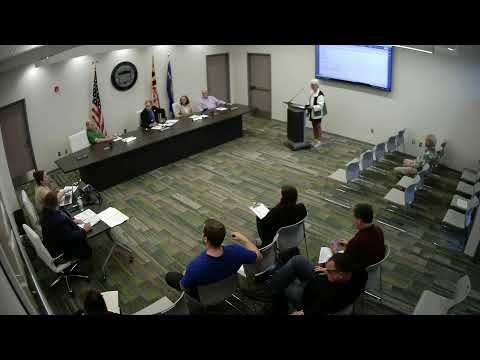
Frostburg commissioners approved Ordinance 2025-05 on second reading, adopting a set of text amendments that change how the city licenses and inspects rental housing.
The amendments, presented at a public hearing by Community Development staff (referred to in the meeting as Bethany), move all rental-unit inspections — including reinspections — to a full‑time city rental-housing inspector rather than privately contracted inspectors, and centralize fee collection through the city. “All inspections including the reinspections will be conducted by a full time city rental housing inspector,” the presenter said, describing the goal of a single standard and single point of contact.
City staff told commissioners the changes respond to landlord feedback, aim for consistent enforcement, and are designed to be cost neutral. The ordinance keeps inspections on a three‑year cycle but tightens scheduling and follow‑up deadlines: property owners must schedule an inspection within 30 days of notice and the inspection must occur within 90 days. If violations are found, non‑life‑safety issues must be corrected within 30 days; life‑safety issues must be corrected within three days. The ordinance also formalizes a full‑time rental-housing inspector position, requires inspectors to hold International Code Council (ICC) certification, and adds conflict‑of‑interest restrictions for inspectors.
The registration process will be modernized: owners may apply and pay online (paper forms available by request), and the form will add checkboxes for occupied/vacant status and whether a unit is a short‑term rental. Staff said the city will add an oath signature to the registration form and intends to launch the new digital platform July 1. The fee schedule discussed in the presentation keeps the on‑time registration rate and raises penalties for late payments: staff said the annual fee will remain $40 if paid on time, $50 if paid in the next window, and that a late payment after April 1 will result in a $100 fee in addition to the $250 citation that can apply for unlicensed units.
Members of the public questioned administration and capacity. Lisa Van Houghton asked who grants extensions; staff said extension requests are submitted to the Community Development director (the presenter) and handled by judgment in coordination with the inspector. A property manager questioned capacity, noting the program requires about 600 inspections a year; staff said the city uses a digital work‑order system to schedule and track inspections, and noted that a typical two‑unit inspection took roughly 30–45 minutes in a demonstration they conducted.
At the close of the public hearing the commission voted to adopt Ordinance 2025-05 on second reading and final passage.
The ordinance also clarifies enforcement authority: the city can revoke registration and post units as unfit for occupancy if required corrections are not completed. Staff emphasized the intent is compliance rather than punishment. The commission approved the ordinance during the meeting after public comment and staff responses.