Get Full Government Meeting Transcripts, Videos, & Alerts Forever!
Get email alerts on the Us Canada Tariffs Trade topic
No spam. Unsubscribe anytime.
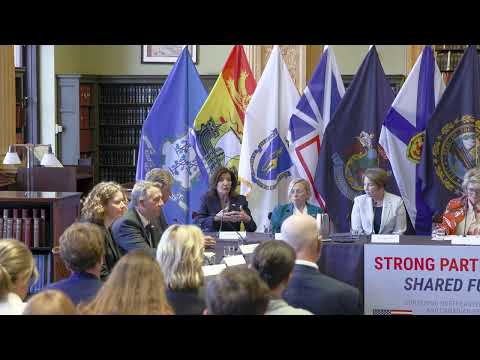
Northeast governors, Canadian premiers warn tariffs are hurting trade, tourism and supply chains
Summary
Governors from U.S. northeastern states and premiers from eastern Canadian provinces told a Boston convening that proposed U.S. tariffs and related rhetoric are disrupting supply chains, reducing tourism and threatening jobs; leaders urged federal action and pledged regional cooperation to mitigate harm.
Governors from the U.S. Northeast and premiers from eastern Canada said proposed tariffs and bellicose federal rhetoric are already disrupting trade, driving down tourism and threatening regional jobs.
The governors and premiers — meeting at the Massachusetts State House — described canceled reservations, supply‑chain interruptions and lost sales across sectors from life sciences to craft brewing. "This is a tax on everything they buy," Governor Hochul said of tariffs during the session, calling the measures a threat to household budgets and competitiveness. Governor Healy summarized the gathering as "urgent" and said leaders will pursue coordination to reduce damage while pressing for action at the federal level.
Why it matters: The Northeast and Atlantic provinces are deeply integrated economically and socially, sharing supply chains, power flows and frequent cross‑border travel. Officials said disruptions reverberate on both sides of the border: tourism businesses that rely on Canadian visitors, manufacturers that import key inputs, and energy systems that share transmission and fuel supplies.
Leaders gave specific examples. Governor Mills said tourism in her state fell "about 26%" between February and April, with local businesses reporting canceled reservations. Governor Healy said Massachusetts expects about a 20% decline in tourism; Vermont reported hotel reservations by Canadians down 45% and credit‑card spending by Canadians down 36%; New York City bookings by Canadians were reported down 45%, attendees said. Premier Ford warned of broad industrial impacts, noting a large aluminum‑can industry and steel usage tied to U.S. suppliers and saying that tariffs are prompting onshoring measures in Ontario.
Speakers flagged supply‑chain effects beyond tourism: manufacturers of medical devices and components used in Massachusetts life‑sciences firms were cited as seeing direct impacts from tariffs on Canadian inputs. Governor Healy noted that roughly 2,400 people from Canada study in Massachusetts each year, including postdoctoral researchers and junior faculty, and said restrictions on personnel movement would hurt research and start‑ups. Premier Lance and others described regulatory and logistical barriers that complicate intra‑regional commerce even without cross‑border tariffs.
Participants urged federal negotiation and international discussion. Several speakers said they expect the G7 and other federal‑level talks to be the place to secure certainty for businesses and investors; Premier Ford called for a prompt deal to restore investor confidence and protect jobs. At the regional level, officials said states and provinces will coordinate messaging, market the Northeast to Canadian travelers and pursue bilateral energy and trade resilience projects.
Ending: The convening produced no formal federal demands or treaties; officials described their next steps as a mix of advocacy in Ottawa and Washington, continued coordination among states and provinces, and marketing campaigns to encourage travel and investment. "We are open for business," Governor Healy said, while also urging federal leaders to provide the certainty businesses need.