Get Full Government Meeting Transcripts, Videos, & Alerts Forever!
Get email alerts on the Right Of Way Utilities topic
No spam. Unsubscribe anytime.
County, Encore discuss coordinating utility relocations with road-widening to avoid duplicated costs
Summary
Encore and Hunt County officials discussed delaying electric line relocations until planned road-widening projects to avoid inefficient zigzagging of poles and added expense; parties agreed to improve coordination and schedule periodic meetings.
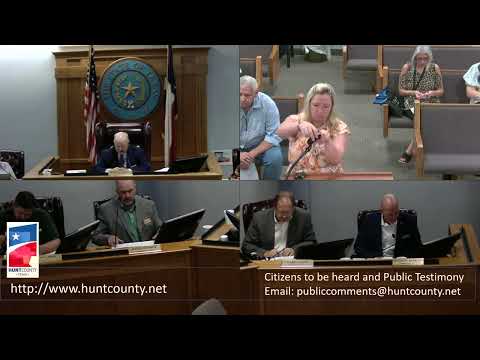
Representatives from Encore and Hunt County told the Commissioner’s Court Monday they want closer coordination to avoid moving power lines ahead of planned road-widening projects.
An Encore representative told the court the company is receiving developer requests to relocate lines "before y'all are ready to do the work," which forces Encore to build temporary zigzag alignments that increase costs and add poles. "If we're not widening the road yet, then it makes sense for us just to wait until y'all are ready to go and then move the line over," the speaker said. The representative gave an example of a 1,600-foot relocation that would require adding multiple poles and dead-end configurations, magnifying the cost of a small isolated relocation.
County officials and Encore discussed who pays for widening when developers plat new sections of road; the county said developers typically pay to widen their section of road. Encore asked for a minimum planning notice of several months to schedule relocations. Commissioners suggested a periodic coordination meeting across precincts so Encore can see which roads are scheduled for work and schedule relocations efficiently.
Encore introduced staff in the room — Ritchie Brewster (supervisor), Anthony Gordon (manager), Sam Thornhill (local design supervisor) and Diane Harris (local coordinator) — and identified Diane Harris as a local contact for coordination. County staff referenced Britney (administrative assistant) and Brian Toole, the county development director, as points of contact for developer coordination. Commissioners volunteered to meet with Encore and county development staff to work out procedures; Judge Stovall said the matter does not require a formal policy and can be handled by coordination between staff and contractors.
Why it matters: coordination can reduce duplicate construction, lower costs to Encore’s ratepayers, and reduce future relocations that county road projects would later make necessary. No formal action was taken; the court closed the item after agreeing to pursue improved communication and at least one working meeting.