Get Full Government Meeting Transcripts, Videos, & Alerts Forever!
Get email alerts on the Seawall Riprap topic
No spam. Unsubscribe anytime.
Windjammer Point condo leaders warn riprap placed for seawall repairs can block finger-pier slips; public works says riprap followed rock encounters
Summary
Windjammer Point condo leaders told the Canal Advisory Committee that riprap placed to stabilize recently replaced seawalls has extended into perpendicular finger-pier slips and can obstruct boats.
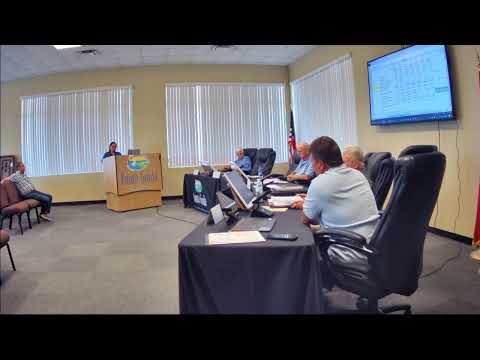
Windjammer Point condominium representatives told the Punta Gorda Isles Canal Advisory Committee on June 16 that riprap placed at the toe of newly replaced seawalls has intruded into finger-pier slips and in some cases interfered with boat access.
Glenn Curtis, treasurer of the Windjammer Point condominium board, said the community has 70 slips with many perpendicular 25-foot finger piers and that riprap installed after recent seawall work “would require boats in those docks to be further out from the seawall, to avoid damage.” He said the condition affects multiple locations and asked the committee to have the city investigate alternatives that avoid placing riprap where it blocks slips.
City staff and public works officials told the committee the riprap installation in the Windjammer location followed contractor attempts to drive long sheet-pile panels; where crews encountered hard substrate or rock they cut panels and could not obtain the required penetration. “The contractor encountered rock, so they had to pull the panels and cut them off,” Public Works said. The contractor then installed riprap to buttress the panels because penetration standards could not be met at those points.
Public Works said the photo examples circulated to the committee were taken at low tide and that crews later pulled some riprap back toward the wall and hand-placed some stone under docks so particular slips could be used again. Staff explained the city’s waterfront development standards are part of the contract documents but that contract precedence and the contract’s rock-encounter provisions governed the contractor’s response on this project.
Committee members and presenters explored alternatives, including additional anchors or dead-man tiebacks, sand/sediment backfill, different toe stone sizes or engineered anchors, but staff cautioned that alternatives could trigger a separate permitting process and additional cost and time. The committee asked staff to: (1) assess how many perpendicular/finger-pier locations are at risk, (2) identify which replacement projects are likely to meet bedrock and therefore need riprap, and (3) explore whether engineered alternatives (additional anchors, different panel lengths, or sand backfill) are feasible and how much permitting and cost those alternatives would add.
No immediate code change or formal action was taken; the committee asked Public Works to treat this as a systemwide issue, prioritize affected sites for mitigation, and report back with the magnitude, costs and possible engineering options.