Get Full Government Meeting Transcripts, Videos, & Alerts Forever!
Get email alerts on the Water Quality topic
No spam. Unsubscribe anytime.
Pokegama Lake association installs nanobubbles pilot to tackle algae, asks county to aid permitting and funding
Summary
Pokegama Lake Association and contractor Mollier described a $100,000 pilot nanobubble installation intended to reduce internal nutrient loading and harmful algal blooms in North Bay and asked Pine County to advocate with state regulators and partner on funding and permitting.
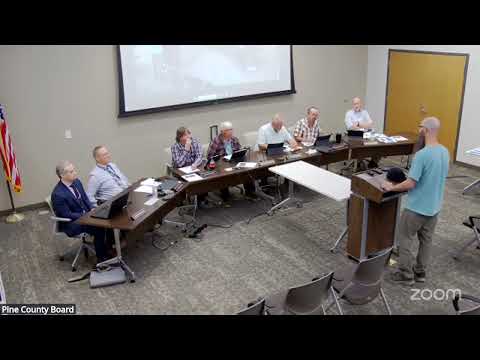
The Pokegama Lake Association presented a nanobubble pilot project to the Pine County Board on Monday, describing a $100,000 demonstration designed to reduce internal nutrient loading, improve oxygen conditions in lake sediments and limit harmful algal blooms.
Kathy Nielsen, co‑chair of the association's water quality committee, said lake owners donated more than $53,000 and the association matched $50,000 to fund an eight‑week pilot installed June 5 in the lake's North Bay. "We were very, very impressed with that technology," she said, citing a case study from nearby lakes where nanobubble treatment produced clearer water compared with an untreated upstream lake.
John Morales of Mollier, the contractor, described how nanobubbles are an aeration technology that produces extremely small, neutrally buoyant bubbles. "At that size, they're actually neutrally buoyant, negatively charged, and able to interact with the environment in different ways," Morales said. He explained nanobubbles can increase oxygen in sediments, encourage aerobic bacteria, bind phosphorus in oxygenated conditions and thereby reduce internal nutrient recycling that fuels algae.
Association leaders and the contractor described their goals: demonstrate safety and effectiveness to regulators (the Minnesota Department of Natural Resources and the Board of Water and Soil Resources), collect scientific monitoring data through the pilot, and use the results to support permit protocols and larger funding requests. The presenters estimated a full‑lake solution at roughly $2.2 million and said they expect it could take about two years to implement a full project, noting permitting and design for a lake this size will take time.
Nielsen asked the board to advocate with the DNR on timely permitting protocols and to consider county funding or partnership with the Soil and Water Conservation District for broader roll‑out. "We would ask for this board's help in advocating with the DNR over the next year or 2 to quickly and effectively write permitting protocols for the new nanobubbles technology," she said, and invited commissioners to a media day on July 24.
Board members asked technical and watershed questions about expected results, time horizon and sources of nutrient loading. Mollier staff said changes can be observed in roughly a year, that the equipment may remain in place for multiple years and that the technology treats internal loading at the sediment level while upland and watershed work must continue.
No county funding decision was made; the board agreed to receive the update and consider the association's requests during subsequent budget and permitting discussions.