Get Full Government Meeting Transcripts, Videos, & Alerts Forever!
Get email alerts on the Foreclosure Surplus Unclaimed Property topic
No spam. Unsubscribe anytime.
Oregon bill would route foreclosure sale surpluses to Treasury, create statewide claims process
Summary
House Bill 2089A would send surplus proceeds from property tax foreclosure sales to the Oregon State Treasury’s unclaimed property program and set procedures for sale and notice, a compromise developed after the U.S. Supreme Court’s Tyler v. Hennepin decision.
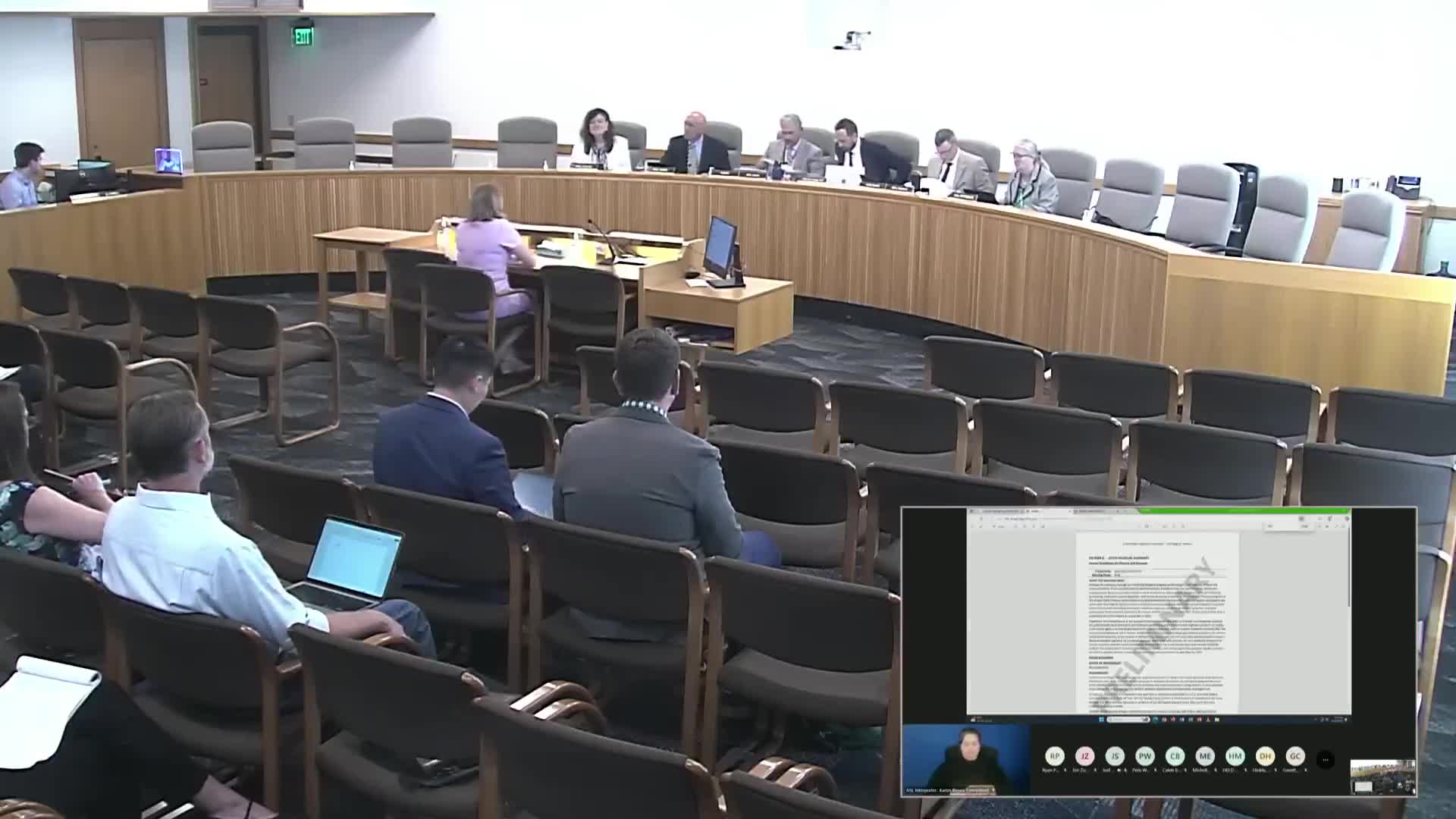
Representative Emerson Levy told the Senate Committee on Finance and Revenue on Monday that House Bill 2089A establishes a statewide process for handling surplus proceeds from property tax foreclosure sales and directs those surpluses to the Oregon State Treasury’s unclaimed property program.
“House Bill 2089A relates to how the surplus proceeds of property tax foreclosure sales will be handled,” Representative Levy said, framing the measure as a follow-up to the U.S. Supreme Court’s 2023 decision in Tyler v. Hennepin County and to prior state legislation (House Bill 4056, 2024).
The bill would require counties to transfer surplus proceeds to the State Treasury rather than retain them locally. Claudia Chobanu, trust property director for the Oregon State Treasury, told the committee the Treasury already operates an unclaimed property program and would list foreclosure surpluses on its website where owners can claim funds “for free 24 hours a day.” Chobanu added the bill would allow funds to be sent to Treasury “as soon as the surplus is realized rather than once a year” to speed access for homeowners and reduce county call volume.
Levy and supporters described two sale tracks in the bill: residential properties that are a current or former primary residence would permit counties to use a real estate agent (with an exemption to procurement rules for certain transactions) to maximize sale value; other properties would generally be sold via standard auction procedures with bid steps tied to market value. Levy said the Treasury’s existing unclaimed property infrastructure would be used to vet and pay legitimate claims and to guard against fraudulent claim-shopping that emerged after Tyler.
Consumer advocates and counties testified they reached a compromise on the measure. Andrea Meyer, director of government relations for AARP Oregon, said the bill includes mandatory brief notice language in five languages directing owners to the Treasury website and contains provisions intended to “maximize the value of the property, particularly residential properties.” Justin Lowe of the Association of Oregon Counties said counties had been concerned about administrative and financial burdens but worked with stakeholders to produce a version they could accept while remaining attentive to implementation costs.
Pacific Legal Foundation, which represented the Tyler plaintiff in the U.S. Supreme Court, supported the bill as the “best sort of compromise” post‑Tyler, said Jim Manley, the group’s state policy chief. County assessors and tax collectors indicated support for the negotiated approach while noting implementation will be administratively substantial, Eric Chancellor said.
No amendments or votes on the bill’s merits were recorded at the June 16 meeting; the committee proceeded to a work session vote on a different item before closing the hearing. Supporters said the bill aims to ensure that surplus foreclosure proceeds reach homeowners and heirs in a consistent statewide process rather than remaining in county coffers or being subject to fragmented local procedures.
The committee moved House Bill 2089A to the Senate floor with a “do pass” recommendation later in the session; the committee’s roll call recorded the motion’s passage.