Get Full Government Meeting Transcripts, Videos, & Alerts Forever!
Get email alerts on the Civil Commitment topic
No spam. Unsubscribe anytime.
Lawmakers debate HB 2005 overhaul of civil‑commitment and aid‑and‑assist rules amid federal court pressure
Summary
The Joint Committee on Addiction and Community Safety opened a public hearing June 16 on House Bill 2005, a large omnibus bill that would revise civil‑commitment criteria, set timelines for state‑hospital restoration and create community‑restoration procedures amid federal court pressure on Oregon’s forensic behavioral‑health system.
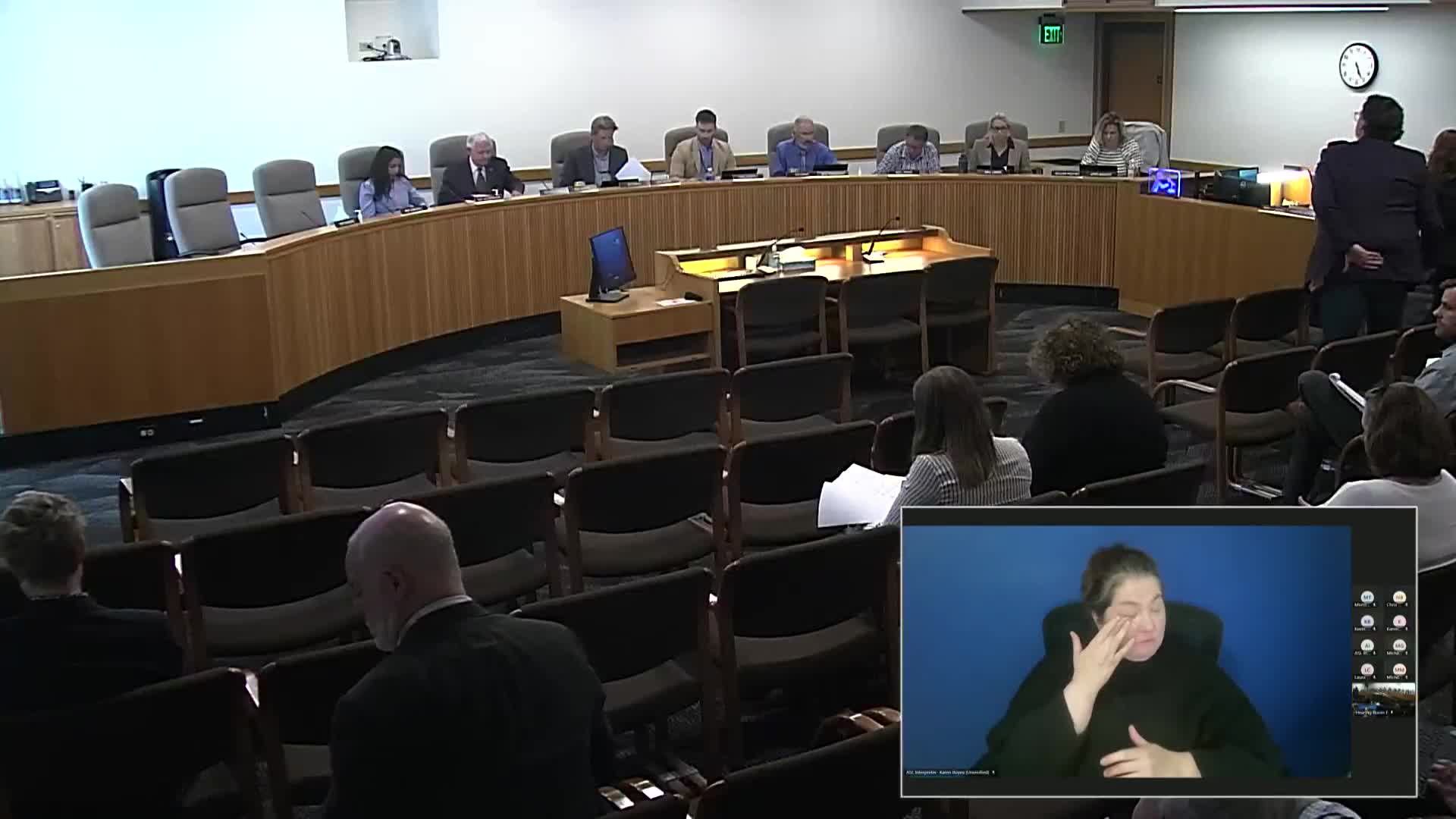
Lawmakers held a lengthy public hearing Monday on House Bill 2005, an omnibus measure that revises Oregon’s civil‑commitment eligibility, codifies timelines for state‑hospital restoration and creates new community‑restoration procedures. Committee members heard testimony from county leaders, judges, the Oregon Judicial Department, public defenders, district attorneys, NAMI Oregon and governor’s office staff.
The bill matters because a federal court recently found the state in contempt for failing to admit people to the Oregon State Hospital within constitutionally required timelines. HB 2005 would modify statutory definitions in ORS 426.005, add diversion options, define new procedures for declarations of mental‑health treatment, establish timelines and status checks for community restoration, expand criteria for commitment of extremely dangerous persons, create a tribal‑state task force, and ease siting rules for licensed treatment facilities inside urban growth boundaries. Supporters said the bill is a negotiated compromise intended to make the system more efficient; critics said it broadens authority for involuntary commitment without sufficient community capacity and safeguards.
Supporters and municipal officials described the bill as the product of months of negotiation. Channa Newell of the Oregon Judicial Department said HB 2005 ‘‘is our best efforts to address the situation in front of us right now’’ and called it a compromise that begins a long path of reform. Judge Nan Waller, a circuit court judge who has worked on aid‑and‑assist issues for years, told the committee the bill ‘‘provides the foundation that we need’’ and highlighted new timelines, status hearings and data collection requirements as tools to improve outcomes.
Casey Liddell, senior behavioral‑health policy adviser to Governor Tina Kotek, said the package complements other investments: she cited a companion proposal in House Bill 2059 that legislators have proposed to add about $65,000,000 for services, housing, locations and facilities designed to expand community capacity. ‘‘Without community beds, people are being sent to the state hospital who could otherwise be treated locally,’’ Liddell said.
But county and local leaders warned that the bill pairs policy changes with implementation challenges. Marion County Commissioner Danielle Bethel said she was ‘‘neutral’’ and frustrated, arguing that the measure conflates separate work on civil commitment and aid‑and‑assist and that counties’ operational concerns have not been incorporated. Tim Dooley of the Association of Oregon Counties testified neutrally and said counties need commensurate funding for community mental‑health programs before expanded commitment criteria are enacted.
The bill also generated strong objections from criminal‑defense advocates and some public defenders. Reid Kajikawa and Allison Knight said the measure removes ‘‘imminent’’ from the civil‑commitment standard, replacing it with a reasonably foreseeable standard that they said invites speculation and the overuse of civil commitment. ‘‘The initiation of commitment proceedings against the citizen results in the deprivation of their liberty,’’ Kajikawa said, adding that the change could permit repeated commitments based primarily on prior commitments rather than current symptoms.
NAMI Oregon’s Chris Bonheff supported the civil‑commitment language carried forward from House Bill 2467 and sections 1 through 6 of the dash‑1 amendment, saying the narrower change to civil‑commitment criteria could spare individuals a criminal record and make civil commitment a meaningful alternative. But Bonheff urged more vetting of the declaration‑of‑mental‑health‑treatment provisions, particularly language he said could allow ‘‘any person who is interested in the affairs or welfare’’ of a declarant to trigger a capacity hearing.
District Attorney Kevin Barton, speaking for the Oregon District Attorneys Association in his personal capacity, said ODAA does not support HB 2005 as amended and urged ‘‘triggering repeal’’ language that would suspend the bill’s timelines if the federal court were to limit implementation. Barton warned the community‑restoration timelines will lead to numerous extension motions and said the bill leaves unanswered practical questions about pending community restoration cases and the role of Department of Justice attorneys in circuit court hearings.
Lawmakers and witnesses repeatedly referenced timelines and sunsets in the amendment language: portions of the restoration‑limit provisions would delay operation until Sept. 29, 2025, and would be repealed Jan. 1, 2028; the tribal‑state task force must meet by Feb. 1, 2026, and report by Dec. 15, 2026. Witnesses also pointed to complementary funding bills and to the need for more residential treatment capacity to make statutory changes effective.
No final vote on HB 2005 occurred during the hearing. Committee members closed the public hearing and said they would continue work in the interim, noting the measure is a complex, negotiated package with elements many stakeholders support and others that remain controversial. Several witnesses urged follow‑up changes in the short session or during the interim and pressed for clearer funding commitments and day‑one counsel for people subject to holds and diversion offers.
Ending: The committee concluded the public hearing and scheduled follow‑up work; witnesses and committee chairs emphasized that the bill represents an initial, imperfect step toward broader behavioral‑health reforms and that continued negotiation will be required.