Get Full Government Meeting Transcripts, Videos, & Alerts Forever!
Get email alerts on the Homeless Shelter Siting topic
No spam. Unsubscribe anytime.
Spokane council debates ordinance to set siting rules for inclement‑weather centers and emergency housing
Summary
Council discussion and public testimony focused on a draft ordinance, Ordinance C36692, that would codify siting and “good neighbor” practices for warming centers, emergency and transitional housing; councilmembers diverged on exemptions for small scattered‑site shelters and on how much neighborhood notice and enforcement the city should require.
The Spokane City Council spent extended time debating Ordinance C36692, a proposal described in the meeting as “codifying best practices for siting and activation of inclement weather centers and emergency and transitional housing facilities.” The ordinance would add a new code section and amend multiple Spokane Municipal Code sections to formalize activation triggers and neighborhood engagement for shelters and warming centers.
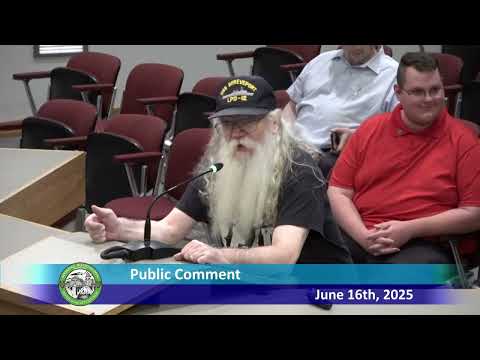
Council members and dozens of public commenters said the measure matters because it affects where shelters and scattered‑site programs locate in neighborhoods and how nearby residents are notified. Public commenter Derek Azaro said the draft removes a prior 1,000‑foot buffer and “took away the protection for the kids at the school,” adding that the new language could place shelters “within a thousand feet of a school.” Larry Andrews, a resident and business owner, urged temporary tent and housing options on county land, a proposal the council president said had been examined and ruled out because of Fairchild Air Force Base flight restrictions and Spokane International Airport concerns.
Council member Cathcart characterized the draft as primarily a siting ordinance rather than a pure weather‑activation rule and criticized several exemptions. She said the ordinance’s exemption for the “first 20 beds” and a $50,000 funding threshold would effectively exempt most scattered‑site models from the new siting process and limit neighborhood protections. “Transparency should be the first and foremost thing in our minds,” Cathcart said during commentary, adding that current practice sometimes leaves neighbors unaware when sites are sited nearby.
Other council members framed the ordinance differently. Council member Zippone (Zippone said she had conducted outreach in her neighborhoods) said the proposal adds “a lot of transparency” and reflected ranked community priorities including a 20‑bed threshold, a $50,000 city contribution and a communication team. Council member Dylan and others praised the change to use heat‑index and wind‑chill criteria for activation, calling that part more scientifically based.
Several council members and public commenters pressed for greater clarity on operational details not spelled out in the draft. Council member Keghart noted the intent to treat new shelter proposals the same as existing group homes up to a point and said a separate process should trigger for larger facilities. A council member asked when shelters would open and close and whether there would be limits on a person’s length of stay; the presenter said staff would “get back with you on that answer.”
Multiple speakers urged stronger, enforceable “good neighbor agreements” that would commit city resources and timelines to respond to neighborhood impacts; critics said the draft’s version of a good‑neighbor agreement focused on communication (a hotline and attendance at neighborhood council meetings) but lacked enforceable standards. Several commenters warned neighborhood councils vary in capacity and that relying solely on neighborhood council meetings would not reach all impacted residents.
The council did not record a final vote on C36692 during the meeting. Council members indicated they wanted additional legal analysis and clearer operational language before a final decision; Cathcart asked for a legal conversation to consider releasing more legal information. Staff and several council members said they were willing to work on additional outreach and revisions.
The debate combined technical policy points about activation criteria with political disputes over transparency, neighborhood notification and exemptions for small scattered‑site shelters. Council members said they would continue the conversation and seek clarifications on enforcement, operational hours and how the city would commit resources if a site caused neighborhood impacts.
For now, the ordinance remains under council consideration pending additional staff information and possible redrafting or amendments at a later date.