Get Full Government Meeting Transcripts, Videos, & Alerts Forever!
Get email alerts on the Land Use Cannabis topic
No spam. Unsubscribe anytime.
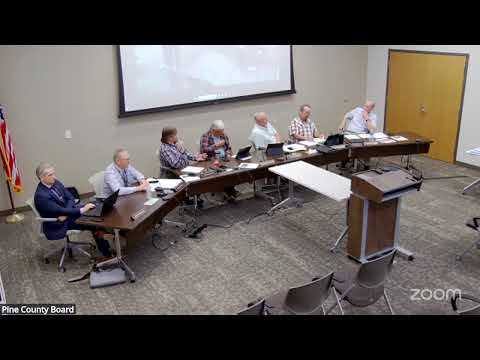
Residents urge Pine County to keep cannabis operations away from homes; pro‑business speaker praises ordinance
Summary
During public forum residents raised odor, water use and zoning concerns about the county’s adult‑use cannabis ordinance; a prospective microbusiness owner defended the board’s zoning approach as consistent with state rules and helpful to small businesses.
Several Pine County residents used the public forum to ask the county to restrict adult‑use cannabis businesses from residential areas, citing odor, water use, nuisance and property‑value concerns. Speakers urged revisions to the county ordinance’s zoning definitions and placement rules; at the same time, a prospective microbusiness owner praised the ordinance and urged local regulation remain consistent with state law.
Denise Bryce of Preston said she has calculated time and effort invested in maintaining a home in Pine County and asked the board to avoid allowing cannabis operations “in residential communities.” Bryce told the board she had previously spoken extensively about cannabis and said she was concerned about odor from flowering and drying operations, water use and facility scale. “They start smelling at 3 to 4 weeks of age,” she said of flowering plants, and she cited published reports—described in her remarks as coming from county associations and articles—about odor and other impacts.
Patrice DeGrae (presenting from Graston/Rialton) referenced the county zoning ordinance (last amended March 18, as noted in her remarks) and asked how the cannabis ordinance relates to the broader zoning code. DeGrae walked the board through zoning definitions and conditional‑use criteria in the county code, including nuisance and the zoning board’s authority to require measures to control “offensive odor, fumes, dust, noise, and vibration.” She asked “which ordinance overrides the other” and why the cannabis ordinance opens by stating it is intended “to protect the public health, safety, and general welfare” while other zoning chapters include explicit environmental and neighborhood protections.
John DeRay of Royalton Township asked whether cannabis is an agricultural product and whether operators would be subject to interim or conditional‑use permits under existing zoning. DeRay said the product remains federally controlled and raised moral objections, adding several procedural questions about building permits and township versus county jurisdiction.
Trent Kannenberg, a Pine County resident who said he has preapproval for a microbusiness and is pursuing a retail license, praised the county zoning board and county officials for crafting restrictions he called “fair, equitable, and just.” Kannenberg told the board the county’s ordinance makes it possible for small businesses to operate legally in Pine County; he urged that debates about legality be handled at the state level and said the county was “at the forefront” compared with many other counties.
Nut graf: The public comments revealed two clear strands of community concern: nearby residents worried about odor, water use, nuisance and the ordinance’s zoning definitions and setback/permit procedures, while at least one prospective operator said the county’s ordinance balances state rules with local controls to allow small, legal businesses.
Ending: The comments occurred during the public forum and did not generate formal board action at this meeting. Several residents asked for ordinance revisions and clarifications; county staff and board members did not announce specific follow‑up actions during the public forum.